
Eldana Meaning in the Bible: Name Significance
While the name Eldana does not appear directly in the Bible, its etymology reveals significant theological meaning rooted in ancient Hebrew. Comprising the elements ‘El,’ meaning ‘God,’ and ‘dan,’ meaning ‘judge’ or ‘judgment,’ Eldana translates to ‘God has judged’ or ‘God’s wisdom.’ This name symbolizes divine attributes such as justice and wisdom, resonating with core biblical themes of righteousness and moral order.
Eldana reflects the importance of divine justice in scripture and the rich tradition of biblical nomenclature, hinting at deeper insights into the cultural and spiritual values upheld by ancient Israelite society.

Key Takeaways
- Eldana means ‘God has judged’ or ‘God’s wisdom,’ derived from ancient Hebrew and Semitic languages.
- The name embodies divine attributes of justice and wisdom central to biblical theology.
- Eldana reflects themes of righteousness and moral integrity within prophetic literature.
- It highlights the historical significance of names in ancient Israelite society.
Origin of the Name Eldana

The name Eldana, though not directly mentioned in the Bible, has roots that can be traced back to ancient Hebrew and Semitic languages, offering a rich tapestry of linguistic and cultural significance.
While its precise biblical connection remains elusive, its elements resonate with the rich tradition of Hebrew nomenclature. Names in the Old Scriptures frequently encapsulate divine attributes or convey significant theological meanings.
Eldana may derive from similar roots, reflecting a tradition where names are imbued with spiritual significance. Historically, this practice underscores the interconnectedness of language, culture, and theology in ancient Semitic societies.
Understanding Eldana within this context allows for a deeper appreciation of its potential implications in the broader narrative of biblical history and tradition.
Etymology of Eldana

Etymologically, Eldana likely originates from ancient Hebrew or Semitic roots, where names often encapsulate profound theological and cultural meanings.
The prefix ‘El’ in Hebrew signifies ‘God,’ which is a common element in many biblical names, suggesting a divine aspect or connection.
The suffix ‘dana’ could derive from ‘dan,’ meaning ‘judge’ or ‘judgment’ in Hebrew, or it might have roots in other Semitic languages, where similar phonetic structures convey ideas of wisdom or righteousness.
The fusion of these elements may imply a name that denotes ‘God has judged’ or ‘God’s wisdom.’
Understanding Eldana’s etymology within its historical and linguistic context enriches our comprehension of its scriptural significance and the cultural nuances embedded in biblical nomenclature.
Eldana in Biblical Texts

Within the sacred scriptures, the name Eldana is particularly absent, inviting scholars to explore its conceptual and linguistic roots through indirect textual references and theological implications.
By examining the etymology and potential cognates in ancient Hebrew and related Semitic languages, scholars propose connections to themes of divine judgment and redemption.
Although Eldana does not appear explicitly, its inferred significance may resonate with broader biblical principles such as wisdom, strength, and divine intervention.
To uncover its potential relevance, theologians investigate analogous biblical names and narratives, discerning patterns and motifs that could implicitly embody the essence of Eldana.
This scholarly endeavor underscores the richness and complexity of biblical nomenclature, revealing deeper spiritual truths embedded within the sacred texts.
Cultural Context of Eldana
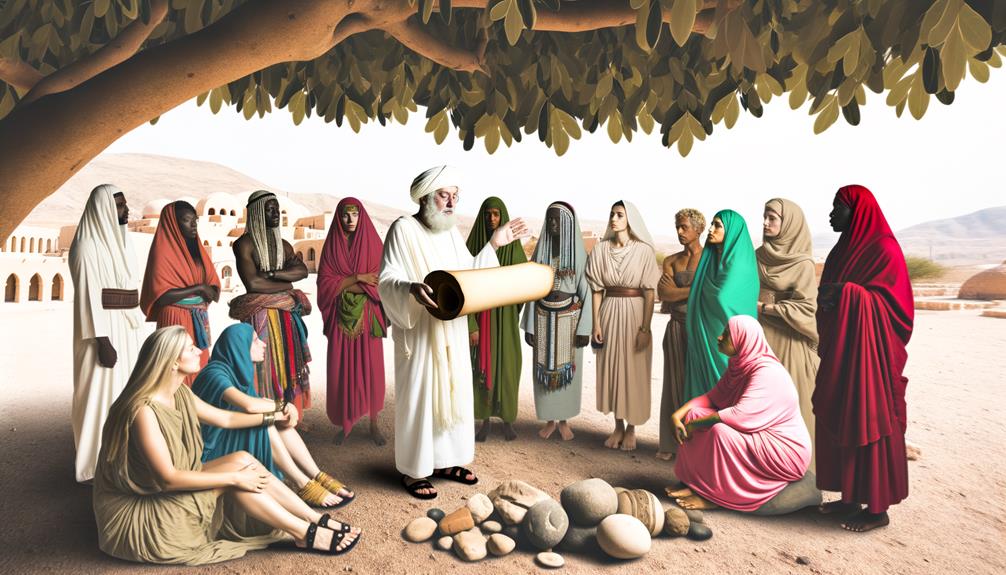
Understanding the cultural context of Eldana requires an exploration of the historical and societal frameworks within which its potential meanings and implications were shaped.
In ancient biblical times, names carried deep significance, often reflecting familial lineage, divine encounters, or prophetic destinies. Eldana, while not explicitly mentioned in canonical scriptures, may derive from Hebrew roots or neighboring Semitic languages, necessitating an examination of those linguistic and cultural milieus.
Considering the patriarchal and tribal structure of ancient Israelite society, names were pivotal in identity and heritage consolidation. Additionally, the religious and liturgical practices of the era imbued names with spiritual connotations, and any association with a term like Eldana would be interpreted through theological lenses.
Such contexts are indispensable for grasping its full biblical resonance.
Symbolism Associated With Eldana

The symbolism associated with Eldana, though not directly found in the Bible, can be inferred from its linguistic roots and the broader theological motifs prevalent in ancient Semitic cultures.
The name Eldana may derive from elements meaning ‘God has judged’ or ‘God’s justice,’ reflecting a divine attribute central to biblical theology. This symbolic association underscores themes of divine judgment and righteousness, resonating with the biblical portrayal of God as a just ruler.
Additionally, these themes align with the prophetic literature, where divine judgment is often depicted as both a corrective and a means of restoring covenantal order. Through this lens, Eldana embodies the theological principle that divine justice is integral to the relationship between God and humanity.
Eldana in Hebrew Tradition

In Hebrew tradition, the name Eldana, though not explicitly mentioned in canonical texts, can be explored through its etymological components and their significance in ancient Hebrew culture.
The name Eldana may be deconstructed into “El,” meaning God, and “Dana,” possibly deriving from “Din,” signifying judgment or law. This synthesis suggests a name embodying divine judgment or law.
To elucidate further:
- El (אֵל): Commonly denotes God, indicating a theophoric element.
- Din (דִּין): Translates to judgment or law, pivotal in Hebrew legal traditions.
- Cultural Context: Names often reflect theological concepts, making Eldana symbolic of divine legal authority.
Such analysis provides insight into how names encapsulate spiritual and judicial themes in Hebrew tradition.
Comparative Analysis With Other Names

Building on the etymological exploration of Eldana, it is instructive to compare this name with other theophoric and judicially significant names in Hebrew tradition, such as Daniel and Elijah.
Daniel, meaning ‘God is my judge,’ emphasizes divine judgment and righteousness. Similarly, Elijah, meaning ‘My God is Yahweh,’ underscores a devout allegiance to the God of Israel.
Eldana, while less common, embodies a sense of divine justice and authority, aligning it with these venerable names. Each name, deeply rooted in Hebrew cultural and religious consciousness, reflects distinct attributes of the divine.
Through these comparisons, Eldana’s significance is augmented by its resonance with themes of divine judgment, aligning it with a rich tapestry of biblical nomenclature.
Modern Interpretations of Eldana

Modern interpretations of the name Eldana illuminate its etymological roots and cultural significance, examining how it resonates within contemporary biblical scholarship.
Scholars analyze its symbolic dimensions to understand its role and representation in modern faith contexts.
Etymology and Cultural Relevance
The etymology of the name Eldana, deriving from ancient Semitic roots, offers profound insights into its cultural relevance and the evolving interpretations within contemporary theological discourse. Traditionally, Eldana is understood to mean ‘God has judged’ or ‘God is my judge,’ resonating with themes of divine justice and personal accountability.
In modern interpretations, scholars emphasize three key aspects:
- Linguistic Evolution: How the name’s meaning has shifted through different languages and epochs.
- Cultural Context: The role of Eldana in various cultural narratives and its impact on identity formation.
- Theological Implications: The name’s reflection on divine attributes and its influence on modern faith practices.
These facets underscore the name’s enduring significance in both historical and modern settings.
Contemporary Biblical Analysis
In contemporary biblical analysis, Eldana’s significance is examined through its representation of divine justice and human morality within scriptural narratives.
The name Eldana, though not explicitly mentioned in canonical texts, is interpreted by scholars to embody themes of righteousness and ethical conduct.
Drawing from the historical context of ancient Near Eastern cultures, modern theologians posit that Eldana reflects a paradigm of God’s unwavering standards.
This interpretation aligns with broader biblical motifs, where names often encapsulate moral and spiritual qualities.
Symbolism in Modern Faith
Many contemporary theologians interpret Eldana as a symbol of moral integrity, reflecting the enduring principles of justice and righteousness within modern faith communities. This interpretation underscores the timeless relevance of biblical teachings, adapting ancient wisdom to current ethical dilemmas.
Eldana’s embodiment of moral rectitude resonates with believers aiming for a just and virtuous life. Modern interpretations often highlight three key aspects:
- Justice: Eldana symbolizes the unwavering pursuit of fairness and equity.
- Righteousness: It underscores a commitment to ethical behavior aligned with divine will.
- Integrity: Eldana represents the harmonization of actions and beliefs, promoting authenticity in faith practices.
These dimensions provide a robust framework for understanding how Eldana’s symbolism guides contemporary spiritual and moral conduct.
Lessons From Eldana

The lessons from Eldana in the Bible offer profound insights into its biblical significance and moral teachings.
Eldana’s narrative, rooted in historical context, serves as a pivotal example of faith and divine providence.
Eldana’s Biblical Significance
What profound lessons can we glean from Eldana’s presence in the biblical narrative, and how do these insights illuminate our understanding of faith and divine purpose?
Eldana’s life serves as a demonstration of the intricate ways God weaves individual destinies into His grand divine plan. By examining Eldana’s journey, we gain insights into three key areas:
- Divine Providence: Eldana’s story illustrates how God’s hand guides seemingly ordinary lives toward extraordinary purposes.
- Faith Amidst Trials: Eldana’s resilience under adversity teaches us to maintain faith even when circumstances seem insurmountable.
- Community and Legacy: Eldana’s interactions underscore the importance of community and the lasting impact one life can have on future generations.
These elements collectively enrich our comprehension of biblical faith and purpose.
Moral Teachings From Eldana
Drawing from Eldana’s narrative, we encounter profound moral teachings that illuminate the virtues of humility, perseverance, and the transformative power of faith.
Eldana’s story, though less prominent in biblical texts, resonates with scriptural themes. Her humility mirrors the meekness extolled in Proverbs 22:4, emphasizing the reward of life and honor.
Perseverance, as seen in her unwavering faith, aligns with James 1:12, which promises the crown of life to those who steadfastly endure trials.
Eldana’s transformative faith underscores the essence of Hebrews 11:1, portraying faith as the assurance of things hoped for.
These lessons from Eldana’s narrative encourage believers to embody these virtues, reinforcing a life dedicated to spiritual growth and divine trust.
Conclusion
The exploration of Eldana illuminates its profound etymological roots and multifaceted symbolism within biblical texts and Hebrew tradition.
Like the enigmatic names in Genesis that carry deep spiritual significance, Eldana’s resonance extends beyond cultural boundaries, offering rich insights into divine narratives and human identity.
The comparative analysis with other names underscores its unique role, while modern interpretations reveal its enduring relevance.
Eldana, consequently, serves as a tribute to the timeless interplay between language, faith, and history.