
Gates Meaning in the Bible: Entrance and Power
In the Bible, gates hold profound symbolic and practical importance. They served as crucial city entrances, centers for legal proceedings, and communal gatherings (Deuteronomy 21:19).
Theologically, gates often symbolize divine judgment and moral discernment, as seen in prophetic visions (Ezekiel 40-48, Revelation 21:12-13). They also represent divine approval and justice (Psalm 118:19-20, Amos 5:15).
Additionally, gates demarcate sacred spaces, indicating a threshold between the secular and the holy (Psalm 24:7-10). Jesus is described as the ‘gate’ to eternal life (John 10:9), underscoring the spiritual pathway to salvation.
Exploring further will reveal richer insights into their multifaceted role.

Key Takeaways
- Gates symbolized divine judgment and moral discernment in prophetic visions (Ezekiel 40-48, Revelation 21:12-13).
- Gates served as venues for legal proceedings and communal decision-making (Deuteronomy 21:19).
- They represented the threshold between sacred and secular, highlighting divine providence (Psalm 24:7-10).
- Gates were integral to market exchanges and economic activities (2 Kings 7:1).
Gates as City Entrances
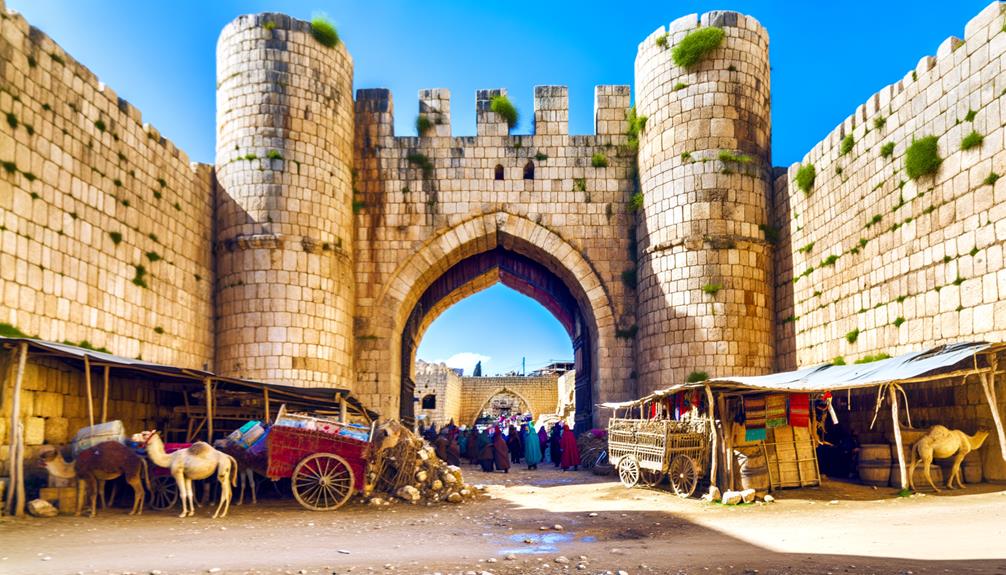
In biblical times, gates served as essential elements of city entrances, functioning not only as points of access but also as places of social, legal, and commercial activity.
These structures were strategically significant, often mentioned in scripture as symbols of strength and protection (Nehemiah 3:1-32).
Biblically, gates were where elders convened to render judgments (Deuteronomy 21:19), and prophets proclaimed divine messages (Jeremiah 17:19-20).
They facilitated trade and market exchanges, underscoring their economic importance.
Theologically, gates represented the threshold between the sacred and the secular, encapsulating divine providence over societal order.
Historically, the presence of gates at city entrances mirrored the need for communal governance and security, embodying a microcosm of civic life in ancient times.
Gates in Ancient Israel
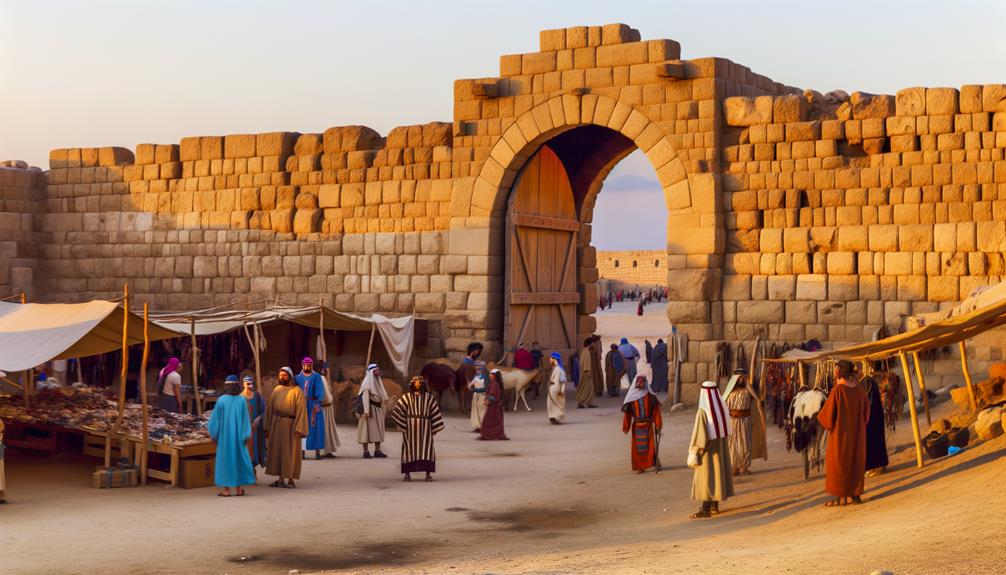
Frequently mentioned in biblical narratives, the gates of ancient Israelite cities were integral to the societal structure, serving as venues for legal proceedings, market activities, and prophetic declarations.
These gates were more than mere entry points; they were vibrant centers of communal life and governance, as illustrated in several scriptural passages:
- Legal Proceedings: In Ruth 4:1, Boaz goes to the town gate to settle legal matters concerning land and marriage.
- Market Activities: In 2 Kings 7:1, market transactions are described as taking place at the city gate during a famine.
- Prophetic Declarations: In Jeremiah 17:19-20, Jeremiah is commanded to stand at the gates to proclaim the word of the Lord.
These roles underscore the multifaceted significance of gates in ancient Israel.
Gates and Divine Judgment

In biblical literature, gates often serve as potent symbols of divine judgment, as evidenced in prophetic visions such as Ezekiel’s depiction of the temple gates (Ezekiel 40-48) and the gates of the New Jerusalem in Revelation (Revelation 21:12-13).
These gates not only demarcate sacred spaces but also embody moral and spiritual lessons, underscoring the separation between the righteous and the wicked.
Historically, ancient city gates functioned as places of legal proceedings and communal decision-making, reinforcing their role as metaphors for divine justice and moral discernment.
Symbolism in Ancient Gates
How did ancient gates come to symbolize divine judgment in biblical texts, and what theological significance did they hold in the cultural and historical context of the time?
In biblical narratives, gates served as venues for legal proceedings, social gatherings, and prophetic declarations. Their theological significance is rooted in their function as places where divine justice was enacted.
- Judicial Hubs: Gates were where elders and judges convened to render decisions (Deuteronomy 16:18).
- Prophetic Declarations: Prophets often proclaimed God’s judgments at the gates, symbolizing divine scrutiny (Jeremiah 17:19-27).
- Covenantal Enforcement: The gates represented entry points for blessings or curses contingent on obedience to God’s laws (Deuteronomy 28:6).
Thus, ancient gates were potent symbols of divine oversight and societal order.
Gates in Prophetic Visions
Prophetic visions often depict gates as profound metaphors for divine judgment, reflecting their historical role in administering justice and societal governance.
In Isaiah 26:2, gates symbolize the entry of the righteous nation that keeps faith, signifying approval from God. Similarly, in Revelation 21:25, the gates of the New Jerusalem remain open, signifying eternal access for the redeemed.
These scriptural references underscore gates as thresholds of divine discernment, where righteousness is rewarded and iniquity is barred.
The imagery of gates in prophetic contexts consequently conveys the solemnity of God’s judgment and the ultimate separation of the just from the unjust, aligning with the gates’ traditional function in ancient cities as places of judgment and decision-making.
Moral Lessons From Gates
Gates in biblical narratives serve as powerful moral lessons, illustrating the principles of divine judgment and the dichotomy between righteousness and wickedness.
These gates often symbolize the threshold between God’s blessings and His wrath, teaching profound ethical and spiritual truths.
- Gate of Righteousness: Psalm 118:19-20 speaks of entering ‘the gate of the Lord’ where the righteous may enter, symbolizing divine approval and moral rectitude.
- Gate of Judgment: In Amos 5:15, the gate is a place where justice is administered, emphasizing God’s impartiality and the importance of social justice.
- Gate of Salvation: Jesus refers to Himself as the ‘gate’ in John 10:9, illustrating the pathway to eternal life, underscoring faith and obedience as key to divine favor.
These gates collectively underscore the importance of moral integrity and divine judgment.
Gates of the Temple

The gates of the Temple in Jerusalem, which held profound theological significance, served not only as physical entrances but also as symbols of spiritual passage and divine encounter, as illustrated in various biblical texts such as Psalm 24:7-10. These gates represented the threshold between the earthly and the divine, where worshippers moved into sacred space, seeking communion with God.
| Temple Gate | Biblical Reference | Symbolism |
|---|---|---|
| Golden Gate | Ezekiel 44:1-3 | Divine Glory |
| Beautiful Gate | Acts 3:2-10 | Healing and Miracles |
| East Gate | Ezekiel 10:19 | Departure of God’s Glory |
| Water Gate | Nehemiah 8:1-3 | Spiritual Renewal |
| Sheep Gate | John 5:2 | Sacrificial Entrance |
Understanding these gates enhances the appreciation of their role in biblical theology and history.
Prophetic Visions of Gates

Throughout the scriptures, numerous prophetic visions involving gates serve as profound metaphors for divine revelation, judgment, and eschatological hope. These gates often symbolize changes and pivotal moments in biblical prophecy:
- Ezekiel’s Vision of the New Temple: In Ezekiel 40-48, the prophet describes a future temple with specific gates, symbolizing restoration and divine presence.
- Isaiah’s Prophecy: Isaiah 60:11 envisions gates that remain open continually, representing perpetual access to God’s glory and abundance.
- Revelation’s New Jerusalem: Revelation 21:12-13 depicts twelve gates, each named after one of Israel’s tribes, signifying God’s inclusive promise to His people.
These prophetic visions underscore the gates’ roles as thresholds between the divine and human domains, heralding ultimate fulfillment and divine communion.
Spiritual Symbolism of Gates

Building on the prophetic visions, the spiritual symbolism of gates in the Bible encapsulates the themes of access, protection, and the demarcation of sacred spaces.
Throughout scripture, gates are depicted as both protective barriers and entry points to divine encounters. In Psalms 24:7-10, ‘Lift up your heads, O gates,’ suggests an opening for the King of Glory, symbolizing divine access.
Historically, city gates like those in Jerusalem served as places of governance and judgment, underscoring their importance in societal order (Ruth 4:1-11).
Spiritually, gates represent the threshold between the earthly and the divine, as seen in Jacob’s vision at Bethel: ‘This is none other than the house of God, and this is the gate of heaven‘ (Genesis 28:17).
Gates in Eschatology

In eschatological discourse, gates frequently symbolize the final separation between the righteous and the wicked, as underscored in prophetic visions and apocalyptic literature. These gates serve as pivotal thresholds in the divine narrative of judgment and redemption.
For instance, the Book of Revelation (21:12-13) describes the twelve gates of the New Jerusalem, reflecting the ultimate entry of the faithful into eternal communion with God. Conversely, gates also represent barriers to the wicked, as seen in Matthew 7:13-14, which contrasts the narrow gate leading to life with the wide gate leading to destruction.
To visualize:
- Revelation’s New Jerusalem – Twelve gates symbolize the entrance for the redeemed.
- Matthew’s Narrow Gate – A metaphor for the path to salvation.
- Judgment Gates – Final separation in eschatological prophecy.
Conclusion
The multifaceted symbolism of gates within the Bible underscores their significance in theological and historical contexts. Gates served as city entrances, judicial venues, and sacred spaces in ancient Israel.
They are imbued with divine judgment and prophetic visions, reflecting spiritual and eschatological themes. What deeper truths about divine access and human transcendence are revealed through these Biblical gates?
Through varied scriptural references, gates emerge as powerful metaphors for spiritual passage, divine encounter, and ultimate redemption.