Horses In The Bible Meaning: Strength and Warfare
In the Bible, horses symbolize power, divine intervention, and swiftness in executing God’s decrees. They are often depicted as representations of military might and human reliance on strength, yet their presence underscores divine supremacy, as seen in Psalms 33:17 and Revelation’s apocalyptic horsemen.
Prophetic visions like those in Zechariah and Ezekiel employ horses to convey messages of judgment and eschatological shifts. Additionally, Elijah’s fiery chariots highlight divine omnipotence and protection, while the Four Horsemen of Revelation delineate themes of conquest, war, famine, and death.
For a deeper theological understanding, exploring each reference reveals the layers of meaning horses embody in scripture.

Key Takeaways
- Symbol of Power and Strength: Horses represent military might and divine intervention in battles, underscoring both human reliance on power and divine supremacy.
- Prophetic Visions: Horses in prophetic visions, like Revelation’s Four Horsemen, symbolize divine messages and eschatological events, indicating cosmic shifts.
- Divine Judgment: Horses often signify swiftness and power in executing divine decrees, as seen in visions and prophecies across the Bible.
- Biblical Battles: In warfare contexts, horses highlight human reliance on physical might while demonstrating divine purposes and judgment.
Symbol of Power and Strength

Throughout the Bible, horses are consistently portrayed as symbols of power and strength, often representing a nation’s military might and divine intervention in battles.
In Exodus 15:1, the Song of Moses exalts God for triumphing over the Egyptians, where ‘horse and rider’ are cast into the sea, signifying divine deliverance.
Similarly, in Psalms 33:17, the futility of relying solely on military power is highlighted: ‘A horse is a vain hope for deliverance.’
Horses also symbolize the swiftness and efficacy of God’s judgment, as seen in Jeremiah 4:13, where advancing enemies are described as ‘horses swifter than eagles.’
Consequently, horses encapsulate both human reliance on military prowess and the overarching supremacy of divine intervention in biblical narratives.
Horses in Prophetic Visions
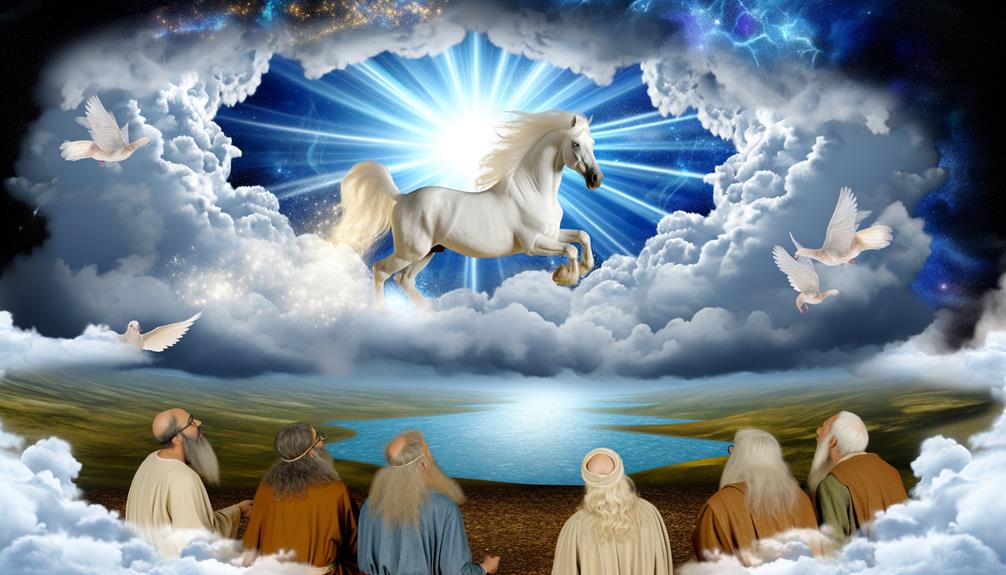
In addition to symbolizing power and strength, horses play a pivotal role in prophetic visions throughout the Bible, often serving as harbingers of divine messages and eschatological events. For instance, in the Book of Revelation, four horses represent different aspects of the apocalypse, each bearing a unique rider symbolizing conquest, war, famine, and death.
| Vision Source | Horse Color | Symbolism |
|---|---|---|
| Revelation 6:2 | White | Conquest |
| Revelation 6:4 | Red | War |
| Revelation 6:5 | Black | Famine |
| Revelation 6:8 | Pale (Chloros) | Death |
These prophetic horses underscore the profound ways in which equine imagery encapsulates divine communication and impending cosmic shifts. Their presence in these visions provides theological insights into the unfolding of God’s ultimate plan.
Divine Judgement and Horses
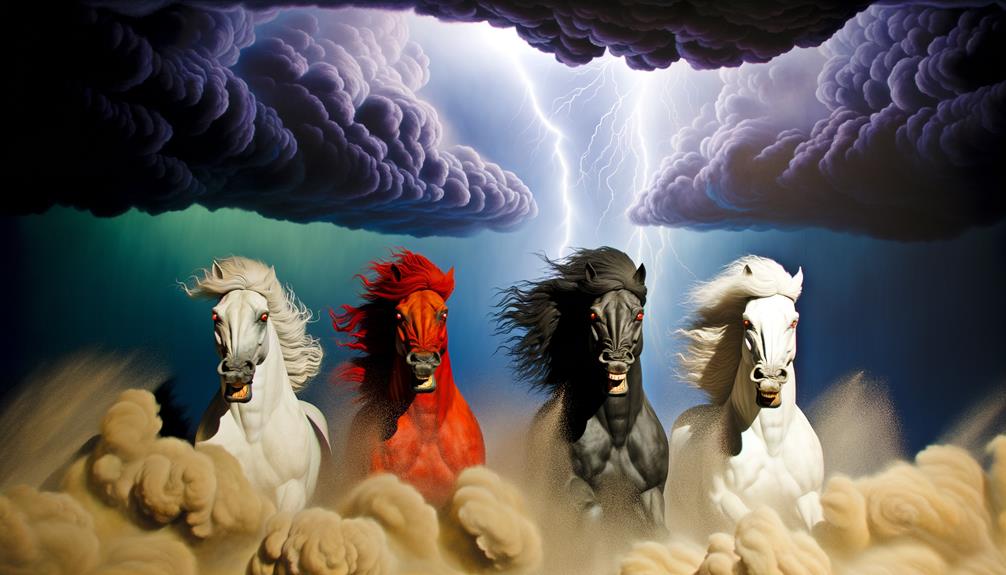
The motif of horses in the context of divine judgment underscores their role as instruments of God’s retributive justice, vividly depicted in various biblical narratives and eschatological frameworks.
Horses symbolize swiftness, power, and the execution of divine decrees, often associated with apocalyptic imagery. The Book of Revelation, for instance, presents the Four Horsemen as harbingers of divine wrath and cosmic upheaval. Similarly, Zechariah’s visions employ horses to convey God’s sovereign interventions.
- Revelation’s Four Horsemen: Symbolize conquest, war, famine, and death.
- Zechariah’s Patrol Horses: Represent divine watchfulness and judgment over the earth.
- Isaiah’s Prophecies: Horses as agents of impending judgment.
These instances highlight horses as central to understanding divine judgment in biblical theology.
Horses in Biblical Battles

In the biblical narrative, horses frequently emerge as potent symbols of strength and instruments of divine judgment in the context of warfare.
Their presence in battles underscores both human reliance on physical might and the theological assertion that God can use even the tools of war to fulfill divine purposes.
Throughout scripture, horses serve not merely as assets in combat but as embodiments of the broader cosmic struggle between divine sovereignty and human ambition.
Symbol of Strength
While often depicted as symbols of power and might, horses in biblical narratives frequently underscore the significance of divine strength over human military prowess. Horses are prominently featured in various scriptural accounts, emphasizing their role in battles and warfare. Yet, their presence often serves as a theological reminder that ultimate victory and strength lie with God, not man.
Psalm 20:7: “Some trust in chariots and some in horses, but we trust in the name of the Lord our God.”
Proverbs 21:31: “The horse is made ready for the day of battle, but victory rests with the Lord.”
Isaiah 31:1: A warning against relying on Egypt’s horses for security over God.
Revelation 19:11-16: Christ on a white horse symbolizes divine triumph.
Divine Judgement Tool
Scriptural accounts also portray horses as instruments of divine judgment, where their involvement in battles serves to execute God’s sovereign will and justice.
In prophetic literature, such as in the Book of Revelation, horses symbolize cataclysmic forces released upon the earth. Revelation 6:4-8 describes the Four Horsemen, each representing conquest, war, famine, and death, manifesting divine retribution.
Similarly, in the Old Covenant, horses in chariots often signify impending judgment upon nations, as seen in the prophetic visions of Zechariah (Zechariah 6:1-8).
These depictions underscore the theological concept that divine judgment is not arbitrary but is a controlled, purposeful act of divine sovereignty, where horses are pivotal mediums orchestrating the fulfillment of divine decrees.
Instruments of Warfare
Throughout biblical narratives, horses frequently emerge as pivotal assets in warfare, symbolizing not only military strength but also the broader strategic and theological implications of conflict in ancient times. Their presence in battles was multifaceted:
- Chariots and Cavalry: Horses provided mobility and speed, transforming the dynamics of engagement.
- Divine Favor or Judgment: Victories and defeats involving horses often signified divine intervention or judgment.
- Symbol of Power: Possessing horses was a mark of a nation’s military and economic strength.
In these contexts, horses transcended their practical role, becoming symbols deeply interwoven with the divine narratives and theological constructs of biblical warfare.
Elijah and the Chariots of Fire
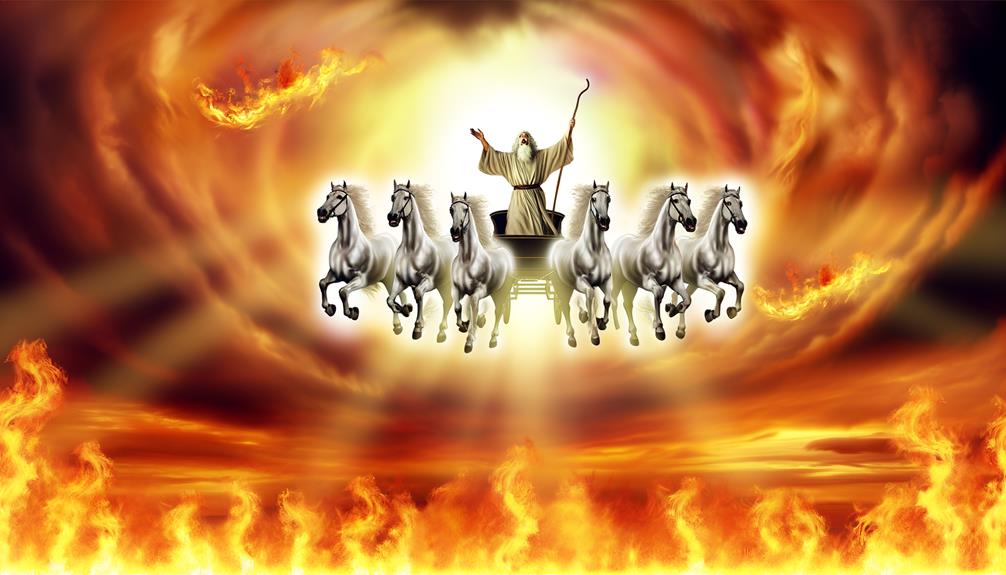
The account of Elijah and the Chariots of Fire, as depicted in 2 Kings 2:11, serves as a profound theological narrative illustrating both heavenly manifestations and the omnipotent authority of God.
The appearance of fiery horses and chariots underscores a divine intervention, offering a tangible representation of God’s power and majesty.
This imagery not only reinforces the celestial origin of Elijah’s departure but also symbolizes the protection and supremacy of the divine domain.
Heavenly Sightings Explained
When analyzing the heavenly sightings of Elijah’s chariots of fire, it becomes essential to explore the theological implications and symbolic meanings embedded within this profound biblical narrative. This event, recorded in 2 Kings 2:11, offers a rich tapestry of divine communication.
The chariots of fire serve not just as a dramatic mode of Elijah’s ascent but as a multifaceted symbol.
- Divine Presence: Represents God’s immediate and powerful presence.
- Heavenly Approval: Indicates divine endorsement of Elijah’s prophetic mission.
- Transition to Eternity: Symbolizes the passage from earthly to heavenly existence.
Understanding these elements deepens our appreciation of how biblical narratives convey complex theological truths.
Symbolism of Divine Power
Invariably, the chariots of fire associated with Elijah’s ascension symbolize the overwhelming and dynamic power of the divine, encapsulating both God’s omnipotence and His profound involvement in human affairs.
This vivid imagery, found in 2 Kings 2:11, not only highlights the divine authority but also serves as a metaphysical conduit, linking the celestial with the terrestrial.
The chariots, drawn by horses of fire, signify the transcendence of God’s power, reinforcing His ability to intervene directly in the mortal domain.
Theologically, this event underscores the divine prerogative to elevate prophets, thereby affirming their roles as intermediaries between God and humanity.
Such symbolism invites believers to recognize the omnipresent and active nature of divine power in their lives.
The Four Horsemen of Revelation
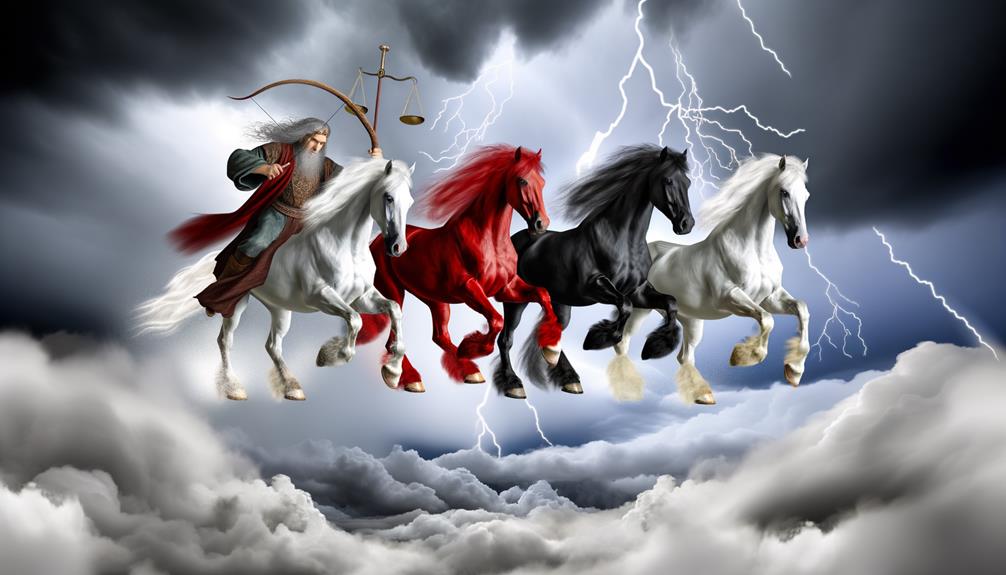
Emerging from the apocalyptic vision of the Apostle John, the Four Horsemen of Revelation symbolize profound and multifaceted themes of conquest, war, famine, and death. These eschatological figures, depicted in Revelation 6:1-8, serve as harbingers of divine judgment and societal upheaval.
Each horseman rides a distinctively colored horse, representing:
- White Horse: Conquest, often interpreted as either Christ or a figure of deceptive peace.
- Red Horse: War and bloodshed, symbolizing rampant violence.
- Black Horse: Famine, indicating economic disparity and scarcity.
The theological significance of these horsemen lies in their illustrative role of ushering in the end times, reflecting divine sovereignty over human history and its ultimate culmination.
Spiritual Lessons From Horses

Beyond their apocalyptic symbolism, horses in the Bible also offer profound spiritual lessons that illuminate aspects of faith, obedience, and divine interaction with humanity.
The strength and swiftness of horses, often depicted in biblical texts, serve as metaphors for God’s power and the urgency of heeding His call.
In Job 39:19-25, the warhorse’s bravery and unwavering spirit symbolize the courage believers must exhibit in spiritual battles.
Additionally, Psalm 32:9 admonishes against being like the horse, which requires bit and bridle, highlighting the importance of willing obedience to God’s guidance.
Horses therefore function as a dual emblem—both of divine might and the necessary discipline and responsiveness expected from the faithful in their spiritual journey.
Conclusion
Horses in the Bible serve as profound symbols of power, strength, and divine intervention. From prophetic visions to the battles that shaped Israelite history, their presence underscores significant theological motifs.
How do these equine figures illuminate the narratives of divine judgment and spiritual warfare? The imagery of horses, particularly in the accounts of Elijah and the Four Horsemen of Revelation, offers a compelling framework for understanding divine sovereignty and eschatological events.
Such symbolism continues to inspire deep theological reflection.