
Illyricum Meaning In The Bible: Missionary Journey
Illyricum, located in the western Balkan Peninsula, played a significant role in the Apostle Paul’s missionary efforts and is mentioned in Romans 15:19. Historically a Roman province, Illyricum served as both a strategic military zone and an economic hub due to its position along the Adriatic Sea.
Paul’s reference to Illyricum underscores the extent of his ministry, spreading the Gospel over vast regions. This mention highlights the geographic breadth of early Christianity’s expansion and the diverse cultural landscape encountered by missionaries.
For a deeper appreciation of Illyricum’s influence on biblical history, further exploration reveals its multifaceted significance.

Key Takeaways
- Mentioned in Romans 15:19: Apostle Paul refers to Illyricum as a boundary of his missionary journeys, emphasizing its role in spreading Christianity.
- Strategic Geographic Location: Illyricum’s mention highlights its importance as a frontier region, bridging Eastern and Western Roman territories.
- Missionary Outreach: The reference underscores the extensive reach of Paul’s ministry and the early church’s efforts to evangelize diverse populations.
- Cultural and Trade Hub: Illyricum’s inclusion in the Bible reflects its significance in facilitating economic, cultural, and religious exchanges within the Roman Empire.
Historical Background of Illyricum
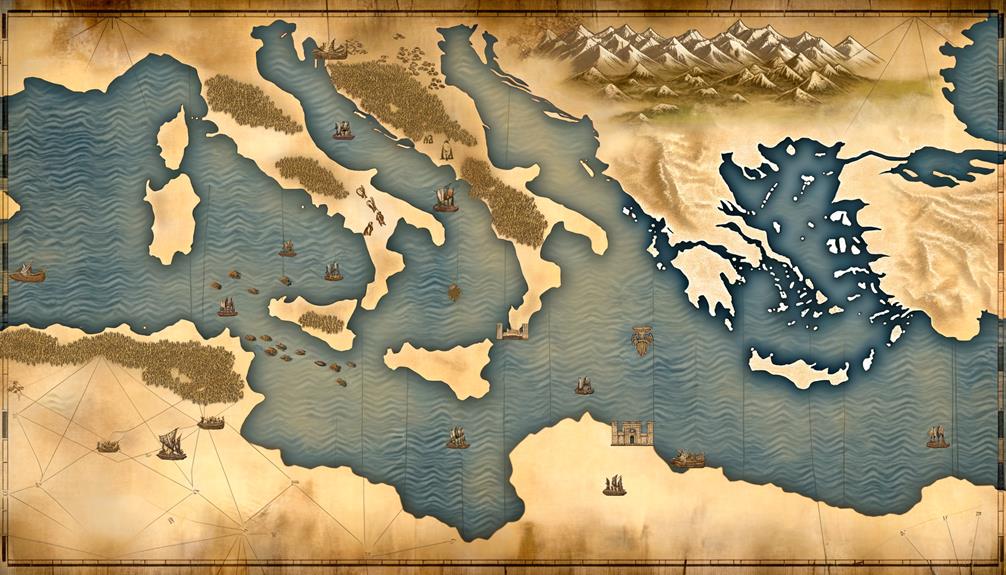
Illyricum, an ancient region situated along the western Balkan Peninsula, played a significant role in the geopolitical and cultural landscape of the Roman Empire.
Initially inhabited by the Illyrians, a group of tribes known for their distinct language and customs, the region was annexed by Rome in the 2nd century BCE. This incorporation brought significant military and administrative changes, transforming Illyricum into an essential Roman province.
The region served as a strategic buffer zone against northern barbarian incursions and facilitated trade routes across the Adriatic Sea. Additionally, Illyricum was notable for its contribution to the Roman military, supplying numerous soldiers and even emperors.
Understanding Illyricum’s historical context is imperative for comprehending its mention in biblical texts.
Geographical Significance
Strategically positioned along the Adriatic Sea, the region’s geographical significance is underscored by its role as an essential crossroads for trade and military routes in the ancient world. Illyricum’s location provided a crucial link between Eastern and Western Europe, facilitating cultural and economic exchanges.
Key elements enhancing its geographical importance include:
- Proximity to Italy and Greece: Enabled seamless maritime and overland connectivity.
- Mountainous Terrain: Offered natural fortifications and influenced settlement patterns.
- River Systems: The Drava and Sava rivers served as crucial transportation and trade channels.
- Rich Resources: The region was abundant in minerals and fertile lands, attracting various civilizations.
These factors collectively contributed to Illyricum’s strategic prominence in antiquity.
Illyricum in Roman Times

During Roman times, Illyricum emerged as a significant province, integral to the empire’s administrative structure and military strategy.
This region facilitated robust economic and cultural exchange, fostering interactions between various peoples and enhancing Rome’s influence.
The Roman provincial governance in Illyricum was marked by the establishment of military colonies, ensuring both security and the spread of Roman culture.
Roman Provincial Governance
Roman Provincial Governance in Illyricum epitomized the intricate administrative frameworks that Rome employed to maintain control over its diverse and expansive territories. This provincial organization not only facilitated military oversight but also guaranteed economic stability and cultural integration.
Key elements included:
- Military Presence: Legions stationed in Illyricum served as both a deterrent against rebellions and a means of securing Roman borders.
- Administrative Divisions: The province was divided into smaller administrative units, each overseen by local officials who reported to the Roman governor.
- Legal Systems: Roman law was implemented, promoting a standardized legal framework that facilitated governance and dispute resolution.
- Infrastructure Development: Roads, aqueducts, and public buildings were constructed to improve connectivity and public welfare, reinforcing Roman influence.
These elements underscore Rome’s strategic approach to provincial management.
Economic and Cultural Exchange
Illyricum emerged as an essential hub of economic and cultural exchange in Roman times, facilitated by its strategic location along key trade routes and its diverse population.
The region’s position along the Adriatic Sea connected it to major Mediterranean markets, while inland routes linked it to the Danube and beyond. This facilitated the flow of goods, such as metals, grains, and luxury items, fostering economic prosperity.
Cultural exchanges flourished as well, with Roman, Greek, and indigenous Illyrian traditions intermingling, evidenced by archaeological finds and historical records.
The amalgamation of languages, art forms, and religious practices created a rich tapestry of cultural diversity, making Illyricum a significant conduit for the diffusion of ideas and innovations within the Roman Empire.
Apostle Paul’s Missionary Journeys
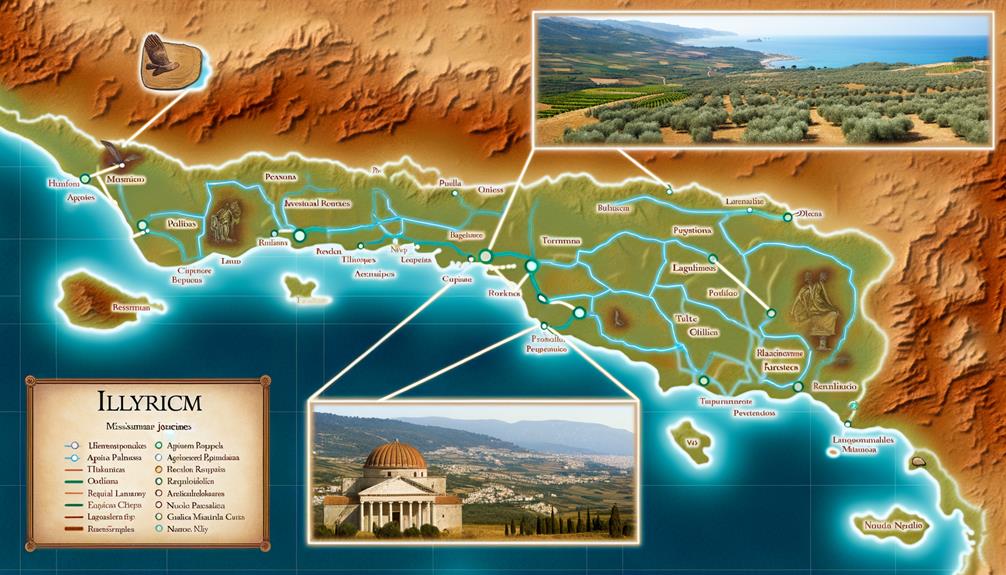
Apostle Paul’s missionary journeys, meticulously documented in the New Scriptures, highlight his extensive travels and evangelistic efforts across various regions, including Illyricum. These journeys are pivotal in understanding the spread of early Christianity.
Paul’s dedication is exemplified through:
- Preaching in synagogues and public spaces: He engaged with diverse audiences, ranging from Jews to Gentile converts.
- Establishing and nurturing new churches: His letters often provided spiritual guidance and resolved doctrinal conflicts.
- Facing persecution and hardships: Paul’s resilience under duress emphasized his unwavering commitment to his mission.
- Collaborating with local leaders: He built a network of co-workers and disciples who furthered his evangelical objectives.
These aspects underscore the strategic and expansive nature of Paul’s ministry.
Biblical References to Illyricum
In examining the geographic and spiritual scope of Paul’s missionary endeavors, it is remarkable that he explicitly mentions Illyricum in his epistle to the Romans, thereby highlighting the region’s significance in the spread of early Christianity.
Romans 15:19 states, ‘From Jerusalem and round about as far as Illyricum, I have fully preached the gospel of Christ.’ This reference underscores Illyricum as a boundary marker of Paul’s extensive travels and evangelical reach.
While detailed accounts of Paul’s activities in Illyricum are sparse, the mention suggests a strategic geographic point in his mission.
It also reflects the ambitious nature of Paul’s ministry, aiming to cover vast territories in his proclamation of the Gospel, hence emphasizing Illyricum’s role in his mission.
Role in Early Christianity
The region of Illyricum held a strategic position in the early Christian missionary efforts, serving as a critical juncture for the dissemination of the Gospel across diverse and expansive territories. This significance can be analyzed through several key aspects:
- Geographical Advantage: Illyricum’s location bridged the Eastern and Western Roman Empire, facilitating movement and communication.
- Pauline Missions: The Apostle Paul mentioned Illyricum in Romans 15:19, indicating its role in his extensive missionary journeys.
- Cultural Interactions: The region’s diverse population provided a fertile ground for the spread of Christianity among different ethnic groups.
- Roman Influence: As a Roman province, Illyricum benefited from the administrative and infrastructural stability of the Empire, aiding missionary activities.
This combination of factors underscores Illyricum’s pivotal role in early Christian history.
Modern Understanding of Illyricum

Contemporary scholarship on Illyricum integrates archaeological findings, historical records, and biblical texts to construct a nuanced understanding of its role and significance in ancient times.
Modern archaeological excavations have unearthed artifacts and settlements that illustrate Illyricum’s strategic importance in the Roman Empire, particularly as a military and trade hub.
Historical records, including Roman administrative documents, provide insight into the governance and economic activities in the region.
Biblical references, especially in the New Covenant, highlight Illyricum as a frontier for early Christian missionary activities, as evidenced by Apostle Paul’s travels.
This multidisciplinary approach enables scholars to contextualize Illyricum within the broader framework of ancient Mediterranean geopolitics and religious movements, enriching our comprehension of its historical and biblical relevance.
Conclusion
The tale of Illyricum, like a dormant seed in the soil of biblical history, blooms with hidden significance upon closer examination.
Nestled in the confluence of geography, Roman influence, and early Christian fervor, it served as both a backdrop and a stage for the Apostle Paul’s evangelical voyages.
Its sparse yet poignant mentions in scripture cast long shadows, hinting at a pivotal role in the spread of nascent Christianity.
Consequently, Illyricum’s legacy, though often overlooked, remains indelible in the annals of sacred history.