
Palmerworm Meaning In The Bible: Symbol of Devastation
The palmerworm in the Bible, particularly referenced in the Book of Joel, serves as a symbol of divine judgment and the initial agent of devastating locust plagues. Joel 1:4 presents the palmerworm as the forerunner in a sequence of destructive stages, embodying escalating divine retribution.
Acting as a metaphor for the ruin brought upon by sin, the palmerworm underscores the necessity for repentance and spiritual renewal. The historical context of these plagues emphasizes agricultural vulnerability and divine sovereignty.
Exploring this further reveals deep insights into the themes of judgment, redemption, and renewal embedded within biblical prophetic literature.

Key Takeaways
- In the Bible, the palmerworm symbolizes initial stages of divine judgment and devastation, primarily seen in the Book of Joel.
- It represents the beginning phase of a sequence of destructive locusts, emphasizing escalating divine retribution.
- The palmerworm underscores themes of repentance and spiritual renewal, urging recognition of sins and dependence on divine providence.
- Its mention signifies God’s sovereign control over nature, acting as a reminder of the consequences of disobedience.
Biblical References to Palmerworm

The term ‘palmerworm‘ appears in several passages within the Bible, most notably in the book of Joel, where it symbolizes devastation and divine judgment.
Joel 1:4 describes a sequence of destructive locusts, with the palmerworm being the initial agent of ruin. This term underscores the thorough nature of the calamity that befalls Israel as a consequence of their disobedience.
Historical and theological analysis suggests that the palmerworm represents the beginning stages of an escalating divine retribution. The Septuagint and other ancient translations render the term variably, reflecting its considerable impact across different cultures and epochs.
Understanding the biblical references to palmerworm involves contextualizing it within the broader narrative of prophetic literature, emphasizing themes of repentance and restoration.
Symbolism of Insects in Scripture

In the Bible, insects often serve as potent metaphors, representing both divine judgment and providence. They function as messengers of God’s will, illustrating spiritual truths through their appearances and actions, as seen in the prophetic books and wisdom literature.
Additionally, the plagues involving insects, such as those in Exodus, highlight profound spiritual lessons about obedience, repentance, and the sovereignty of God.
Biblical Insect Metaphors
How do insects, such as the palmerworm, serve as profound metaphors within Biblical scripture, embodying themes of destruction, judgment, and divine intervention? In the Bible, insects often symbolize broader theological truths, acting as agents of God’s will. The palmerworm, locust, and caterpillar frequently appear in prophetic texts, illustrating divine retribution and the consequences of human disobedience. These metaphors underscore the transient nature of earthly resources and God’s ultimate authority over creation.
| Insect | Biblical Symbolism |
|---|---|
| Palmerworm | Destruction, Judgment |
| Locust | Divine Retribution, Famine |
| Caterpillar | Transformation, Renewal |
| Ant | Diligence, Wisdom |
| Bee | Prosperity, Community |
Through these symbolic creatures, scripture conveys lessons on morality, the impermanence of worldly wealth, and the need for spiritual vigilance.
Insects as Divine Messengers
Many instances within Biblical scripture illustrate how insects serve as divine messengers, embodying God’s communication with humanity through their symbolic presence and actions.
The locust, for example, is frequently depicted as an instrument of divine judgment, as seen in Joel 1:4, where its devastation symbolizes impending spiritual desolation.
Similarly, Proverbs 6:6-8 extols the ant’s industriousness as a model for human diligence and wisdom.
In Exodus 8:21, the plague of flies conveys a direct divine warning to Pharaoh.
These instances demonstrate that insects are not mere nuisances but are imbued with profound theological significance.
Insect Plagues’ Spiritual Lessons
Throughout Biblical scripture, insect plagues serve as profound symbols, embodying spiritual lessons and divine retribution.
In texts such as Joel and Exodus, swarms of locusts, palmerworms, and other insects are depicted as instruments of God’s judgment, emphasizing the consequences of disobedience.
The relentless devastation wrought by these plagues symbolizes the destructive power of sin and the urgency of repentance.
Historically, these narratives underscore the vulnerability of agrarian societies to natural calamities, thereby reinforcing dependence on divine providence.
Theologically, they illustrate the principle that divine correction, though severe, aims at restoration and renewal.
Context in the Book of Joel
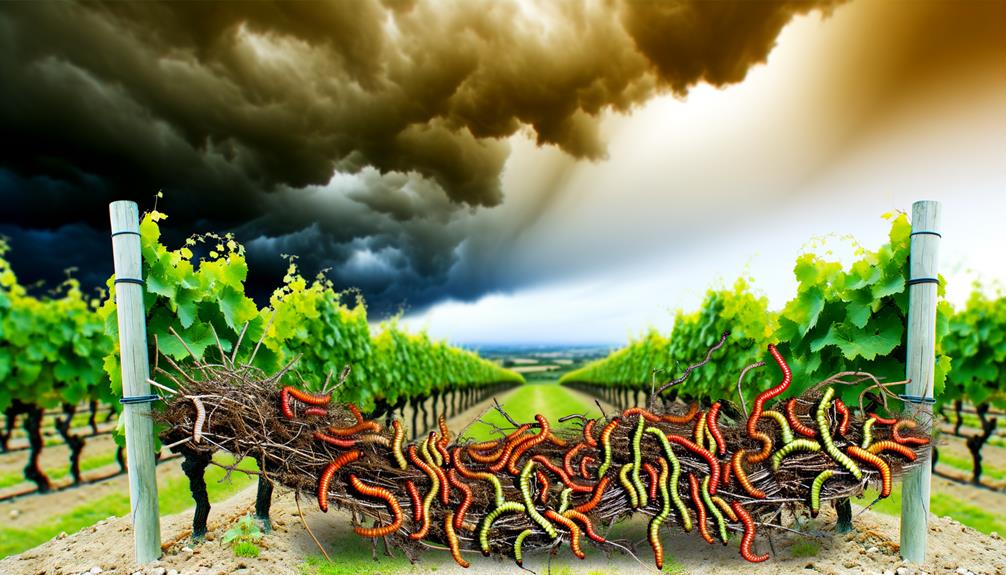
The Book of Joel presents the palmerworm as part of a devastating locust plague, symbolizing divine judgment and a call for repentance. Joel 1:4 describes a sequence of locusts—palmerworm, locust, cankerworm, and caterpillar—each consuming what the previous left. This imagery underscores the completeness of the destruction and the severity of the judgment faced by Israel.
Historically, locust plagues were catastrophic, causing famine and economic collapse. Theologically, Joel’s use of the palmerworm serves as a metaphor for the pervasive and successive nature of divine retribution.
The prophet Joel urges the people to recognize their sins and turn back to God, using the palmerworm to emphasize the urgency and necessity of spiritual renewal amidst tangible suffering.
Palmerworm and Divine Judgment

How does the palmerworm embody the profound nature of divine judgment in biblical theology?
The palmerworm, mentioned in the Book of Joel, acts as an instrument of God’s retribution. In Joel 1:4, the locust plague, including the palmerworm, symbolizes a divine punitive measure against Israel’s transgressions.
Theologically, this infestation signifies God’s sovereign control over nature and His capacity to use it to enforce moral and spiritual discipline. Historically, locust invasions were catastrophic, leading to famine and social upheaval.
Scripturally, the palmerworm’s devastation serves as a tangible manifestation of divine displeasure, urging repentance and spiritual renewal. Consequently, the palmerworm is not merely an insect but a divine agent underscoring the gravity of sin and the necessity for redemption.
The Quartet of Destructive Insects

Frequently in the Hebrew Scriptures, the quartet of destructive insects—locust, cankerworm, caterpillar, and palmerworm—represents a multifaceted divine judgment, each species embodying a distinct aspect of God’s punitive measures against Israel.
This imagery primarily appears in prophetic texts such as Joel and Amos, where these insects symbolize successive waves of devastation.
The locust often denotes overwhelming swarms consuming everything in their path, while the cankerworm and caterpillar represent stages of destruction and consumption.
The palmerworm, or gazam in Hebrew, is frequently associated with the initial phase of desolation.
In historical context, these insects serve as metaphors for invading armies or prolonged periods of hardship, emphasizing the severity and all-encompassing nature of divine chastisement.
Spiritual Lessons From Palmerworm

Drawing from its biblical representation, the palmerworm serves as a profound symbol of the initial stages of divine intervention intended to prompt spiritual introspection and repentance.
Its presence in Scripture underscores several spiritual lessons that resonate deeply within the context of faith:
- Divine Judgment: The palmerworm signifies God’s initial phase of judgment, calling for immediate recognition of sin.
- Repentance: It serves as a catalyst for repentance, urging believers to turn away from wrongdoing and towards spiritual renewal.
- Restoration: The destructive nature of the palmerworm highlights the necessity of divine intervention for restoration and healing.
- Vigilance: It teaches the importance of spiritual vigilance, reminding believers to remain steadfast in faith and obedience.
These lessons provide a roadmap for spiritual growth and divine alignment.
Historical Impact and Interpretation

In examining the historical impact and interpretation of the palmerworm within biblical texts, one must consider its symbolic significance as depicted in passages such as Joel 1:4.
This locust-like insect is often interpreted as a metaphor for divine judgment and societal decay, reflecting the agricultural and economic conditions of ancient Israel.
Understanding the cultural context in which these references were made provides deeper insights into the theological implications and the lived experiences of the biblical audience.
Biblical Text References
Numerous biblical passages mention the palmerworm, each contributing to a profound theological understanding and historical context that shapes its interpretation. These references highlight the nuanced role of the palmerworm in the biblical narrative:
- Joel 1:4 – Describes the palmerworm as an agent of devastation, symbolizing divine judgment.
- Amos 4:9 – Emphasizes the palmerworm in God’s warnings, reflecting divine retribution and a call to repentance.
- Deuteronomy 28:38 – Illustrates the consequences of disobedience, with the palmerworm consuming crops as a form of divine punishment.
- 1 Kings 8:37 – Highlights the palmerworm among other plagues, underscoring its significance in the collective memory of Israel’s trials.
These scriptural instances elevate the palmerworm as a critical element in conveying theological themes of judgment, repentance, and divine sovereignty.
Symbolic Significance Explained
The symbolic significance of the palmerworm in biblical texts extends beyond its immediate depiction as a pest, encapsulating themes of divine judgment, moral consequence, and covenantal faithfulness.
Scriptural references, particularly in the book of Joel, use the palmerworm as a metaphor for devastation wrought by disobedience to God’s commandments.
Historically, this imagery underscores the severity of divine retribution and the necessity for repentance and spiritual renewal.
The palmerworm, consequently, serves as a tangible representation of the cyclical nature of sin and redemption in Israel’s history.
This interpretative lens reveals the broader theological narrative, wherein natural calamities are intertwined with divine actions, emphasizing the enduring call for adherence to God’s covenant.
Cultural Context Insights
Understanding the historical impact and interpretation of the palmerworm in biblical times necessitates an exploration of the ancient Near Eastern agricultural practices and the socio-religious context in which these texts were written.
The palmerworm, often associated with crop devastation, held profound significance:
- Agricultural Vulnerability: Crop destruction by pests like the palmerworm symbolized economic and food insecurity.
- Divine Judgment: In prophetic literature, palmerworm invasions were frequently depicted as instruments of divine retribution.
- Symbol of Repentance: The call to repentance was often linked with the ravages caused by the palmerworm, urging communities to return to covenantal faithfulness.
- Eschatological Hope: Restoration promises included the eradication of such pests, symbolizing divine mercy and future abundance.
This multifaceted understanding underscores the palmerworm’s role in conveying deeper theological and existential truths.
Palmerworm in Modern Theology

In contemporary theological discourse, the palmerworm is frequently interpreted as a symbol of divine judgment and restoration within the broader narrative of scriptural prophecy. This interpretation is rooted in the prophetic texts, particularly in the book of Joel, where the palmerworm is part of a sequence of locust plagues symbolizing God’s chastisement and eventual mercy. The palmerworm, along with other locusts, represents stages in the spiritual and moral decline of a community, followed by divine intervention for renewal.
| Aspect | Symbolism | Scriptural Reference |
|---|---|---|
| Divine Judgment | Chastisement | Joel 1:4 |
| Restoration | Renewal | Joel 2:25 |
| Spiritual Decline | Moral Degradation | Joel 1:6-7 |
| Prophetic Vision | Divine Mercy | Joel 2:18-27 |
This multifaceted symbol underscores the intricate relationship between sin, punishment, and redemption.
Applying Biblical Lessons Today

By examining the symbolic representation of the palmerworm within the book of Joel, contemporary believers can derive meaningful insights into the dynamics of divine judgment and restoration applicable to modern spiritual life. The palmerworm, a metaphor for destruction, ultimately serves as a precursor to divine restoration and renewal.
Divine Judgment: The palmerworm signifies the consequences of turning away from God’s commandments, illustrating the severity of divine judgment.
Call to Repentance: Joel’s narrative urges believers to reflect on their spiritual state and return to God with genuine contrition.
Hope and Restoration: The eventual restoration promised by God underscores His mercy and readiness to heal and renew.
Spiritual Vigilance: Continuous spiritual vigilance is essential to safeguard oneself from moral and spiritual decay.
These lessons remain profoundly relevant today.
Conclusion
The palmerworm, as depicted in biblical texts, signifies divine judgment and spiritual decay. It serves as a symbol of destruction and renewal, underscoring the cyclical nature of sin and redemption.
This insect, along with its destructive counterparts, illustrates profound theological truths about human frailty and divine sovereignty. Historical interpretation and modern theology both reflect the enduring relevance of these scriptural lessons.
The palmerworm remains a powerful metaphor for understanding divine justice, human repentance, and spiritual restoration.