
Pavilion Meaning In The Bible: Divine Protection
In the Bible, the term ‘pavilion’ is often employed metaphorically to denote a sacred refuge or dwelling place that signifies divine protection and presence. It frequently appears in the Old Covenant, portraying God’s shelter amid adversities, as seen in texts like Psalm 27:5 and Isaiah 4:6.
These references underscore themes of spiritual solace and divine guardianship. While less prominent in the New Covenant, the pavilion retains its symbolic essence of divine protection and communion.
This multifaceted symbol enriches the theological discourse, highlighting God’s omnipotent protection and presence. To explore its deeper implications, further examination can be undertaken.

Key Takeaways
- Pavilion signifies God’s protective shelter for His people during adversities.
- Represents a sacred meeting place for divine-human interactions in the Old Testament.
- Symbolizes spiritual solace and intimate relationship with God.
- Emphasizes divine refuge and guardianship in psalms like Psalm 27:5 and Psalm 31:20.
Biblical Definition of Pavilion

The term ‘pavilion’ in the Bible is often used metaphorically to describe a shelter or dwelling place that conveys protection and divine presence. This figurative language encapsulates the notion of God providing refuge to His people, offering a sanctuary from adversities.
In biblical texts, a pavilion signifies not just physical safety but also spiritual solace, symbolizing the intimate relationship between God and His followers. The imagery of a pavilion evokes a sense of divine guardianship, where God’s providence and care are ever-present.
This term, consequently, transcends its literal meaning, embedding itself in theological discussions as a representation of God’s omnipotent protection and the sacred space He creates for communion with humanity.
Old Testament References

Old Covenant references to pavilions frequently signify symbolic divine shelter, as seen in passages like Psalm 27:5, where God’s protection is metaphorically described as a pavilion.
Additionally, these structures are depicted as sacred meeting places, such as in 1 Kings 7:2, which narrates the construction of Solomon’s Palace of the Forest of Lebanon.
The concept of pavilions also extends to protective enclosures, offering a tangible sense of security and sanctity within the broader narrative of God’s covenantal relationship with His people.
Symbolic Divine Shelter
In the Old Scriptures, the pavilion often symbolizes God’s protective shelter over His people, manifesting as a divine refuge amidst adversities. This theme is prevalent throughout the Old Covenant, where the pavilion serves as a metaphor for God’s omnipresent guardianship and sanctuary.
Key references include:
- Psalms 27:5 – ‘For in the day of trouble He will keep me safe in His dwelling; He will hide me in the shelter of His sacred tent and set me high upon a rock.’
- Isaiah 4:6 – ‘There will be a booth for shade by day from the heat, and for a refuge and a shelter from the storm and rain.’
- Psalms 31:20 – ‘In the shelter of Your presence You hide them from all human intrigues.’
These verses underscore the pavilion as a symbol of divine protection and solace.
Sacred Meeting Places
Numerous passages in the Old Scripture highlight the pavilion as a sacred meeting place where divine-human interactions occur, emphasizing its role in facilitating covenantal encounters.
For instance, the Tent of Meeting, described in Exodus, serves as a mobile sanctuary, where Moses would commune directly with God (Exodus 33:7-11). This tent embodies the concept of a pavilion as a designated space for divine revelation and guidance.
Similarly, the Tabernacle, a more elaborate structure described in Exodus 25-27, functions as a divine dwelling among the Israelites, reinforcing the pavilion’s significance.
These sacred spaces not only provide a venue for worship but also symbolize God’s ongoing presence and the establishment of His covenant with His people.
Protective Enclosures
Several passages in the Old Scripture present the pavilion as a protective enclosure, symbolizing divine shelter and security for the faithful.
This motif is evident in various contexts, where the pavilion serves as a metaphor for God’s safeguarding presence.
Key references include:
- Psalm 27:5 – ‘For in the time of trouble he shall hide me in his pavilion: in the secret of his tabernacle shall he hide me; he shall set me up upon a rock.’
- Isaiah 4:6 – ‘And there shall be a tabernacle for a shadow in the daytime from the heat, and for a place of refuge, and for a covert from storm and from rain.’
- Psalm 31:20 – ‘Thou shalt hide them in the secret of thy presence from the pride of man: thou shalt keep them secretly in a pavilion from the strife of tongues.’
These passages underscore the pavilion’s role as a symbol of divine protection.
New Testament Mentions

While the concept of a pavilion is more prominently featured in the Old Scripture, its presence and symbolic significance in the New Scripture warrant a closer examination to understand its thematic continuity and theological implications.
In the New Covenant, explicit references to pavilions are sparse, yet the metaphorical essence persists. For instance, the imagery of God’s encompassing presence resonates with pavilion-like shelter, reflecting divine protection and communion.
This subtle continuity underscores the shift from physical structures to spiritual symbolism, aligning with the New Covenant’s emphasis on internal faith over external rituals.
Understanding these nuances enriches the theological discourse, bridging the Covenants and deepening the comprehension of biblical symbolism in conveying divine intimacy and refuge.
Pavilion as Divine Shelter

In biblical literature, the pavilion is often depicted as a symbol of divine shelter, representing God’s protective and encompassing presence over His people. This imagery is utilized to convey the assurance of safety and refuge provided by God in times of trouble.
The concept of divine shelter can be examined through various texts and contexts:
- Exodus 33:22: God places Moses in a cleft of the rock and covers him with His hand, symbolizing divine protection and presence.
- Isaiah 4:6: The pavilion is described as a shelter from the storm and rain, highlighting God’s role as a protector.
- Psalm 27:5: The psalmist speaks of being hidden in God’s pavilion, underscoring the divine promise of security and sanctuary.
Symbolism in Psalms

In the Psalms, the pavilion frequently symbolizes divine protection, portraying God as a sanctuary that offers safety and solace.
This imagery underscores the sacred shelter significance, where the pavilion serves as a metaphor for the intimate refuge believers find in worship.
Consequently, the pavilion not only represents a physical space but also embodies the spiritual haven provided by a trusting relationship with the divine.
Divine Protection Imagery
The Psalms frequently employ the imagery of a pavilion to symbolize divine protection, portraying it as a sacred shelter where the faithful find refuge. This metaphor is rich in theological significance, emphasizing God’s role as a protector and provider.
Specifically, Psalms depict this divine pavilion as:
- A Place of Safety: Psalm 27:5 describes God hiding the faithful in His pavilion during times of trouble, highlighting divine protection.
- A Source of Comfort: Psalm 31:20 speaks of God’s pavilion shielding believers from the strife of tongues, suggesting emotional and spiritual solace.
- A Symbol of God’s Presence: Psalm 61:4 conveys the desire to dwell in God’s tent forever, symbolizing continuous communion with the divine.
These elements underscore the multifaceted nature of divine protection in biblical theology.
Sacred Shelter Significance
Symbolism in the Psalms often elevates the concept of a sacred shelter, portraying it as an emblem of divine guardianship and spiritual sanctuary.
Within the poetic verses, terms like ‘pavilion’ and ‘tabernacle’ are frequently employed to depict God’s protective presence. For instance, Psalm 27:5 states, ‘For in the time of trouble He shall hide me in His pavilion.’ This imagery reflects not only physical protection but also a profound sense of spiritual refuge.
The sacred shelter serves as a metaphor for God’s encompassing care, offering believers a haven from life’s adversities.
Analyzing these symbols within their historical and literary contexts illuminates their function as powerful assurances of God’s unwavering protection and intimate fellowship.
Refuge in Worship
Psalmic references to ‘pavilion’ and ‘tabernacle’ underscore the intrinsic connection between divine refuge and the act of worship, illustrating how sacred spaces are central to experiencing God’s presence and protection.
In Psalms, these terms symbolize not just physical structures, but also spiritual sanctuaries where believers find solace.
- Psalm 27:5 – ‘For in the time of trouble he shall hide me in his pavilion: in the secret of his tabernacle shall he hide me; he shall set me up upon a rock.’ This verse exemplifies the pavilion as a divine refuge.
- Psalm 31:20 – ‘Thou shalt hide them in the secret of thy presence from the pride of man.’ This highlights God’s protective presence.
- Psalm 61:4 – ‘I will abide in thy tabernacle for ever.’ This signifies eternal refuge in divine worship.
Prophetic Imagery

In the domain of prophetic imagery, the pavilion often serves as a metaphorical construct denoting divine protection and presence. This imagery is prominently illustrated in Psalms, where the pavilion symbolizes God’s safeguarding embrace amidst turmoil.
For instance, Psalm 27:5 portrays the pavilion as a secure, hidden abode where the faithful are shielded from adversities. The prophetic use of the pavilion extends beyond mere physical shelter, suggesting an ethereal sanctuary that encompasses spiritual reassurance and divine intimacy.
Such metaphors underscore the transcendent nature of God’s protection, offering believers a profound sense of security and communion. This symbolic representation enriches the biblical narrative, imbuing the text with deeper theological nuances that resonate through prophetic literature.
Hebrew and Greek Terms
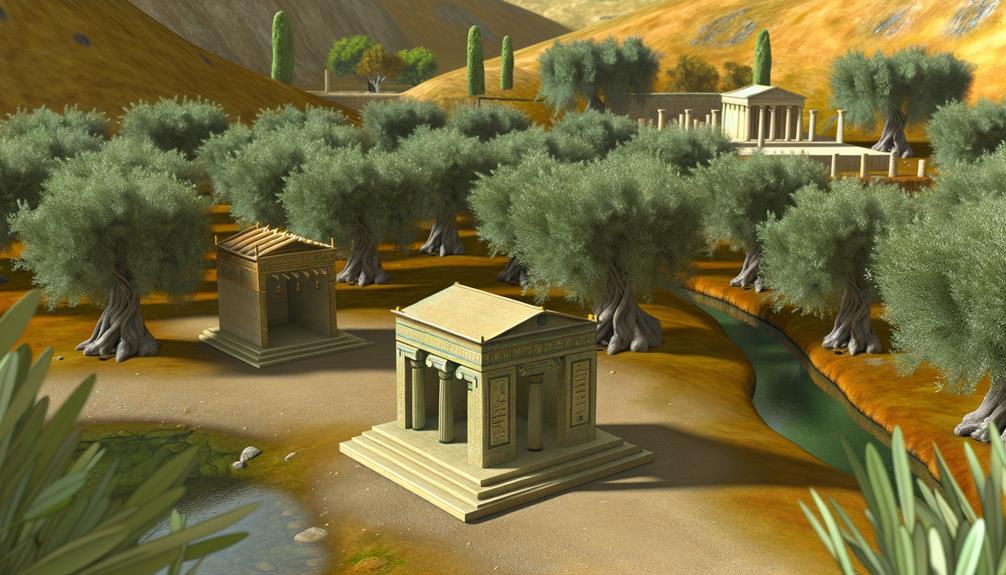
The term ‘pavilion‘ in biblical texts is anchored in distinct Hebrew and Greek linguistic traditions, each contributing nuanced meaning.
In the Hebrew Scriptures, ‘pavilion’ is often translated from the word ‘sukkah,’ which denotes a temporary shelter or booth, reflecting cultural and religious practices such as the Feast of Tabernacles.
Meanwhile, the Greek term ‘skēnē’ provides a broader context, frequently associated with tabernacles or tents, consequently signifying a place of divine encounter and sanctuary.
Hebrew Pavilion References
How does the term ‘pavilion’ in Hebrew and Greek texts reflect the conceptual and theological nuances present in biblical scripture?
In Hebrew, the word ‘סּלכָל’ (sukkah) often translates to pavilion or booth, conveying a temporary shelter, symbolizing divine protection and transience. This term is deeply embedded in Jewish tradition, especially during the Feast of Tabernacles (Sukkot).
The Hebrew references to pavilions emphasize:
- Divine Protection: Pavilions symbolize God’s safeguarding presence (Psalm 27:5).
- Transitory Nature: Reflects the fleeting nature of human life and reliance on God (Leviticus 23:42-43).
- Sacred Space: Used in contexts that illustrate sanctified environments where divine-human encounters occur (2 Samuel 22:12).
These aspects underscore the theological richness and significance of pavilions in scripture.
Greek Pavilion Context
Greek texts often employ the term ‘σκηνή’ (skēnē), meaning tent or tabernacle, which similarly encapsulates themes of divine presence and temporal shelter within biblical narratives.
This term appears prominently in the Septuagint, the Greek translation of the Hebrew Bible, where it translates the Hebrew word ‘mishkan.’ ‘Skēnē’ is essential in understanding the theological concept of God dwelling among His people.
In the New Covenant, ‘skēnē’ is used in the context of the Transfiguration (Matthew 17:4) and in Revelations (21:3) to signify the divine presence.
Consequently, the Greek term maintains the symbolic representation of a pavilion, emphasizing the intersection of the sacred and the temporal, a consistent theme throughout biblical texts.
Pavilion in Tabernacle

Within the context of the Tabernacle, the term ‘pavilion’ often signifies a temporary, sacred dwelling place symbolizing God’s presence among His people. This notion is deeply rooted in the Old Scripture, where the Tabernacle served as a mobile sanctuary during the Israelites’ journey through the wilderness.
The concept of a pavilion, in this case, encapsulates several key aspects:
- Divine Presence: The pavilion represents God’s immediate presence, guiding and protecting the Israelites.
- Transience: It underscores the nomadic lifestyle of the Israelites, reflecting the temporality of their earthly pilgrimage.
- Sacred Space: It delineates a consecrated area designated for worship and communion with God.
This contextual understanding highlights the multifaceted role of the pavilion within the Tabernacle’s framework.
Spiritual Significance

Moving from the physical embodiment within the Tabernacle, the pavilion’s spiritual significance emerges as a profound metaphor for divine shelter and protection.
In biblical texts, the pavilion symbolizes a sacred space where the believer finds refuge and solace under God’s watchful care. This metaphorical usage extends beyond mere physical shelter, touching on the deeper theological themes of spiritual sanctuary and divine guardianship.
The pavilion, consequently, serves as a tangible representation of God’s promise to shield and nurture His faithful. By invoking the pavilion, Scripture underscores God’s omnipresence and the intimate relationship between the Creator and His creation.
Accordingly, its spiritual significance offers believers a potent reminder of the divine covenant and the protection afforded to them.
God’s Presence and Protection

The concept of the pavilion in the Bible intricately weaves together the themes of God’s presence and protection, serving as a vivid illustration of divine guardianship and intimate communion with the Creator. This imagery is prevalent throughout Scripture, symbolizing a sacred space where believers are shielded from harm and can experience God’s nearness.
Key points include:
- Divine Shelter: Psalms often describe God as a pavilion, providing refuge and safety (Psalm 27:5).
- Sacred Encounter: The pavilion signifies a place of holy interaction, emphasizing God’s accessibility and relational nature (Psalm 61:4).
- Spiritual Protection: Scriptural metaphors of the pavilion underscore God’s role as a protector against spiritual adversaries (Psalm 31:20).
These elements collectively highlight the profound nature of God’s protective presence.
Conclusion
The term ‘pavilion’ in biblical texts encapsulates profound layers of meaning, ranging from divine shelter to symbols of God’s omnipresent protection.
The Old and New scriptures references reveal a rich tapestry of theological significance.
Pavilion imagery in Psalms, along with its Hebrew and Greek terms, underscores its role within the Tabernacle and spiritual constructs.
The concept is not merely an architectural element but a monumental emblem of God’s enduring presence and boundless protection throughout biblical history.