
Meaning of Dan in the Bible: Judge of Israel
Dan is a prominent biblical figure, whose name, derived from the Hebrew verb ‘din’, meaning ‘to judge’, encapsulates themes of divine judgment and justice. Dan first appears in Genesis when Rachel names her son, proclaiming, ‘God has judged me,’ hinting at his future role in Israelite society.
Jacob’s blessing in Genesis 49 elevates Dan as a judge among tribes, yet also warns of potential peril, likening him to a serpent. The tribe’s legacy includes both its judicial authority and military prowess, but also instances of apostasy and conflict.
To explore Dan’s multifaceted role in biblical history and prophecy, further investigation is essential.

Key Takeaways
- Dan means ‘to judge’ or ‘to vindicate’ in Hebrew, reflecting judicial authority and a quest for justice.
- Rachel named her son Dan, signifying ‘God has judged me’ (Genesis 30:6), highlighting a divine judgment theme.
- Jacob’s blessing (Genesis 49:16-18) predicted Dan’s role as a judge and a potentially perilous protector.
- The tribe of Dan played a significant military role and faced challenges along the Mediterranean coast and Philistine conflicts.
Etymology of ‘Dan’
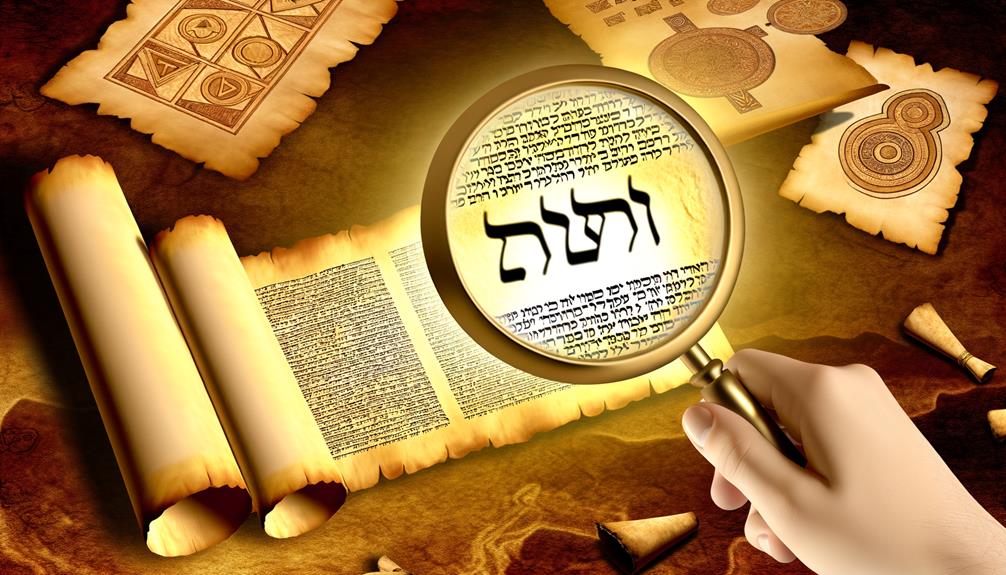
The etymology of the name ‘Dan’ in the Bible is deeply rooted in the Hebrew language, where it originates from the verb דִּין (din), meaning ‘to judge‘ or ‘to vindicate.’ This etymological foundation underscores the theological significance of the name.
In the biblical context, names often reflect divine purpose or prophetic destiny. The name ‘Dan’ embodies a judicial role, symbolizing authority and discernment.
Historically, the name is first encountered in Genesis when Rachel names her son Dan, proclaiming, ‘God has judged me‘ (Genesis 30:6). This declaration aligns with the broader narrative of justice and vindication, themes that resonate throughout the biblical text, providing a profound lens through which to understand the character and legacy of Dan.
Dan in Jacob’s Blessings

Jacob’s blessings to his son Dan, as found in Genesis 49:16-18, encapsulate a profound symbolic significance and prophetic role that extends beyond the individual to the destiny of the ancient tribe.
Jacob’s words, ‘Dan shall judge his people,’ underscore the tribe’s future judicial authority and imply a broader theological implication of justice.
Additionally, the imagery of Dan as a ‘serpent by the roadside‘ adds layers of complexity to his legacy, hinting at both protective and potentially perilous elements within Israel’s narrative.
Dan’s Symbolic Significance
Emerging from Jacob’s prophetic blessings in Genesis 49, Dan’s symbolic significance is intricately tied to themes of justice and serpentine cunning.
Jacob’s proclamation, ‘Dan shall judge his people,’ underscores Dan’s role as a tribe endowed with judicial authority. This judicial aspect aligns with the historical accounts of Dan as a leader among Israel’s tribes.
Additionally, the imagery of Dan as a serpent ‘by the way’ and ‘an adder in the path’ suggests a nuanced, tactical approach to justice, often employing cunning to achieve righteous ends.
Theologically, this duality in Dan’s character reflects a broader biblical motif where justice and wisdom often intermingle, portraying a complex interplay of morality and strategy within the divine narrative.
Prophetic Role of Dan
In the prophetic blessings of Genesis 49, Dan’s role is delineated with a profound emphasis on judicial authority and strategic wisdom, reflecting his intricate position within the Israelite narrative.
Jacob proclaims, ‘Dan shall judge his people, as one of the tribes of Israel’ (Genesis 49:16), indicating a divinely-ordained role in dispensing justice.
Further, he is likened to a serpent by the roadside, symbolizing his capacity for cunning and tactical prowess. This characterization underscores a theological insight: Dan’s leadership is not through overt strength but through shrewdness and discernment.
Historically, this portrayal aligns with the tribe’s later actions in Israelite history, emphasizing their unique contribution to the collective identity and governance of the Israelite tribes.
Ancient Tribe’s Destiny
The destiny of the tribe of Dan, as articulated in Jacob’s blessings, reveals a complex interplay of judicial authority and cunning strategy that shaped their historical and theological identity within Israel.
In Genesis 49:16-17, Jacob prophesies that Dan will ‘provide justice for his people as one of the tribes of Israel’ and be ‘a serpent by the roadside.’ This dual identity encapsulates both the tribe’s role in ensuring justice and its reputation for subtlety and unpredictability.
Historically, the tribe’s relocation to the northern part of Israel further accentuated their strategic significance.
Theologically, Dan’s association with both judgment and deception underscores the multifaceted nature of their divine mandate, reflecting their pivotal, albeit enigmatic, role in Israel’s narrative.
Dan’s Maternal Lineage

Dan’s maternal lineage traces back to Bilhah, Rachel’s handmaid, who played a significant role in the intricate family dynamics of Jacob’s household.
In the context of ancient Near Eastern customs, Rachel, Jacob’s beloved but barren wife, offered Bilhah to bear children on her behalf. This act, recorded in Genesis 30:1-6, was a culturally accepted practice that aimed to secure lineage and inheritance.
Theologically, Bilhah’s role highlights the themes of divine providence and human agency in the fulfillment of God’s promises to Abraham’s descendants.
Dan, meaning ‘judge’ in Hebrew, symbolizes Rachel’s hope for vindication and God’s justice.
This maternal lineage underscores the complexities and divine orchestration within the patriarchal narratives of the Bible.
Role in the Twelve Tribes

Integral to the formation and identity of the Israelites, the Tribe of Dan holds a significant yet complex place within the narrative of the Twelve Tribes, reflecting both the unity and diversity of Jacob’s descendants. Known for their warrior spirit and vital role in biblical battles, the tribe’s contributions extend beyond mere military prowess.
Theologically, the Tribe of Dan symbolizes aspects of justice and judgment, a reflection of their progenitor’s name meaning ‘judge.’
- Military Prowess: Played a vital role in Israel’s early conflicts.
- Symbol of Judgment: Embodied principles of justice, echoing their ancestor Dan’s name.
Understanding Dan’s role offers a nuanced perspective on Israel’s collective identity.
Dan’s Territory in Canaan

Situated along the Mediterranean coast, the territory allotted to the Tribe of Dan in Canaan was marked by its strategic significance and fertile lands, yet it was also fraught with challenges from neighboring Philistine settlements.
Historically, this location offered both agricultural prosperity and trade opportunities due to its proximity to major maritime routes. However, the Philistine presence created persistent military and cultural conflicts, often disrupting the tribe’s stability.
Theologically, the struggles of Dan reflect broader themes of divine testing and faith amidst adversity. The tribe’s eventual migration northward to Laish, later renamed Dan, underscores a narrative of resilience and adaptation, illustrating the complex interplay between divine promise and human agency in the biblical account.
Judges From the Tribe of Dan

The Tribe of Dan‘s significant role in the Biblical era is exemplified through the narrative of Samson, whose extraordinary birth and divine mission underscored the tribe’s potential for deliverance amidst Israel’s trials.
The subsequent Danite migration, prompted by territorial disputes, reflects their struggle for identity and stability.
This era was marked by persistent conflicts with the Philistines, highlighting the tribe’s enduring spirit and contributions to Israel’s defense and cohesion.
Samson’s Birth and Mission
Although the tribe of Dan is often overshadowed by the more prominent tribes of Israel, the birth and mission of Samson, a judge from this tribe, are pivotal events that underscore the complex interplay of divine intervention and human agency in biblical narratives.
Samson’s birth was foretold by an angel to his mother, emphasizing his divine purpose as a Nazirite dedicated to God. His mission was marked by extraordinary feats of strength aimed at liberating Israel from Philistine oppression.
These events reflect:
- Divine purpose: Samson’s life was orchestrated by a divine plan from birth.
- Human frailty: Despite his divine mission, Samson’s personal flaws led to his downfall.
Danite Migration Story
Rooted in a period of significant socio-political upheaval, the Danite migration narrative in the Book of Judges reveals both the opportunistic strategies and spiritual crises faced by the tribe of Dan as they sought a new homeland. The account, found in Judges 18, details how the Danites, unable to secure their allotted territory, scouted and conquered the peaceful city of Laish. This migration embodies theological themes of divine providence and human agency, reflecting the tribe’s struggle to align with God’s covenant amid internal and external pressures.
| Aspect | Details |
|---|---|
| Biblical Source | Judges 18 |
| Initial Territory | Coastal Plain |
| New Territory | Laish (later Dan) |
| Key Themes | Divine Providence, Human Agency |
| Historical Context | Period of Judges, Pre-Monarchic Era |
This narrative highlights the complex dynamics of faith and survival in ancient Israel.
Conflict With Philistines
Emerging from the pages of the Book of Judges, the conflict between the tribe of Dan and the Philistines underscores the profound military and theological challenges faced by Israel during this tumultuous period. As one of the tribes tasked with securing Israel’s borders, Dan faced significant opposition from the Philistines, who were known for their military prowess and strategic locations.
- Samson’s exploits: A judge from Dan, Samson’s feats against the Philistines are legendary, symbolizing divine strength.
- Cultural clash: The Philistines’ sophisticated iron technology posed a substantial threat to Israel’s agrarian society.
These elements collectively illustrate the intricate dynamics of faith and survival in ancient Israel.
Symbolism of the Name

The name ‘Dan,’ derived from the Hebrew verb ‘din,’ meaning ‘to judge,’ carries profound symbolism within biblical theology and historical context. This significance is evident in the patriarchal narratives and the subsequent tribal identity. Dan, as a son of Jacob and Bilhah, represents a quest for justice and judgment, reflective of his name’s etymology. The tribe of Dan’s role and reputation in Israelite history further highlight these themes.
| Aspect | Symbolism |
|---|---|
| Etymology | Judgment |
| Patriarchal Role | Advocate for Justice |
| Tribal Identity | Defender of Law |
| Historical Actions | Pursuit of Righteousness |
| Biblical References | Judicial Authority |
This table encapsulates the multifaceted symbolism of ‘Dan,’ demonstrating how a single name can encapsulate a legacy of judicial and moral significance in biblical tradition.
Dan in Prophetic Texts

In the prophetic texts, Dan’s tribe is often depicted with significant ambiguity, reflecting both their potential and peril.
Jacob’s prophecy in Genesis 49:16-17 and Moses’ blessing in Deuteronomy 33:22 highlight varying aspects of Dan’s future role, from a judge of his people to a serpent by the roadside.
This duality underscores the tribe’s symbolic representation of both justice and treachery, raising theological questions about Dan’s ultimate place in Israel’s eschatological vision.
Dan’s Tribal Prophecies
How does the tribe of Dan figure into the prophetic texts of the Bible, and what implications do these prophecies hold for understanding the tribe’s role in Israel’s history and eschatological expectations?
The tribe of Dan is often mentioned in contexts that signal both judgment and redemption. Jacob’s blessing in Genesis 49:16-17 highlights Dan’s role as a judge, yet also hints at treachery. Similarly, in the Song of Deborah (Judges 5:17), Dan’s absence during a critical battle is conspicuous.
- Genesis 49:16-17: Prophetic blessing and curse
- Judges 5:17: Noted absence in military alliance
These texts collectively underscore Dan’s ambiguous and complex role in biblical prophecy.
Symbolism of Dan
Central to understanding the symbolism of Dan in prophetic texts is the tribe’s dual representation of both judicial authority and potential apostasy, a dichotomy that profoundly influences its portrayal throughout biblical literature. The Book of Genesis highlights Dan as a judge among his people, reflecting his role in upholding justice. Conversely, the Book of Revelation omits Dan from the list of tribes, suggesting apostasy and idolatry. This tension between justice and unfaithfulness shapes Dan’s symbolic narrative.
| Aspect | Symbolism |
|---|---|
| Judicial Role | Upholding justice |
| Apostasy | Idolatry and betrayal |
| Genesis | Judge among tribes |
| Revelation | Omission from tribes |
This duality offers deep theological insights into the complexities of faith and morality.
Dan’s Future Role
The prophetic texts extend the complex symbolism associated with Dan by exploring his anticipated role in the eschatological framework.
Dan’s future is often depicted with ambiguity and intrigue, reflecting his tribe’s tumultuous history and moral ambivalence. Biblical prophecies and apocalyptic literature hint at varied roles for Dan:
- Omission from Revelation’s Twelve Tribes: Dan is significantly absent from the list of tribes in Revelation 7, sparking theological debates.
- Antichrist Association: Early Christian writings sometimes link Dan with the Antichrist, derived from Jacob’s blessing in Genesis 49:17.
This duality underscores Dan’s enigmatic position in biblical prophecy.
Dan in Historical Records
Historical records provide a multifaceted view of the tribe of Dan, offering insights into its territorial disputes, cultural interactions, and religious significance within the broader narrative of ancient Israel.
The Danites initially settled in a coastal area near the Philistines, frequently clashing over land and resources. Archaeological findings, such as inscriptions and settlement remains, corroborate these biblical accounts, showcasing the tribe’s fluctuating fortunes.
Cultural exchanges with neighboring peoples influenced Danite practices, including religious syncretism evident in the establishment of alternative worship sites.
This tribe’s journey from coastal struggles to relocating in the northern region of Laish (later renamed Dan) highlights their adaptive strategies and quest for identity, further entwining their history with Israel’s complex tapestry.
Legacy of the Tribe
Examining the legacy of the tribe of Dan reveals how their experiences, conflicts, and cultural exchanges profoundly shaped their identity and enduring significance within the biblical narrative. Despite their initial struggles to secure territory, the Danites demonstrated resilience and adaptability. Their migration from their original allotment to the northern region illustrates their quest for survival and influence.
- Cultural Interactions: Dan’s interactions with neighboring tribes and peoples introduced diverse cultural and religious elements.
- Military Engagements: The tribe’s involvement in various military conflicts, including those with the Philistines, underscored their strategic importance.
Understanding Dan’s legacy provides valuable insights into their pivotal role in Israel’s history.
Conclusion
In sum, the tribe of Dan, emerging from complex etymological roots and rich maternal lineage, occupies a multifaceted role in biblical history and theology.
Symbolically potent, territorially significant, and prophetically intriguing, Dan’s legacy weaves through the tapestry of Israelite identity.
As the sands of time shift, the echoes of Dan’s narrative persist, inviting contemplation on the enduring interplay between divine providence and human agency within the sacred texts.
Such is the enigmatic legacy of Dan.