Meaning of Onyx in the Bible: Gemstone Symbolism
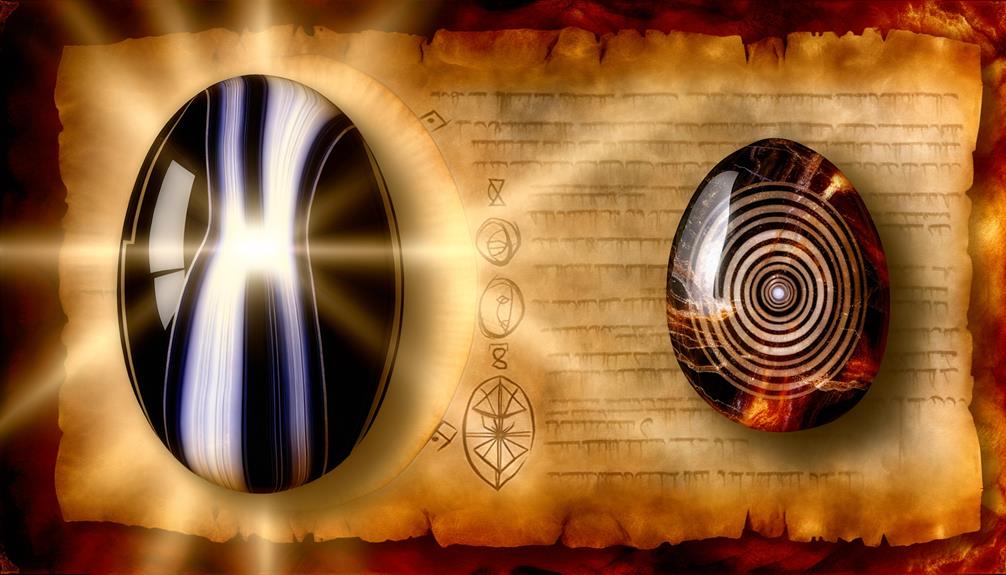
Onyx in the Bible holds multifaceted significance, initially symbolizing material wealth and divine provision in Genesis 2:12. Its spiritual elevation is evident in Exodus, where it adorns the High Priest’s ephod and breastplate, signifying divine judgment and guidance.
The incorporation of onyx into the Tabernacle construction also reflects communal devotion and sanctification. This stone, embodying divine authority and spiritual discernment, served as an emblem of unity and sacred covenants.
These layers of meaning illustrate its revered status, hinting at a deeper understanding of its role in biblical tradition and beyond.
Key Takeaways
- Onyx signifies divine creation and purity, first mentioned in Genesis 2:12.
- In Exodus, onyx symbolizes divine authority and sanctification, used in the High Priest’s ephod and breastplate.
- Onyx represents unity and the collective identity of the twelve tribes of Israel.
- The stone embodies the complexity of human spirituality with its layered, multi-hued appearance.
Onyx in Genesis

In the Book of Genesis, onyx is first mentioned as one of the precious stones found in the land of Havilah, signifying its early importance and value in the biblical narrative. This reference occurs in Genesis 2:12, within the broader context of the description of Eden, underscoring the richness and abundance bestowed upon the initial creation.
The mention of onyx, alongside gold and bdellium, highlights its esteemed status and intrinsic worth. Analyzing this passage, scholars infer that the inclusion of onyx serves to convey not only material wealth but also the divine provision and splendor of the created world.
Consequently, onyx in Genesis epitomizes a symbol of divine blessing and the inherent beauty of the nascent earth.
Onyx in Exodus

The significance of onyx evolves in the Book of Exodus compared to its initial mention in Genesis.
In Genesis, onyx is referred to as part of the natural wealth in Eden. However, in Exodus, onyx carries a heightened spiritual and ceremonial importance. It is incorporated into the sacred vestments and artifacts of the Tabernacle, signifying its elevated status.
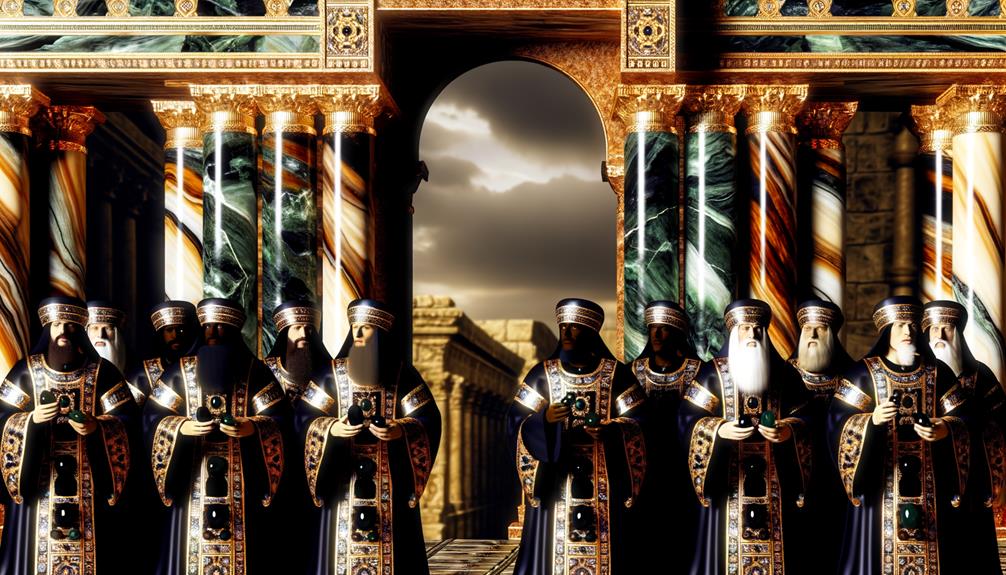
- Priestly Garments: Onyx stones were set in gold filigree and placed on the High Priest’s ephod, bearing the names of the twelve tribes of Israel (Exodus 28:9-12).
- Breastpiece of Judgment: The breastpiece, also adorned with onyx, symbolized divine judgment and guidance (Exodus 28:20).
- Tabernacle Construction: Onyx was among the materials contributed by the Israelites for the construction of the Tabernacle, reflecting communal devotion (Exodus 35:27).
Symbolism and Spiritual Significance
The elevated role of onyx in the ceremonial practices of Exodus invites a deeper exploration into its broader symbolism and spiritual significance within the biblical narrative.
Onyx is frequently associated with themes of divine authority and sanctification. Its presence in the High Priest’s breastplate and the ephod underscores its connection to spiritual discernment and divine guidance.
The dual onyx stones engraved with the names of Israel’s tribes signify unity and collective identity before God.
In addition, onyx’s inherent properties—its layered, multi-hued appearance—may symbolize the complexity and depth of human spirituality.
Consequently, within the biblical context, onyx is not merely ornamental but serves as a profound emblem of divine-human interaction and sacred covenant.
Historical Uses of Onyx
Numerous historical records and archaeological findings indicate that onyx has been utilized for various ceremonial and ornamental purposes across different ancient civilizations. This semi-precious stone, valued for its striking appearance and durability, played a significant role in various cultures:
- Ancient Egypt: Onyx was often used in the creation of intricate jewelry and amulets, believed to provide protection and spiritual power.
- Classical Greece and Rome: Onyx was carved into cameos and intaglios, serving as both decorative items and personal seals.
- Mesopotamia: This stone adorned temples and palaces, symbolizing wealth and divine favor.
Through these diverse applications, onyx’s historical significance reflects its multifaceted value beyond mere aesthetics, encompassing spiritual and societal dimensions.
Onyx in Biblical Tradition

Within Biblical tradition, onyx is frequently mentioned as a precious stone imbued with significant symbolic and religious connotations.
It first appears in the Book of Genesis, associated with the rivers of Eden, symbolizing divine creation and purity (Genesis 2:12).
Additionally, in the Book of Exodus, onyx stones are integral to the high priest’s breastplate, each stone representing one of the twelve tribes of Israel (Exodus 28:20). This denotes onyx as a symbol of unity and divine guidance.
Moreover, onyx is referenced in the construction of Solomon’s Temple (1 Chronicles 29:2), indicating its importance in sacred architecture.
These instances collectively underscore its revered status and its role in conveying spiritual truths within Biblical texts.
Conclusion
In biblical tradition, onyx is not merely a precious stone but a symbol of spiritual depth and historical significance.
The references in Genesis and Exodus highlight its importance in religious artifacts and priestly garments.
What deeper meanings can be derived from its consistent appearance across sacred texts?
This stone’s enduring presence through history underscores its role as a conduit of divine connection and a reflection of enduring faith traditions.