
Meaning of Transfiguration in the Bible: Glory Revealed
The Transfiguration in the Bible is chronicled in the Gospels of Matthew, Mark, and Luke and stands as a significant revelation of Jesus Christ’s divine nature and messianic identity. This event occurs on a high mountain, traditionally Mount Tabor, where Jesus’ face shines brilliantly, and His clothes become dazzling white.
Witnessed by Peter, James, and John, this theophany features the appearance of Moses and Elijah, symbolizing the Law and the Prophets and affirming Jesus as the fulfillment of both. The divine voice from heaven declares Jesus as the beloved Son, solidifying His divine mission and foreshadowing the resurrection.
Understanding this pivotal moment opens deeper insights into the intersection of Old and New Covenant themes.

Key Takeaways
- Divine Revelation: The Transfiguration affirms Jesus’ divine nature and messianic identity through a radiant transformation.
- Old and New Covenants: Presence of Moses and Elijah symbolizes the unity and fulfillment of the Law and the Prophets in Jesus.
- Heavenly Affirmation: A voice from heaven declares Jesus as God’s beloved Son, confirming His divine mission.
- Eschatological Promise: Offers a foretaste of the eternal glory awaiting believers in God’s Kingdom.
Biblical Account of the Transfiguration

In the New Covenant, the account of the Transfiguration is detailed in the Synoptic Gospels—Matthew, Mark, and Luke—providing a profound theological narrative that underscores the divine nature of Jesus Christ.
This pivotal event occurs on a high mountain, traditionally identified as Mount Tabor, where Jesus is transfigured before Peter, James, and John. His face shines like the sun, and His clothes become dazzling white, symbolizing His divine glory.
The Transfiguration serves as a critical moment of revelation, bridging the Old and New Scriptures. It affirms Jesus’ messianic identity and prefigures His resurrection.
This historical and theological juncture not only highlights Jesus’ divine sonship but also offers a glimpse into the eschatological promise of eternal glory for believers.
Key Figures Present
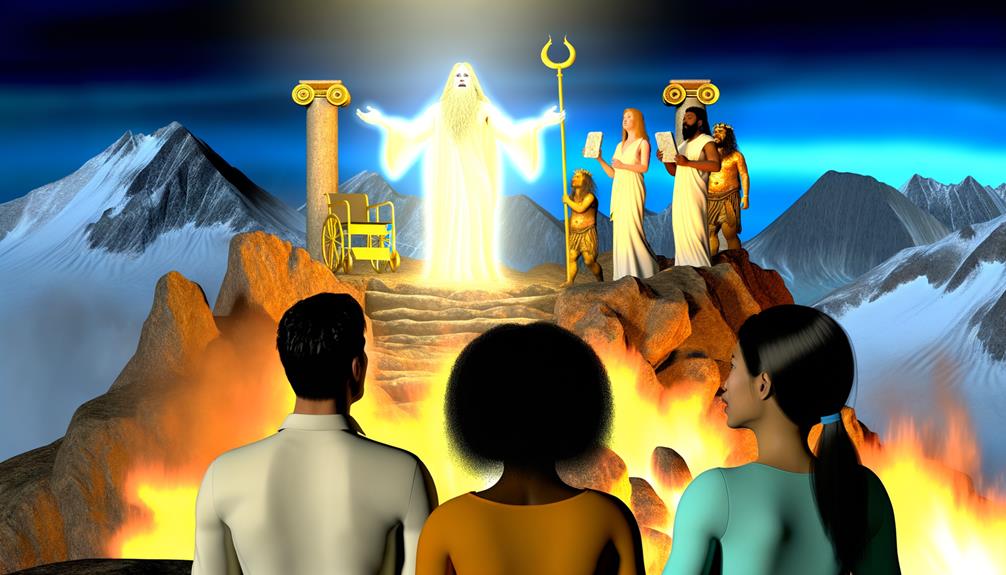
The narrative of the Transfiguration not only emphasizes the divine nature of Jesus but also intricately involves key figures whose presence underscores the event’s theological and historical significance.
Moses and Elijah appear alongside Jesus, symbolizing the Law and the Prophets, respectively, thereby affirming Jesus as the fulfillment of both.
Peter, James, and John, the inner circle of Jesus’ disciples, witness this revelation, highlighting their roles as foundational pillars in the nascent Christian community.
The presence of these figures encapsulates the unity of the Old and New Covenants, portraying Jesus as the bridge between Jewish tradition and the emerging Christian faith.
Their participation elevates the Transfiguration from a mere vision to a profound theophany, rooted in historical and prophetic continuity.
The High Mountain Setting

Nestled within the Gospel narratives, the high mountain setting of the Transfiguration serves as a symbolic and theological stage, reflecting the tradition of divine encounters occurring atop elevated landscapes in biblical history.
Mountains in scripture often signify places where humanity meets the divine, such as Moses receiving the Law on Mount Sinai and Elijah encountering God on Mount Horeb.
This setting underscores the significance of the Transfiguration as a divine revelation, conveying Jesus’ divine nature to his closest disciples.
The choice of a mountain elevates the event both physically and metaphorically, emphasizing the separation from the mundane and the ascent towards spiritual enlightenment.
Historically, this reinforces the idea of mountains as liminal spaces where the earthly and heavenly domains intersect.
Symbolism of Radiant Glory

The transfiguration’s radiant glory signifies a profound manifestation of divine light, symbolizing Jesus’ divine nature and his unity with the Father.
This luminous event also serves as a heavenly affirmation, echoing Old Scriptures theophanies where God’s presence is accompanied by overwhelming light and glory.
Such symbolism underscores the transfiguration as a pivotal revelation of Christ’s messianic identity and divine mission.
Divine Light Manifestation
In the biblical account of the Transfiguration, the divine light that envelops Jesus serves as a profound symbol of radiant glory, signifying His divine nature and the presence of God.
This manifestation of divine light echoes Old Scriptures theophanies, where God’s presence is often depicted through overwhelming luminosity, as seen with Moses on Mount Sinai.
The radiant light surrounding Jesus not only underscores His divinity but also fulfills prophetic visions of the Messiah’s glory.
Theologically, this luminous event is a foretaste of the eschatological glory that awaits in God’s Kingdom.
Historically, it reassures the disciples of Jesus’ messianic identity, bridging the divine-human divide and providing a tangible experience of divine majesty.
Heavenly Affirmation Signs
Among the numerous elements of the Transfiguration narrative, the heavenly affirmation signs particularly serve as a profound evidence to Jesus’ divine sonship and messianic mission.
These signs symbolize the radiant glory that reflects His unique relationship with the Father.
The luminous transformation of Jesus’ appearance, coupled with the voice from the cloud proclaiming, ‘This is my beloved Son,’ are laden with theological significance.
Historically, such celestial phenomena resonate with Old Covenant theophanies, drawing parallels to divine encounters experienced by Moses and Elijah.
This radiant glory signifies not merely physical brightness but the manifestation of divine presence and approval, affirming Jesus as the fulfillment of the Law and the Prophets.
This event underscores the eschatological hope and the inaugurated kingdom of God.
Connection to Old Testament Prophecies
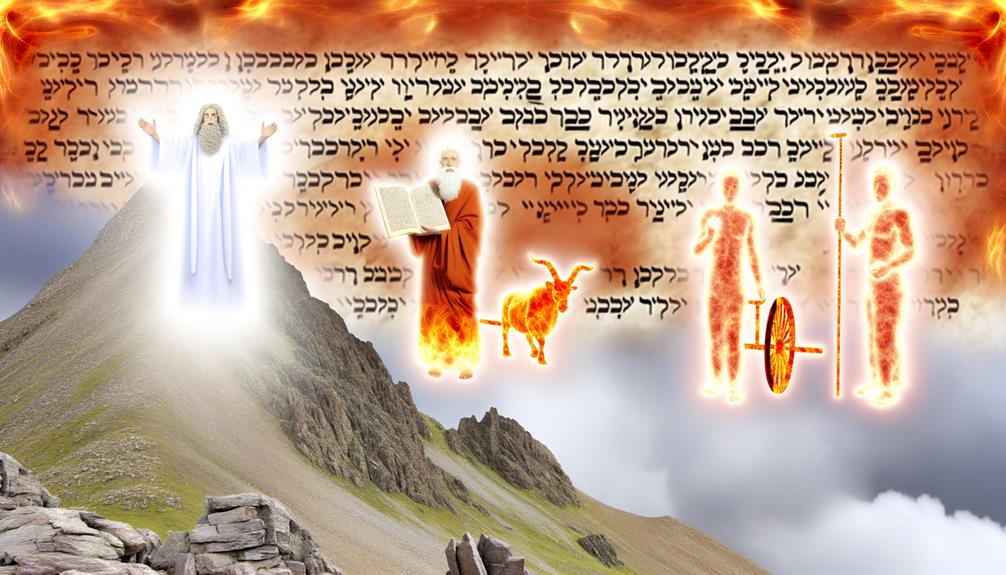
Several Old Scriptures prophecies find their fulfillment in the Transfiguration, particularly those that foretold the coming of a divine messianic figure who would embody both the law and the prophets.
The presence of Moses and Elijah during the Transfiguration is deeply symbolic: Moses represents the Law, while Elijah signifies the prophetic tradition. This convergence echoes Deuteronomy 18:15, where Moses speaks of a prophet like himself, and Malachi 4:5, which anticipates Elijah’s return.
The luminous transformation of Jesus on the mountaintop evokes Daniel 7:13-14, depicting the ‘Son of Man’ endowed with everlasting dominion.
These connections affirm that Jesus is the anticipated Messiah who fulfills the ancient prophecies, uniting the Old Scriptures’ legal and prophetic dimensions in his divine person.
Divine Confirmation of Jesus’ Sonship

The Transfiguration not only illuminates Jesus’ divine nature but also serves as a pivotal moment of divine affirmation, where a voice from heaven explicitly declares Him as the beloved Son, thereby reinforcing His unique relationship with God.
This heavenly proclamation, coupled with Jesus’ radiant appearance, underscores His messianic identity and fulfills the prophetic visions found in the Hebrew Scriptures.
Such elements collectively authenticate Jesus’ divine sonship and His role within the salvific history of Israel.
Voice From Heaven
During the Transfiguration, a profound and divine voice from heaven declared, ‘This is my Son, whom I love; with him I am well pleased,’ thereby unequivocally affirming Jesus’ divine sonship and messianic mission.
This heavenly proclamation, echoing the words spoken at Jesus’ baptism, serves as a theological cornerstone, reinforcing Jesus’ identity and authority.
The historical context reveals the significance of such divine endorsements in Jewish tradition, where divine voices affirmed prophetic missions.
By declaring Jesus as His beloved Son, God both validates Jesus’ ministry and prefigures His ultimate sacrifice.
This moment of divine approval provides assurance to the disciples, solidifying their faith in Jesus as the Messiah and Son of God, essential for the nascent Christian community’s belief system.
Radiant Appearance
Amid the Transfiguration, Jesus’ radiant appearance, marked by a shining face and dazzling white clothes, serves as a profound theological affirmation of His divine sonship and preeminent glory.
This transformation echoes Old Covenant theophanies, where divine glory manifests visibly, such as in Moses’ shining face after encountering God (Exodus 34:29-35).
The luminous transformation of Jesus symbolizes His divine nature and foreshadows His resurrection glory.
This moment is pivotal in Christology as it visually confirms Jesus’ identity as the Son of God to the disciples present—Peter, James, and John.
The event underscores the continuity between the Old and New Covenants, positioning Jesus as the fulfillment of the Law and the Prophets, represented by Moses and Elijah’s presence.
Moses and Elijah’s Appearance

Appearing alongside Jesus during the Transfiguration, Moses and Elijah symbolize the Law and the Prophets, consequently affirming Jesus’ fulfillment of both in the unfolding narrative of salvation history.
The presence of Moses, the Lawgiver, and Elijah, the quintessential Prophet, underscores the continuity between the Old and New Covenants. Historically, Moses represents the Torah, the foundation of Jewish religious life, while Elijah embodies prophetic tradition, calling Israel back to faithfulness.
Their appearance together with Jesus signifies the convergence of these pivotal elements, heralding a new epoch.
Theologically, this meeting reveals Jesus as the culmination of divine revelation, bridging the sacred texts and prophecies with the advent of the Messiah, thereby illuminating the fullness of God’s redemptive plan.
The Disciples’ Reaction
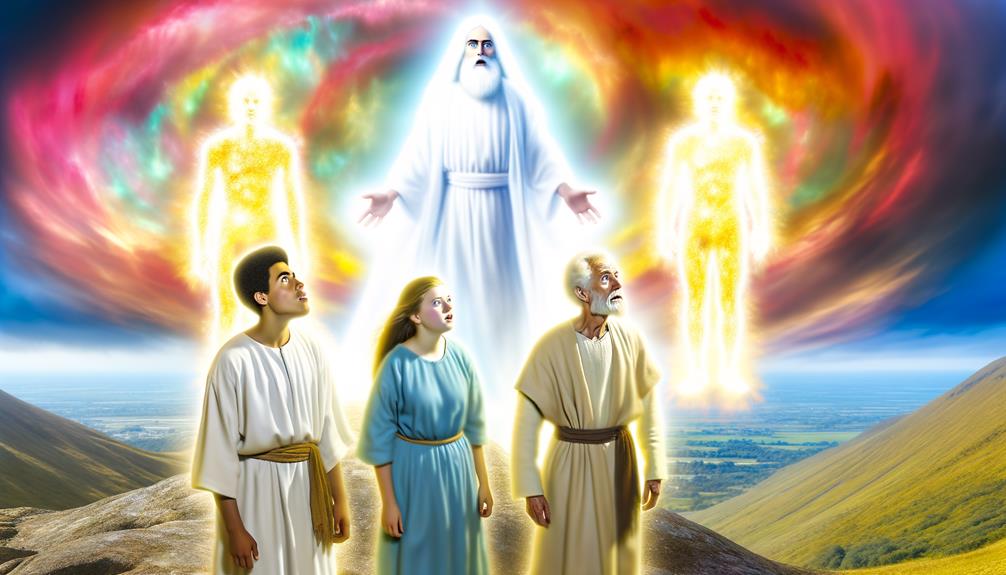
The disciples’ reaction to the Transfiguration, marked by awe and bewilderment, underscores their struggle to comprehend the profound theological and eschatological significance of the event. Peter, James, and John were privileged witnesses, yet their initial response was one of confusion and fear. The event unfolded on a high mountain, with Jesus’ face shining like the sun and His clothes becoming dazzling white, a divine manifestation that left them speechless. Peter’s offer to build three shelters indicates a misunderstanding of the event’s temporary and visionary nature.
| Aspect | Disciples’ Reaction |
|---|---|
| Emotional Response | Awe and Fear |
| Theological Insight | Initial Misunderstanding |
| Immediate Actions | Offer to Build Shelters |
Their reaction reflects the human tendency to grasp the divine through familiar constructs.
Theological Implications
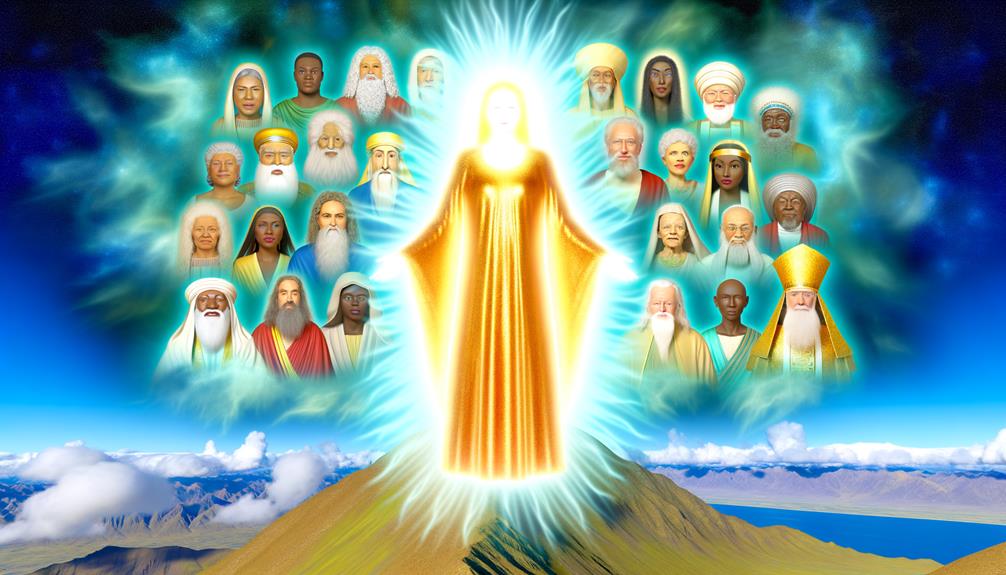
Among the numerous theological implications of the Transfiguration, one of the most significant is its affirmation of Jesus’ divine nature and His fulfillment of Old Scriptures prophecy.
The presence of Moses and Elijah symbolizes the Law and the Prophets, underscoring Jesus as the ultimate fulfillment of both. This event also reinforces the continuity between the Old and New Covenants, revealing Jesus as the anticipated Messiah.
The divine voice proclaiming Jesus as the beloved Son establishes His unique relationship with the Father, affirming His deity.
Historically, the Transfiguration marks a pivotal moment for the disciples, providing them with a profound understanding of Jesus’ divine mission and identity, and thereby strengthening their faith amid the unfolding plan of redemption.
Foreshadowing of Resurrection
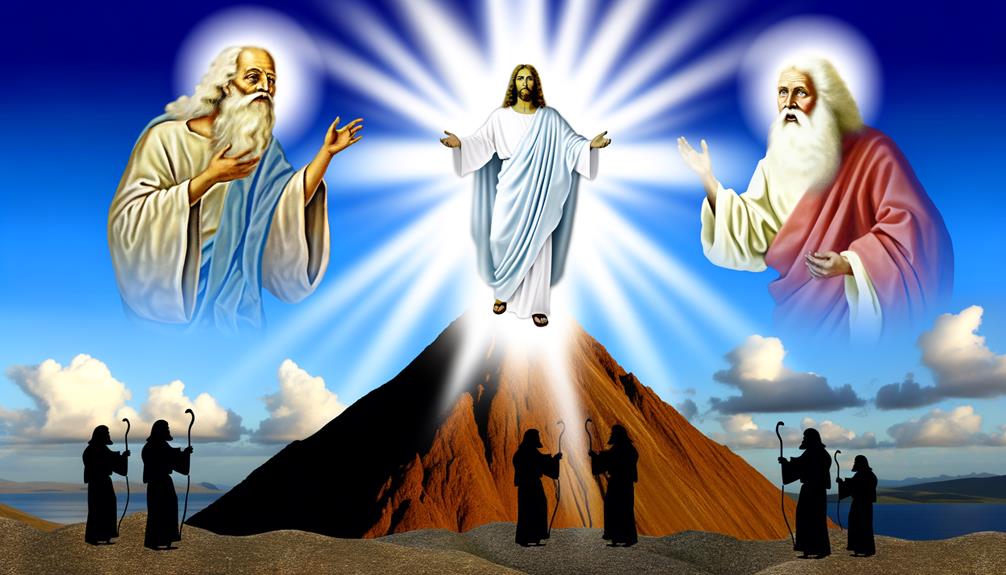
Building upon the theological significance of the Transfiguration, this event also serves as a profound foreshadowing of the Resurrection, offering a glimpse into the glorified state that awaits Jesus post-crucifixion.
The radiant transformation of Jesus on the mountain, witnessed by Peter, James, and John, prefigures His ultimate victory over death and His resurrection body.
In historical context, the presence of Moses and Elijah symbolizes the fulfillment of the Law and the Prophets, further attesting to Jesus’ messianic mission.
The disciples’ experience of divine glory in the Transfiguration anticipates the eschatological hope of resurrection, reinforcing the promise of eternal life.
This moment encapsulates the anticipated transformation and glorification inherent in the resurrection narrative, bridging Jesus’ earthly ministry with His divine destiny.
Impact on Christian Faith
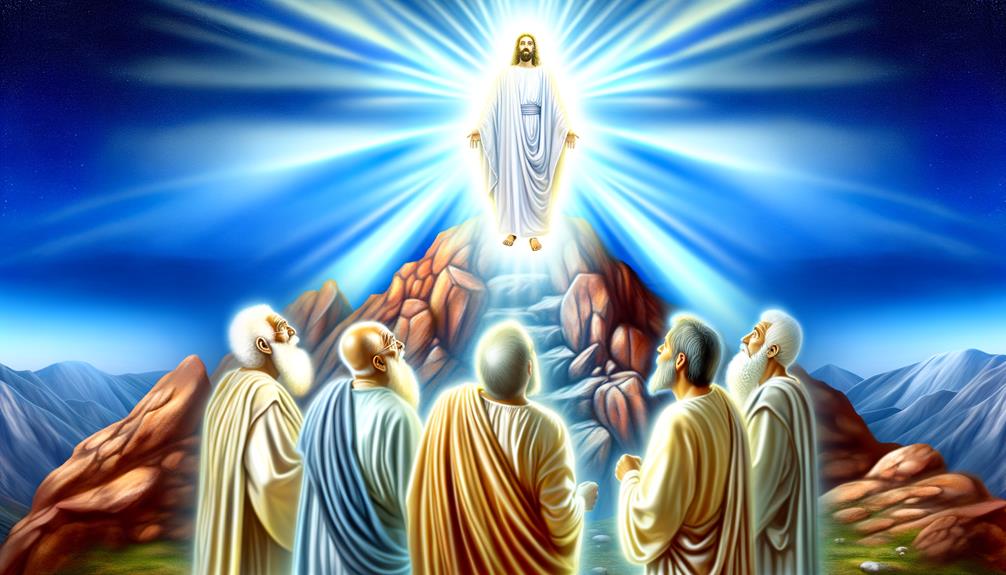
Transfiguration’s profound impact on Christian faith is evident in its affirmation of Jesus’ divine nature and its reinforcement of the eschatological promise of eternal life.
This pivotal event, witnessed by Peter, James, and John, underscores the fulfillment of Old scriptures and highlights Jesus as the Messiah. The appearance of Moses and Elijah symbolizes the Law and the Prophets, converging in Christ.
The divine voice, declaring Jesus as the beloved Son, invites believers to heed His teachings. Historically, the Transfiguration has served as a theological cornerstone, offering Christians a glimpse of divine glory and the ultimate transformation awaiting the faithful.
It bridges the temporal and the eternal, fortifying hope and reaffirming the path to salvation through Christ.
Conclusion
The Transfiguration serves as a powerful juxtaposition of earthly and divine domains, manifesting Christ’s radiant glory while foreshadowing the Resurrection.
This pivotal event, deeply rooted in Old scriptures, underscores the fulfillment of messianic expectations.
The presence of key figures like Moses and Elijah bridges the scriptures, enriching theological discourse.
By illuminating the disciples’ varied reactions, the narrative deepens understanding of faith’s transformative impact, solidifying the Transfiguration’s enduring significance in Christian doctrine and eschatological hope.