Midst Meaning in the Bible: God’s Presence
In the Bible, the term ‘midst’ holds profound theological importance. It often denotes the central or focal point of divine activity and presence.
For instance, in Exodus 14:16, the Israelites pass through the ‘midst’ of the Red Sea, highlighting God’s intervention. Similarly, Zephaniah 3:17 reflects divine proximity within critical moments.
The term also captures significant spiritual dynamics, such as God’s involvement in worship and guidance as seen in Psalm narratives. Understanding ‘midst’ consequently enriches one’s comprehension of God’s intimate engagement in pivotal biblical events and spiritual dimensions.
To gain deeper insights into this central theme, consider further exploration.
Key Takeaways
- ‘Midst’ signifies a central position in locations and events, highlighting pivotal moments.
- It denotes divine presence and proximity during critical moments, offering comfort and guidance.
- Represents God’s active involvement and relationship with humanity, as seen in key biblical narratives.
- Illustrates spiritual and emotional centers where significant actions unfold, like the burning bush in Exodus.
Biblical Definition of ‘Midst’

The term ‘midst‘ in the Bible is frequently employed to signify a central position or the heart of a particular setting, whether it be physical, situational, or metaphorical.
This usage spans numerous contexts, from describing the physical center of a location to the core of a crisis or event.
For instance, in Exodus 14:16, the Red Sea’s parting places the Israelites in the ‘midst’ of the sea, emphasizing their precarious position.
Similarly, in Psalms, the ‘midst’ often refers to the emotional or spiritual center of human experience.
This term encapsulates a focal point where significant actions or events unfold, thereby underscoring its importance in conveying both literal and symbolic meanings within biblical texts.
God’s Presence in the Midst
Illustrating divine proximity, biblical narratives frequently depict God’s presence in the midst of His people during critical moments of guidance, protection, and judgment.
From the Israelites’ exodus from Egypt, where God’s presence was manifested as a pillar of cloud and fire (Exodus 13:21-22), to the prophetic assurances in Zephaniah 3:17, where it is declared, ‘The Lord your God is in your midst,’ these instances underscore a theology of immanence.
Such occurrences emphasize God’s active involvement and intimate relationship with humanity, providing reassurance amidst trials.
This portrayal serves not only as a comforting reminder of divine oversight but also as a call to recognize and respond to God’s nearness in the collective and individual experiences of the faithful.
‘Midst’ in Key Narratives
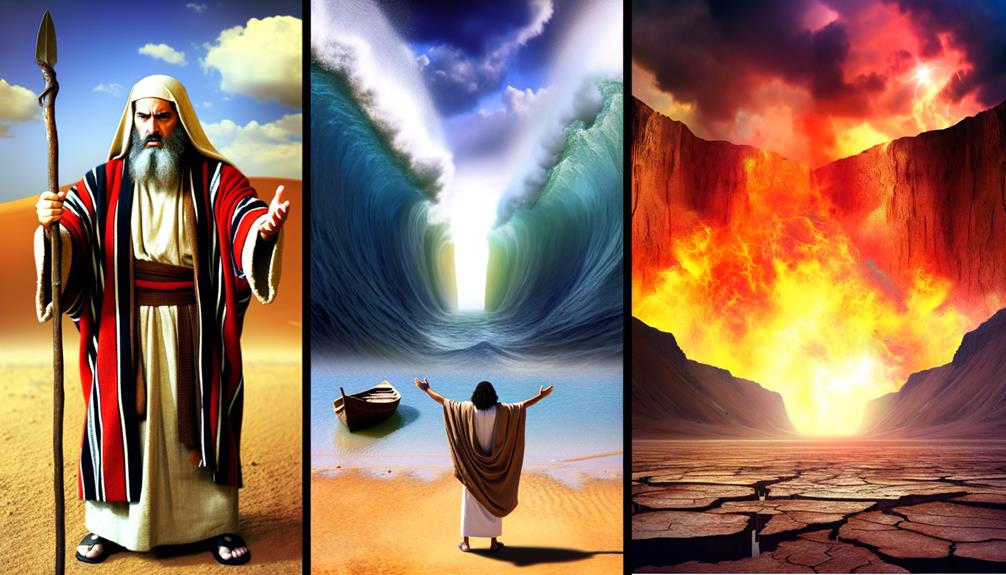
Embedded within key biblical narratives, the term ‘midst’ often serves as a pivotal concept that encapsulates the essence of divine interaction and intervention in the human experience. This term frequently appears in contexts where God’s presence and actions are most profoundly felt, symbolizing His immanence and sovereignty among His people. Examining these instances reveals deeper theological and existential meanings.
Genesis 3:8 – God walking in the midst of the Garden of Eden, signifying His direct communion with humanity.
Exodus 14:16 – The parting of the Red Sea, where God stands in the midst of Israel’s deliverance.
Daniel 3:25 – The fourth figure in the fiery furnace, indicating divine protection.
Matthew 18:20 – Christ’s promise to be in the midst of gathered believers.
Revelation 1:13 – The Son of Man in the midst of the lampstands, symbolizing His presence among the churches.
Spiritual Implications of ‘Midst’

Recognizing the recurring appearances of ‘midst’ in key biblical narratives invites a deeper exploration of its spiritual implications, revealing how this term underscores the profound presence and activity of the divine within the human experience.
The term ‘midst’ often signifies God’s intimate involvement in pivotal moments, such as His presence within the burning bush (Exodus 3:2) or the pillar of cloud guiding the Israelites (Exodus 13:21). This centrality signifies not just proximity but a deliberate act of divine engagement and intervention.
Theologically, ‘midst’ conveys God’s transcendence intersecting with immanence, illustrating a divine closeness that reassures, guides, and transforms. Consequently, ‘midst’ encapsulates a sacred dynamic where divine presence fundamentally alters human circumstances and spiritual understanding.
Lessons From ‘Midst’ in Scripture

Analyzing the occurrences of ‘midst’ in Scripture reveals a recurring theme of divine presence and intervention that offers profound lessons for faith and theology. This term frequently signifies God’s involvement in human affairs, often during pivotal moments.
For instance, God’s presence in the midst of the Israelites during their exodus underscores His guiding role. Similarly, Jesus’ declaration of being present ‘where two or three are gathered’ highlights communal worship’s sanctity.
These instances elucidate key theological insights:
- Divine presence during trials: God’s proximity in adversity.
- Centrality of worship: The sacredness of communal gatherings.
- Guidance and protection: God’s role as a protector.
- Manifestations of faith: Demonstrating faith amidst challenges.
Such examples enrich our understanding of God’s active role within our lives.
Conclusion
To sum up, the term ‘midst’ within biblical texts signifies more than mere physical presence; it embodies the profound manifestation of divine intervention and communal experiences.
The exploration of ‘midst’ in key narratives elucidates its spiritual ramifications, offering timeless lessons on faith and divine proximity.
Much like a modern-day GPS, ‘midst’ serves as a navigational anchor, guiding believers through the complexities of spiritual and communal life, thereby reinforcing the omnipresence and omnipotence of the divine.