Peacemaker Meaning in the Bible: Role in God’s Kingdom
In the Bible, the term ‘peacemaker‘ originates from the Greek ‘eirēnopoios’ and the Hebrew ‘shalom,’ symbolizing the proactive creation of peace through righteousness and divine reconciliation. Jesus’ teachings, particularly in Matthew 5:9, emphasize that peacemakers are blessed and aligned with God’s will, embodying His nature.
The Old Scripture also underscores peace, depicting it as wholeness and justice essential for covenantal living. Notable scriptural examples involve Abraham’s, Moses’, and Jesus’ initiatives towards harmony.
Understanding these biblical contexts reveals deeper insights into the spiritual and practical dimensions of peacemaking.

Key Takeaways
- Peacemaker in the Bible signifies the active pursuit of peace, embodying righteousness and justice (Matthew 5:9).
- The Hebrew term ‘shalom’ represents completeness, harmony, and welfare, reflecting God’s intention for holistic well-being.
- Jesus’ teachings emphasize peacemaking as a divine attribute and essential to Christian discipleship (Matthew 5:9).
- Biblical figures like Abraham and Moses exemplified peacemaking through reconciliation and conflict resolution.
Biblical Definition of Peacemaker

In theological discourse, what precisely constitutes a ‘peacemaker‘ within the biblical context?
The term ‘peacemaker’ derives from the Greek word ‘eirēnopoios,’ found in Matthew 5:9.
Biblically, a peacemaker is one who actively pursues and cultivates peace, not merely the absence of conflict but the presence of righteousness and justice.
This concept aligns with the Hebrew ‘shalom,’ signifying completeness, welfare, and harmony.
Historical context reveals that peacemakers in biblical times were advocates for reconciliation, both within personal relationships and broader societal structures.
They sought to restore brokenness through godly principles, mirroring God’s reconciliation with humanity.
Therefore, a peacemaker, fundamentally, represents an ambassador of divine peace, endeavoring to bring God’s holistic peace into the fractured human experience.
Jesus’ Teachings on Peacemaking
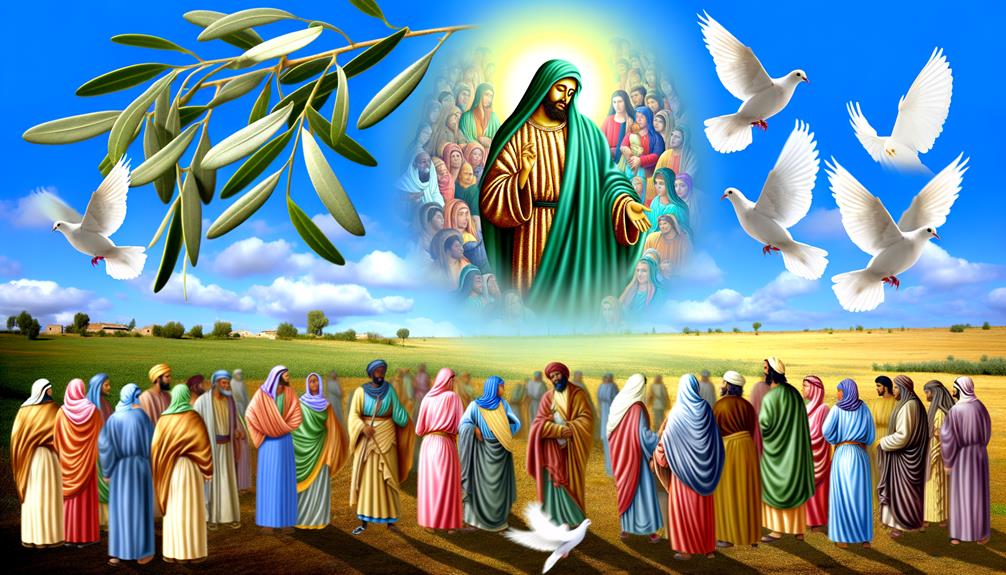
In the Sermon on the Mount, Jesus proclaims, ‘Blessed are the peacemakers, for they shall be called children of God’ (Matthew 5:9), emphasizing the divine approval of those who foster peace.
Moreover, His command to ‘turn the other cheek‘ (Matthew 5:39) challenges conventional responses to aggression, advocating for a radical form of non-retaliation.
These teachings collectively underscore a transformative approach to conflict, rooted in love and reconciliation.
Blessed Are the Peacemakers
Drawing from the Sermon on the Mount, Jesus’ proclamation, ‘Blessed are the peacemakers, for they shall be called sons of God’ (Matthew 5:9), underscores the divine value placed on fostering reconciliation and harmony among individuals.
Theologically, this beatitude identifies peacemaking as a divine attribute, reflecting God’s nature of creating unity and restoring broken relationships.
Scripturally, it aligns with the Old Covenant’s call for shalom—a holistic peace encompassing justice and well-being.
Historically, Jesus’ audience, under Roman occupation, yearned for such peace.
By elevating peacemakers, Jesus redefined strength, advocating for active, courageous efforts in achieving peace.
This beatitude therefore challenges believers to embody God’s reconciling love in a fractured world.
Turn the Other Cheek
Jesus’ teaching to ‘turn the other cheek‘ (Matthew 5:39) further exemplifies the radical nature of peacemaking, urging followers to resist retaliation and embody a spirit of forgiveness and non-violence.
In the historical context of Roman-occupied Judea, this directive stood in stark contrast to the prevailing norms of honor and retribution.
Theologically, it aligns with the call to love one’s enemies and reflects a deeper trust in divine justice.
Scripturally, this teaching underscores the Kingdom of God as an upside-down domain where meekness and mercy prevail over aggression.
Old Testament Perspectives
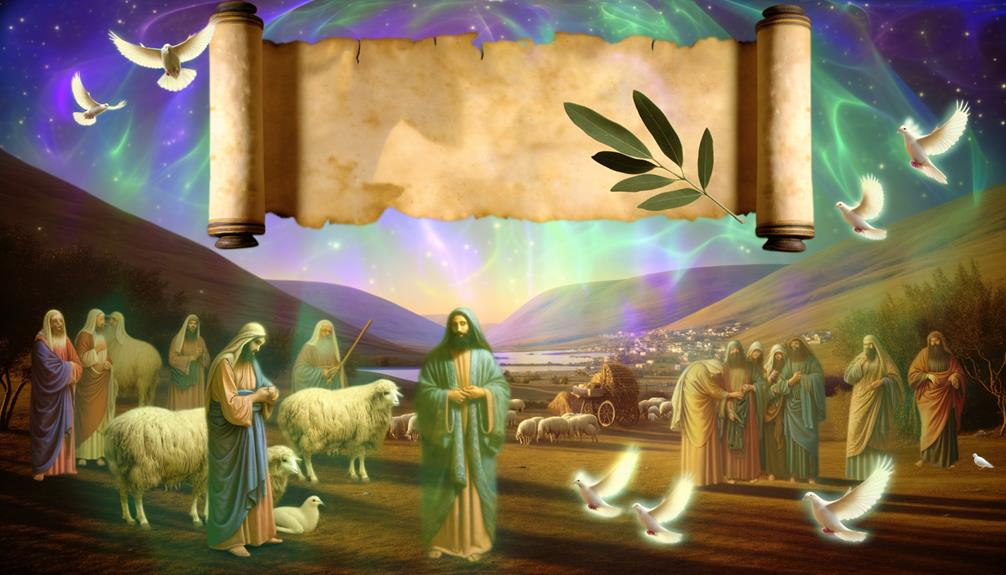
In examining Old Scriptures perspectives, understanding the Hebrew term ‘shalom’ becomes paramount, as it encapsulates notions of peace, completeness, and welfare.
Key scriptural examples, such as the covenantal peace in Numbers 6:24-26 and the peace offerings in Leviticus, highlight the multifaceted nature of peacemaking.
Additionally, prophetic visions, particularly in Isaiah’s messianic prophecies, offer profound insights into the eschatological hope for ultimate peace and reconciliation.
Hebrew Word Analysis
The Hebrew term often associated with ‘peacemaker’ in the Old Scripture is ‘shalom,’ which encompasses a profound sense of peace, completeness, and welfare. ‘Shalom’ is more than the absence of conflict; it signifies a holistic harmony in all aspects of life. This concept is deeply embedded in the cultural and religious fabric of ancient Israel, reflecting God’s intention for His creation to live in a state of total well-being.
| Hebrew Term | Transliteration | Meaning |
|---|---|---|
| שָׁלוֹם | Shalom | Peace, completeness, welfare |
| שָׁלֵם | Shalem | To be complete, sound |
| שָׁלַח | Shalach | To send, to stretch out |
| מַשְׁלֵם | Mashlem | To make peace, to pay |
Understanding ‘shalom’ provides a richer perspective on the biblical call to be peacemakers.
Key Scriptural Examples
Several Old Covenant passages exemplify the role of peacemakers, demonstrating how the pursuit of ‘shalom‘ was integral to the lives and teachings of key biblical figures.
Abraham, in Genesis 13:8-9, exemplified peacemaking by offering Lot the first choice of land to avoid strife.
Moses, acting as a mediator, sought peace between warring factions of Israelites (Exodus 2:13).
Additionally, the wisdom literature, particularly Proverbs 12:20, emphasizes that those who promote peace find joy.
The Psalmist, in Psalms 34:14, exhorts believers to ‘seek peace and pursue it,’ reflecting a deep-rooted biblical ethos.
These instances underscore that the quest for peace was not merely passive but an active, deliberate effort central to covenantal living.
Prophetic Visions Explained
Rooted in the rich tapestry of Old Covenant prophecy, the visions of peacemaking often articulate a future where divine intervention ushers in an era of profound harmony and justice.
Isaiah, for instance, envisions a world where swords are beaten into plowshares and spears into pruning hooks (Isaiah 2:4), symbolizing a transformative peace.
Similarly, Micah echoes this vision, emphasizing universal security and prosperity under God’s reign (Micah 4:3-4).
Ezekiel’s prophecy of the ‘Prince of Peace’ (Ezekiel 37:24-28) further underscores the eschatological hope of a harmonious kingdom where God’s covenant of peace guarantees enduring stability.
These prophetic visions are not mere utopian dreams but reflect a divine promise deeply embedded in Israel’s historical and theological narrative.
Peacemaking and Righteousness

In the Bible, peacemaking is intricately connected to the pursuit of righteousness, as evidenced by various scriptural passages that underscore the moral and spiritual dimensions of fostering peace. The Hebrew concept of “shalom” entails completeness and harmony, which are achieved through righteous living. Christ’s Beatitudes highlight the blessedness of peacemakers, correlating their work with divine sonship (Matthew 5:9). Similarly, James 3:18 emphasizes that “the fruit of righteousness is sown in peace by those who make peace.”
| Scripture Reference | Theme | Implication |
|---|---|---|
| Matthew 5:9 | Beatitudes | Peacemakers called children of God |
| James 3:18 | Righteousness | Peace and righteousness linked |
| Isaiah 32:17 | Peace and Justice | Righteousness brings peace |
| Hebrews 12:14 | Pursuit of Peace | Holiness linked with peace |
| Romans 14:19 | Building Peace | Edification through peace efforts |
Thus, biblical peacemaking is deeply intertwined with living a righteous life.
Role in Christian Life

Understanding the inherent connection between peacemaking and righteousness, it is paramount to explore how this principle manifests in the daily life and practice of a committed Christian.
Theologically, peacemaking is deeply rooted in the teachings of Jesus and the apostolic writings. Scriptural imperatives such as Matthew 5:9, ‘Blessed are the peacemakers,’ guide Christians towards harmonious living.
Historically, early Christians exemplified peacemaking through:
- Forgiveness and reconciliation – Emulating Christ’s forgiveness (Ephesians 4:32).
- Community building – Promoting unity within the church (Ephesians 4:3).
- Advocating justice – Addressing societal inequities (Isaiah 1:17).
- Personal conduct – Exhibiting gentleness and patience (Colossians 3:12).
In essence, peacemaking is an active, enduring commitment that reflects God’s kingdom on earth.
Peacemakers in Action Today

Modern-day peacemakers embody the biblical mandate of reconciliation and justice through active engagement in conflict resolution, social advocacy, and community building, reflecting the timeless principles of scripture in contemporary contexts.
Their actions resonate with the Beatitudes, particularly Matthew 5:9, ‘Blessed are the peacemakers, for they will be called children of God.’
Peacemakers today work within frameworks of restorative justice, echoing scriptural calls for mercy and forgiveness.
They often draw inspiration from historical figures like Martin Luther King Jr., whose commitment to nonviolence and equality mirrors biblical teachings.
Conclusion
In examining the biblical concept of a peacemaker, one finds that both the Old and New Scriptures emphasize its integral role in righteousness and Christian life.
Jesus’ teachings highlight the blessedness of peacemakers, while the Old Scripture underscores peace as a divine attribute.
Historical and scriptural analyses reveal that peacemaking is not merely an act but a calling.
As the adage goes, ‘Blessed are the peacemakers, for they shall be called the children of God.’