
Plumb Line Meaning In The Bible: Standard of Righteousness
In the Bible, the plumb line is a potent symbol of divine judgment, representing God’s unwavering standard of righteousness and justice. It is used metaphorically, particularly in prophetic literature, such as Amos 7:7-9, where it illustrates the measure of Israel’s moral and ethical alignment with God’s laws.
This ancient tool, which guarantees vertical alignment in construction, serves as a benchmark for evaluating moral and spiritual integrity. By highlighting deviations from divine expectations, the plumb line calls for ethical realignment and introspection.
To understand the broader theological implications and historical context, further examination is encouraged.

Key Takeaways
- Represents God’s unwavering standard of righteousness and moral integrity.
- Symbolizes divine judgment against deviations from God’s laws.
- Functions as an objective measure for moral and spiritual alignment.
- Highlights the necessity for ethical conduct and adherence to divine principles.
The Plumb Line in Amos

In the Book of Amos, the plumb line is employed as a powerful metaphor for divine judgment and moral rectitude.
Amos 7:7-8 depicts God revealing a vision to the prophet, where He stands by a wall with a plumb line, symbolizing the standard against which Israel’s actions are measured. This imagery underscores the necessity for alignment with divine principles, emphasizing the inevitability of scrutiny and correction.
The plumb line serves not merely as an instrument of construction, but as a profound theological symbol, illustrating the unwavering precision of God’s expectations.
Through this metaphor, Amos communicates the critical need for ethical integrity, urging the Israelites to realign their conduct with the divine standard, lest they face imminent consequences.
Symbol of Divine Judgment

The plumb line in biblical literature serves as a potent symbol of divine judgment, illustrating God’s unwavering standard of righteousness.
It functions as a measure of moral integrity, against which the actions and hearts of individuals and nations are assessed.
This metaphor underscores the unyielding nature of divine justice, emphasizing that deviations from divine law are neither overlooked nor tolerated.
God’s Standard of Righteousness
As a symbol of divine judgment, the plumb line in the Bible epitomizes God’s unwavering standard of righteousness, against which the moral and spiritual integrity of His people is measured.
Biblical references, such as those in Amos 7:7-8, underscore this metaphor, where the plumb line signifies God’s exacting criteria for justice and holiness.
In this situation, the plumb line functions as a divine tool, revealing deviations from God’s covenantal expectations.
This imagery serves to remind the faithful of the necessity to align with God’s precepts.
The plumb line thus becomes a profound symbol, illustrating that divine judgment is not arbitrary but based on a fixed, righteous standard established by God Himself.
Measure of Moral Integrity
A plumb line, within the biblical context, serves as a potent emblem of divine judgment, rigorously evaluating the moral integrity of individuals and communities alike.
In the Book of Amos, the prophet vividly employs this imagery to underscore God’s unwavering standards of righteousness. The plumb line symbolizes an objective measure against which moral conduct is assessed, leaving no room for deviation or compromise.
This metaphor conveys the inescapable scrutiny under divine justice, where ethical lapses and societal injustices are exposed and rectified. The theological implication is clear: adherence to God’s moral precepts is non-negotiable.
Consequently, the plumb line not only represents judgment but also serves as a call to maintain unwavering ethical standards in alignment with divine will.
Moral Integrity and Righteousness
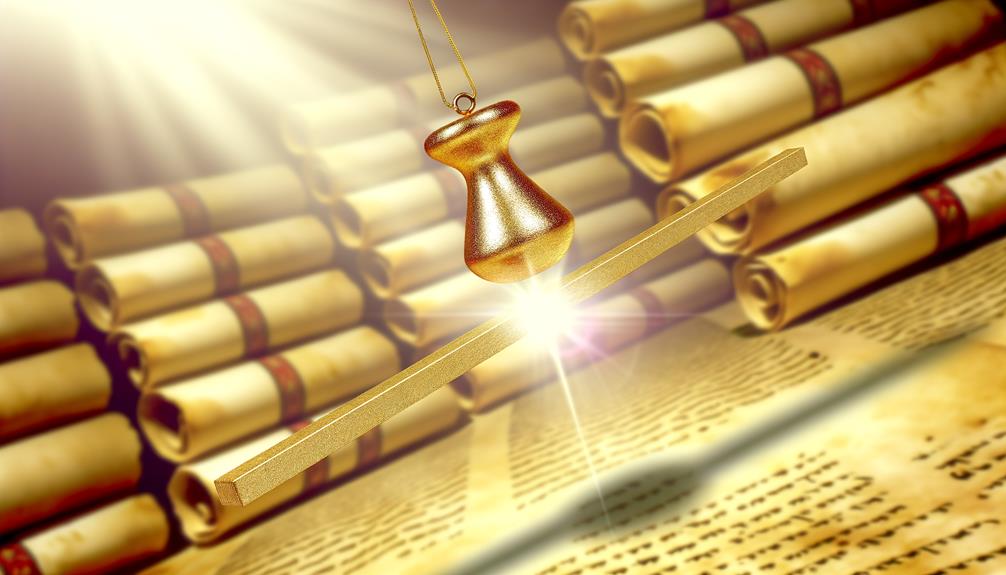
The plumb line, as referenced in the Bible, serves as a metaphorical standard for moral integrity and righteousness, aligning human behavior with divine expectations.
By symbolizing divine justice, the plumb line highlights the necessity for ethical conduct as measured against biblical moral standards.
This instrument consequently functions as a critical tool for evaluating an individual’s adherence to a life of virtue and rectitude.
Biblical Moral Standards
In the biblical context, the plumb line serves as a metaphorical standard for moral integrity and righteousness, illustrating God’s unwavering expectations for ethical conduct among His people.
This imagery, prominently featured in Amos 7:7-8, underscores the necessity for adherence to divine principles. The plumb line’s unerring verticality symbolizes God’s absolute standards, against which human actions are measured.
Deviations from this divine alignment signify moral failings and ethical lapses. The prophetic use of the plumb line emphasizes the importance of living in accordance with God’s righteous decrees, ensuring that one’s life remains spiritually upright.
Consequently, the plumb line metaphor calls believers to a life of introspection and moral rectitude, aligning their conduct with the unwavering righteousness that God demands.
Divine Justice Symbolism
Divine justice, as symbolized by the plumb line in biblical scripture, represents an unwavering standard of moral integrity and righteousness that mandates strict adherence to God’s ethical decrees.
This profound metaphor, prominently featured in Amos 7:7-8, underscores the necessity for alignment with divine principles.
The plumb line, an ancient tool used to guarantee structures are vertically true, illustrates God’s precise and unyielding criteria for human conduct.
Within the prophetic context, it serves as a divine measure against which the moral and ethical stature of the people is assessed.
Consequently, the plumb line transcends its literal utility, embodying an eternal benchmark for justice, demanding that society’s actions are perpetually calibrated to divine righteousness.
Ethical Life Measurement
Moral integrity, as depicted through the biblical symbol of the plumb line, serves as an unwavering standard for evaluating ethical conduct and righteousness. This metaphor, drawn from construction, illustrates God’s expectation for human behavior to align with His divine principles. In the Bible, the plumb line is not merely a tool but a divine measure against which moral and ethical life is assessed.
- Righteousness: Aligning one’s actions with divine laws.
- Justice: Ensuring fairness and equity in dealings.
- Honesty: Maintaining truthfulness in all interactions.
Such an analysis reveals that the plumb line is a call to uphold moral integrity and ethical behavior, reflecting a life in harmony with God’s will.
Historical Context of the Plumb Line
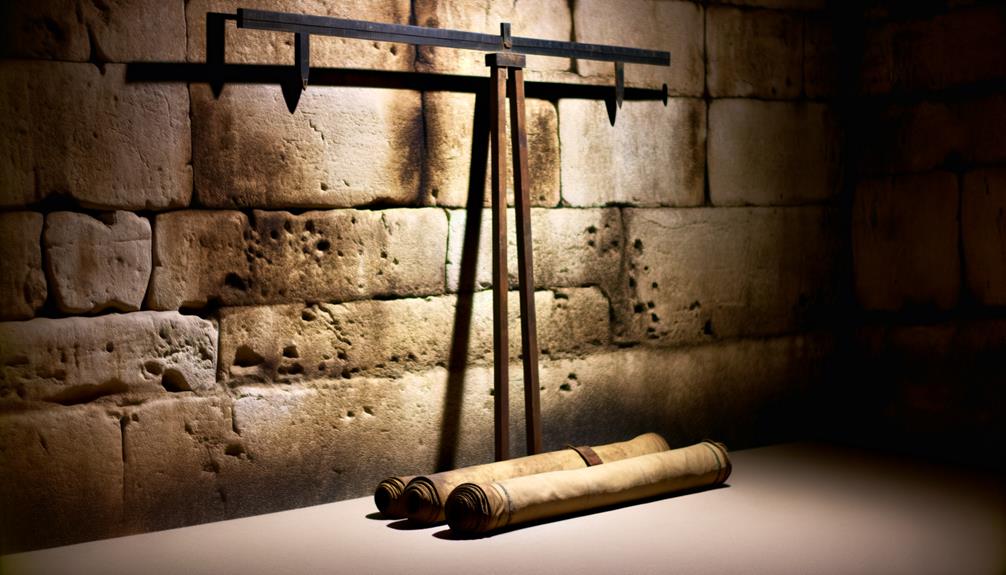
The plumb line, an ancient tool used by builders to guarantee the verticality and alignment of structures, holds significant symbolic meaning within the historical context of biblical texts.
In antiquity, the plumb line was indispensable in ensuring that edifices were constructed with precision and stability, a principle reflective of divine judgment and moral rectitude in the scriptures.
The biblical employment of the plumb line metaphor epitomizes God’s exacting standards for justice and righteousness.
This imagery is profoundly rooted in the societal and architectural practices of the time, where the plumb line’s function in maintaining structural integrity paralleled the necessity for spiritual and ethical steadfastness.
Consequently, the plumb line serves as a powerful symbol of divine scrutiny and alignment with divine will.
Other Biblical References

Beyond its historical context, the plumb line appears in several other biblical passages, each reinforcing its symbolic role in representing God’s unwavering standards of justice and righteousness. The imagery of the plumb line is consistently used to denote divine measurement and judgment, ensuring that God’s people align with His moral and ethical standards.
- Zechariah 4:10: The plumb line symbolizes God’s watchful oversight over the rebuilding of the temple, signifying divine approval.
- Isaiah 28:17: The plumb line represents the standard by which God will judge righteousness and justice.
- Amos 7:7-9: God uses the plumb line to illustrate His impending judgment on Israel for their deviation from His laws.
Lessons for Modern Believers

In examining the symbolic use of the plumb line in Scripture, modern believers can derive significant insights into the importance of aligning their lives with divine standards of justice and righteousness.
The plumb line, as depicted in Amos 7:7-8, serves as a metaphorical tool that measures moral and ethical uprightness. For contemporary adherents, this symbol underscores the necessity of living in accordance with God’s immutable principles.
It challenges individuals to introspectively evaluate their actions and beliefs against the unwavering benchmarks set forth in the Bible. Consequently, the plumb line calls believers to a life of integrity, urging them to eschew moral relativism and to pursue a path that reflects divine truth and justice consistently in their daily conduct.
The Plumb Line in Christian Theology

Christian theology’s exploration of the plumb line metaphor reveals its profound implications for understanding divine justice and moral rectitude. The plumb line, as depicted in the prophetic literature of the Old Scriptures, symbolizes God’s standard of righteousness and the instrument for measuring the moral alignment of His people.
This metaphor is essential in theological discussions for several reasons:
- Divine Justice: It emphasizes God’s unwavering commitment to justice and fairness.
- Moral Rectitude: It underscores the necessity for believers to align their lives with divine principles.
- Prophetic Authority: It validates the role of prophets as God’s messengers in calling out injustice.
This analysis reveals the plumb line as a key theological tool in understanding God’s expectations.
Conclusion
The plumb line in biblical texts, particularly in Amos, serves as a profound metaphor for divine scrutiny and moral exactitude.
It symbolizes an unwavering standard against which faithfulness and integrity are measured.
Embedded within its historical and theological contexts, the plumb line challenges contemporary adherents to align with divine principles.
Through this metaphor, scripture subtly admonishes believers to maintain spiritual rectitude, thereby ensuring alignment with the divine architect’s blueprint for a just and righteous existence.