
Second Death Meaning In The Bible: Eternal Consequence
In biblical theology, the ‘second death‘ is primarily discussed in the Book of Revelation, specifically in Revelation 20:14-15, where it denotes the lake of fire—symbolizing eternal separation from God and the ultimate fate of the unrighteous. This eschatological concept emphasizes the severity of divine judgment and the existential consequences of sin, rooted in early Judeo-Christian apocalyptic thought.
It underscores the irreversible spiritual alienation for those not found in the Book of Life, contrasting sharply with the promise of eternal communion with God. Understanding its implications prompts deeper reflection on faith and righteousness.

Key Takeaways
- The second death in the Bible is described as the lake of fire, representing eternal separation from God (Revelation 20:14-15).
- It signifies the ultimate fate for the unrighteous, emphasizing the importance of faith and repentance to avoid it.
- The concept is rooted in early Judeo-Christian eschatological thought and appears prominently in the Book of Revelation.
- It highlights the distinction between physical death (cessation of biological life) and spiritual death (eternal separation from God).
Biblical References to Second Death

The concept of the ‘second death‘ is primarily found within the eschatological texts of the New Covenant, particularly in the Book of Revelation.
Specifically, Revelation 2:11, 20:6, 20:14, and 21:8 articulate this notion.
Revelation 20:14 identifies the ‘second death’ as the lake of fire, symbolizing eternal separation from God for the unrepentant.
Revelation 2:11 promises that the faithful who overcome will not be harmed by the second death, underscoring a dichotomy between eternal life and eternal punishment.
Revelation 20:6 describes the blessed and holy participants in the first resurrection as immune to the second death.
This dualistic framework illuminates the theological gravity of final judgment and the ultimate fate of souls, serving as a profound element of Christian eschatology.
Historical Context and Origins

Rooted in early Judeo-Christian eschatological thought, the concept of the ‘second death‘ evolved within the apocalyptic literature to symbolize ultimate divine judgment and eternal separation from God.
Emerging from the intertestamental period, this notion was influenced by Jewish apocalyptic texts such as 1 Enoch and 2 Esdras, which emphasized finality and retribution.
The term gained a definitive scriptural presence in the Book of Revelation (20:14; 21:8), where it denotes the final judgment and consignment to the lake of fire.
These apocalyptic writings reflected a burgeoning theological framework that sought to address the fate of the unrighteous post-mortem.
Consequently, the ‘second death’ encapsulated a profound existential and theological consequence, rooted in early religious thought and scripture.
Theological Interpretations

The concept of the ‘second death‘ in biblical theology encompasses several critical dimensions, including the notion of eternal separation from God, the implications of spiritual death, and the criteria of divine judgment and the afterlife.
Scriptural references, particularly in Revelation, depict the second death as the ultimate consequence for the unrighteous, signifying an irrevocable state of exclusion from divine presence.
This theological interpretation necessitates a deeper understanding of eschatological themes and the moral imperatives set forth in the sacred texts.
Eternal Separation Concept
In theological discourse, the concept of eternal separation as it relates to the second death in the Bible is often interpreted as a definitive and irreversible severance from the presence of God.
Scriptural references such as Revelation 20:14-15 elucidate this notion, depicting the second death as the lake of fire, symbolizing ultimate divine judgment.
Theologically, this separation is not merely physical but profoundly spiritual, signifying a permanent exclusion from God’s grace and communion.
Scholars argue this eternal division underscores the gravity of sin and the finality of divine justice.
Consequently, it serves as a solemn warning about the eternal consequences of one’s earthly life choices, emphasizing the importance of reconciliation with God through faith and repentance.
Spiritual Death Implications
How does the notion of spiritual death in biblical theology illuminate the profound consequences of estrangement from divine life and truth? Spiritual death signifies a state of alienation from God and forfeiture of eternal communion with Him. This separation is not merely a physical demise but a profound spiritual disconnection from the source of all goodness and life. Scriptural references underscore the dire implications of this state, portraying it as a consequence of sin and disobedience.
| Scriptural Reference | Implication |
|---|---|
| Genesis 3:23-24 | Expulsion from Eden |
| Romans 6:23 | Wages of sin is death |
| Ephesians 2:1 | Dead in transgressions |
| Matthew 25:41 | Eternal fire prepared for the devil |
| Revelation 20:14 | Lake of fire, second death |
This estrangement elucidates the necessity of reconciliation through divine grace.
Judgment and Afterlife
Judgment and afterlife, as depicted in biblical theology, encapsulate the ultimate evaluation of human deeds and the ensuing eternal destinies.
Scriptural texts, such as Revelation 20:11-15, illustrate a divine courtroom where the Book of Life is opened, determining the fate of each soul. The righteous are granted eternal life, while the unrighteous face the ‘second death‘ in the lake of fire.
This distinction underscores a dualistic afterlife: eternal communion with God or eternal separation. Theological interpretations emphasize the finality and irrevocability of this judgment, reinforcing the moral imperatives within Christian doctrine.
The concept serves both as a warning and an invitation, urging adherents toward a life of righteousness in anticipation of divine adjudication.
Symbolism in Revelation
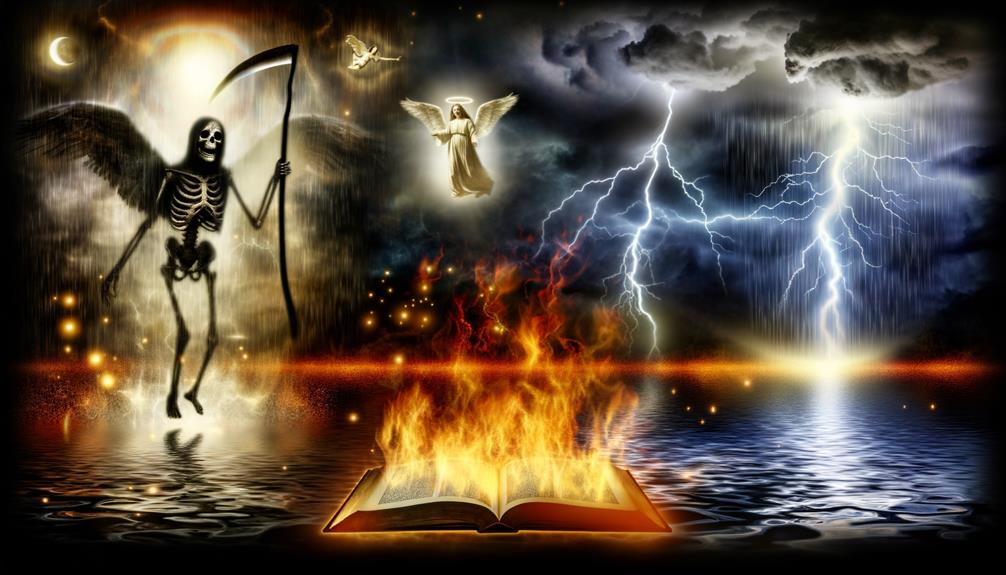
The Book of Revelation employs rich symbolism to convey the concept of the second death, intertwining eschatological themes with profound theological implications.
The imagery of the lake of fire (Revelation 20:14-15) serves as a powerful representation of final judgment and ultimate separation from God. This metaphorical language is intended to evoke the severity and permanence of spiritual death.
The ‘second death’ contrasts starkly with the promise of eternal life, underscoring the dichotomy between salvation and damnation. Revelation’s symbolic use of terms like ‘death’ and ‘Hades’ (Revelation 1:18) highlights the shift from physical demise to eternal destiny.
This vivid symbolism invites believers to reflect on their spiritual state and the eternal consequences of their choices.
Spiritual Consequences

Building upon the symbolic framework established in Revelation, the spiritual consequences of the second death emphasize the eternal ramifications of one’s relationship with God.
In Revelation 20:14-15, the second death represents ultimate separation from God’s presence, reserved for those whose names are not found in the Book of Life. This profound estrangement signifies not merely physical cessation but a perpetual state of spiritual alienation and suffering.
The second death, consequently, underscores a critical theological assertion: the irrevocable fate of those who reject divine grace. The emphasis is on the gravity of moral and spiritual choices made during one’s earthly life, reflecting the enduring biblical theme that eternal destiny is intrinsically linked to one’s fidelity to God and His commandments.
Second Death Vs. Physical Death

Contrasting the second death with physical death reveals distinct theological implications within biblical eschatology. Physical death, the cessation of biological life, is a universal human experience marked by the separation of the soul from the body. In contrast, the second death, as depicted in Revelation 20:14, signifies eternal separation from God, reserved for those unredeemed by Christ’s sacrifice. This distinction underscores the gravity of spiritual redemption.
| Aspect | Physical Death | Second Death |
|---|---|---|
| Nature | Biological cessation | Eternal spiritual separation |
| Scriptural Reference | Genesis 3:19 | Revelation 20:14 |
| Implication | Universal human experience | Reserved for the unredeemed |
Such theological nuances underscore the importance of understanding these eschatological concepts within the Christian faith.
Implications for Believers

Understanding the theological distinction between physical death and the second death profoundly impacts the spiritual lives and eternal destinies of believers.
In Revelation 20:14-15, the second death is described as the lake of fire, symbolizing eternal separation from God. For believers, this underscores the gravitas of their faith in Christ for salvation (John 3:16).
Embracing Christ not only promises eternal life but also averts the peril of the second death. As a result, this doctrine shapes ethical living, urging adherence to Christ’s teachings (Matthew 7:21).
Believers are therefore called to a life of holiness, knowing that their eternal trajectory hinges on their spiritual fidelity and the redemptive work of Jesus Christ (Romans 6:23).
Conclusion
The concept of the second death, as presented in the Bible, underscores significant theological and eschatological implications.
Particularly, Revelation 20:14 states, ‘Then death and Hades were thrown into the lake of fire. The lake of fire is the second death.’ This scripture emphasizes the spiritual finality beyond physical demise.
A compelling statistic reveals that references to the second death appear four times in the Book of Revelation, illustrating its critical role in biblical eschatology and the doctrinal understanding of eternal judgment.