What Is the Meaning of Born Again in the Bible? Renewal
In the Bible, being ‘born again‘ signifies a profound spiritual transformation essential for entering the Kingdom of God, as described in John 3:1-21. This concept, derived from Jesus’ dialogue with Nicodemus, involves an inner renewal through the Holy Spirit, marked by repentance and faith.
Theologically, it emphasizes a reorientation of one’s spiritual state and identity towards divine principles. Metaphors of water and Spirit underscore the process of purification and rebirth.
This transformation aligns believers with Christian values, promoting ethical living and spiritual maturity. To gain a deeper understanding, explore the implications of these metaphors and theological foundations further.

Key Takeaways
- The ‘born again’ concept signifies a profound spiritual transformation facilitated by the Holy Spirit, transcending physical birth.
- Jesus emphasized to Nicodemus in John 3:1-21 the necessity of being ‘born of water and Spirit’ for salvation.
- Central to being ‘born again’ is the inner renewal and complete reorientation of life towards divine principles.
- Faith in Jesus Christ and repentance from sin are fundamental for the ‘born again’ spiritual transformation.
Biblical Origins of Born Again

The concept of being ‘born again‘ finds its origins in the New Scriptures, particularly in the dialogue between Jesus and Nicodemus as recorded in the Gospel of John.
This term signifies a profound spiritual transformation, transcending mere physical birth. Contextually, ‘born again’ denotes a radical reorientation of one’s life and values towards divine principles.
It embodies a regenerative process facilitated by the Holy Spirit, symbolizing a shift from spiritual death to life. Scholarly interpretations often link this notion to themes of repentance, renewal, and the inception of a new spiritual identity.
It underscores the importance of an internal change, rather than external conformity, as a prerequisite for entering the Kingdom of God, reflecting a core tenet of Christian soteriology.
Jesus and Nicodemus
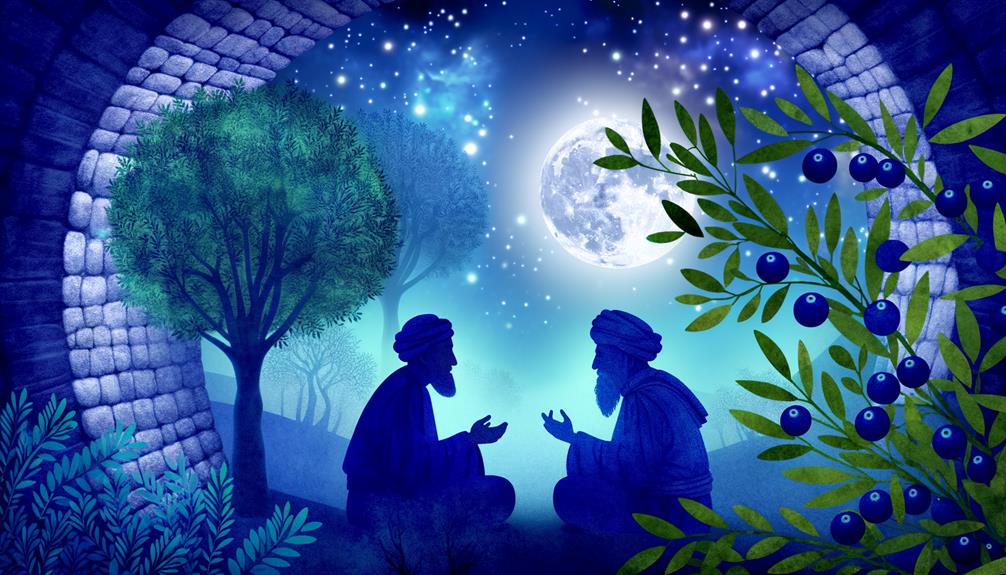
Engaging in a nocturnal conversation, Jesus elucidates the profound concept of being ‘born again‘ to Nicodemus, a Pharisee and member of the Jewish ruling council, as documented in John 3:1-21.
Nicodemus approaches Jesus, seeking deeper spiritual insight. Jesus responds by asserting that one must be ‘born of water and the Spirit’ to enter the kingdom of God.
This mystical dialogue reveals the necessity of a transformative rebirth, transcending physical birth and emphasizing spiritual regeneration.
Nicodemus, grappling with the literal implications, is guided by Jesus towards an understanding that this rebirth is essential for true spiritual enlightenment and salvation.
This exchange encapsulates the theological foundation for the ‘born again’ experience, pivotal in Christian doctrine.
Spiritual Transformation Explained
Spiritual transformation in the biblical context involves an inner renewal process that signifies a profound change in one’s spiritual state.
This transformation leads to the formation of a new identity in Christ, marked by a departure from past sins and an embrace of faith and repentance.
Such a metamorphosis is foundational to the concept of being ‘born again,’ reflecting a complete reorientation of one’s life towards divine principles.
Inner Renewal Process
Central to the concept of being ‘born again‘ is the profound inner renewal process, wherein an individual’s spiritual essence undergoes a transformative realignment towards divine principles.
This transformation is often described as a metamorphosis that transcends mere behavioral change, reaching into the core of one’s spiritual identity.
The Bible elucidates this process through metaphors of purification and rebirth, emphasizing the eradication of former, sinful inclinations and the cultivation of a renewed, sanctified nature.
Scriptural passages such as Romans 12:2 and 2 Corinthians 5:17 underscore this renewal, advocating for a continuous renewal of the mind and spirit.
Consequently, the inner renewal process is a divine recalibration, aligning believers with God’s will and enabling a deeper, more authentic spiritual communion.
New Identity Formation
The formation of a new identity in the context of being ‘born again‘ involves a profound reconfiguration of one’s spiritual essence, characterized by a departure from former sinfulness and an embrace of a sanctified life.
This transformative process signifies not just an external change in behavior, but a deep internal renewal, aligning one’s values and actions with the tenets of Christian faith.
Scriptural references, such as 2 Corinthians 5:17, underscore this metamorphosis, asserting that ‘if anyone is in Christ, the new creation has come: The old has gone, the new is here!’
This reformation of identity is pivotal, as it embodies the believer’s progression from spiritual death to life, symbolizing a complete reorientation towards divine principles and purpose.
Faith and Repentance
Faith and repentance are fundamental components of the spiritual transformation described as being ‘born again,’ encapsulating the believer’s turn away from sin and towards a life devoted to Christ.
Faith involves an absolute trust in Jesus Christ as Savior, acknowledging His atoning sacrifice and resurrection as the basis for salvation.
Repentance, on the other hand, signifies a profound change of mind and heart, leading to a deliberate rejection of sin and a commitment to God’s will.
This dual process is integrative, where faith ignites the believer’s spiritual journey and repentance guarantees a continuous alignment with divine principles.
The synergy of faith and repentance underscores the transformative essence of being ‘born again,’ fostering a renewed identity in Christ.
Symbolism in Rebirth

Examining the symbolism in rebirth reveals profound theological implications that underscore the transformative nature of spiritual renewal in biblical texts.
Rebirth, often depicted through metaphors such as being ‘born of the Spirit’ (John 3:5-8) and ‘new creation‘ (2 Corinthians 5:17), emphasizes a radical inner change. This transformation transcends mere moral reformation, signifying a complete renewal of one’s identity and relationship with God.
The imagery of water and spirit in baptism further illustrates cleansing and the bestowal of new life. Such rich symbolism not only highlights the depth of God’s redemptive power but also serves as a powerful narrative device to convey the profound shift from an old, sinful existence to a new, sanctified life in Christ.
Implications for Believers

The concept of being ‘born again‘ carries significant implications for believers, encompassing a profound spiritual transformation process that redefines their identity in Christ.
This new identity is not merely symbolic but entails a genuine metamorphosis that aligns believers with the teachings and character of Jesus.
Additionally, this transformation assures believers of eternal life, serving as a foundational tenet of Christian faith and hope.
Spiritual Transformation Process
Central to the concept of being born again is the profound spiritual transformation that redefines a believer’s identity and purpose within the Christian faith.
This metamorphosis involves a radical reorientation of one’s inner life, characterized by the indwelling of the Holy Spirit, which initiates a process of sanctification. The believer undergoes a shift in values, priorities, and behavior, aligning more closely with the teachings of Jesus Christ.
This transformation is not merely external but deeply internal, affecting the core of one’s being.
Scriptural passages such as 2 Corinthians 5:17 emphasize that in Christ, one becomes a ‘new creation,’ thereby underscoring the thorough nature of this spiritual rebirth.
This ongoing process necessitates continual growth and maturity in faith.
New Identity in Christ
Understanding the profound spiritual transformation that occurs during the process of being born again, believers are endowed with a new identity in Christ, which carries significant implications for their everyday lives and spiritual journey.
This new identity is not merely symbolic but foundational, altering one’s moral and ethical framework. Scripturally, this transformation signifies a shift from old self-bound by sin to a new self liberated in righteousness (2 Corinthians 5:17).
Believers are called to embody virtues such as love, humility, and compassion, aligning their lives with the teachings of Christ.
Consequently, this identity reshapes interpersonal relationships, decision-making processes, and priorities, fostering a life that reflects Christ’s character and values, ultimately guiding believers toward spiritual maturity and sanctification.
Eternal Life Assurance
Eternal life assurance profoundly influences believers by providing a steadfast hope and a framework for enduring faith amidst life’s uncertainties. This assurance, rooted in biblical promises, signifies the believer’s secure and unending relationship with God. It shapes a Christian’s worldview, encouraging ethical living and spiritual growth.
Key implications include:
- Confidence in Salvation: Believers rest in the certainty of their eternal destiny.
- Motivation for Righteous Living: Assurance prompts adherence to biblical principles.
- Comfort in Trials: Provides solace during hardships, knowing eternal life awaits.
- Purpose and Mission: Fuels evangelistic efforts, sharing the message of salvation.
Thus, eternal life assurance is a cornerstone of Christian faith, offering both existential comfort and practical guidance.
Modern Interpretations

Exploring modern interpretations of the concept of being ‘born again‘ reveals a diverse spectrum of theological perspectives and cultural adaptations.
Contemporary Christian denominations often emphasize personal spiritual renewal and transformation as central to the ‘born again’ experience. Evangelical traditions particularly highlight a conscious decision to accept Jesus Christ as Savior, marking a pivotal conversion moment.
Meanwhile, progressive theologians may interpret ‘born again’ in more metaphorical terms, viewing it as an ongoing process of spiritual growth and ethical living.
Beyond Christianity, the phrase has permeated broader cultural contexts, sometimes symbolizing significant life changes or new beginnings.
This multiplicity of interpretations underscores the adaptability and evolving nature of the concept, reflecting its enduring relevance in various social and religious settings.
Conclusion
In an age where spiritual rebirth is often reduced to mere vernacular, the biblical concept of being ‘born again‘ remains a profound paradox.
Jesus’ dialogue with Nicodemus underscores a transformation that transcends physical existence, inviting believers into a domain of symbolic rebirth and spiritual renewal.
Ironically, this ancient idea continues to challenge modern interpretations, revealing the timeless struggle to reconcile human understanding with divine mystery.
Such is the enduring legacy of being ‘born again’ within the Christian faith.