
Mocked Meaning in the Bible: Scorn and Rejection
In the Bible, mockery is highlighted as a grave offense against both individuals and the divine order, reflecting deeper moral and spiritual failings. In the Old Scripture, figures such as Ishmael, Goliath, and the prophets faced severe repercussions or divine retribution for mocking others or being mocked themselves.
This theme extends into the New Scripture, where Jesus and His apostles endured ridicule as part of their divine mission, fulfilling ancient prophecies and illustrating human rejection of divine wisdom. Mockery serves as a narrative device to juxtapose human folly against divine justice and purpose, offering profound theological insights.
Explore how these lessons shape our understanding of faith and resilience.

Key Takeaways
- Mockery in the Bible symbolizes moral and spiritual failings, often resulting in severe consequences.
- Prophets and Jesus frequently faced scorn, fulfilling prophetic scriptures and emphasizing divine purpose.
- Job’s friends’ mockery reflected a misunderstanding of divine justice and suffering.
- Mockery in the Psalms expresses anguish and serves as a call for divine intervention.
Mockery in the Old Testament
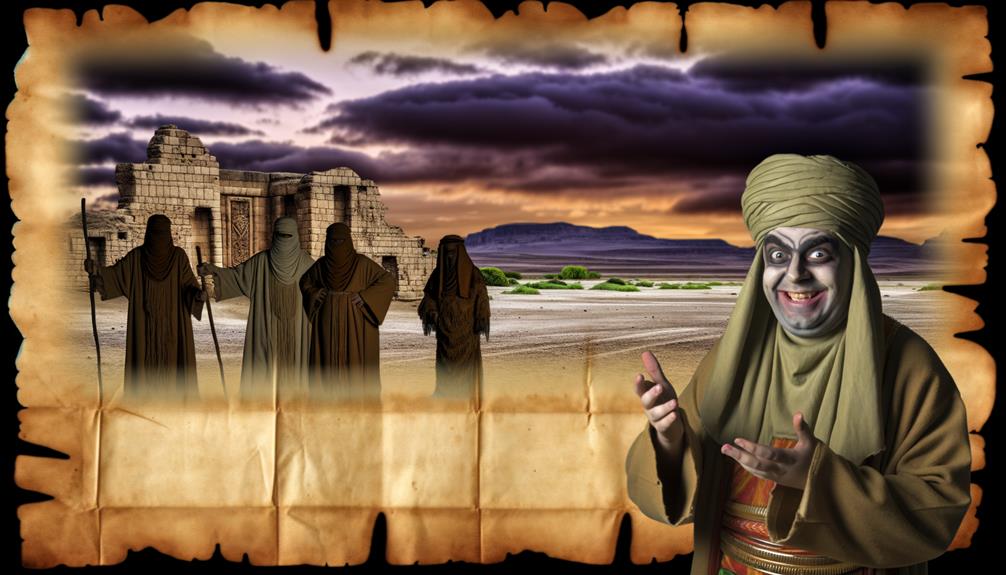
In the Old Scriptures, mockery is often depicted as a grave offense that reflects deeper moral and spiritual failings, with numerous instances illustrating its consequences within the narrative framework.
For example, in Genesis 21:9-10, Ishmael’s mocking of Isaac leads to his and Hagar’s expulsion, underscoring mockery’s disruptive potential.
Proverbs 14:9 states, ‘Fools mock at making amends for sin,’ indicating mockery’s association with folly and moral blindness.
Prophets like Elisha faced mockery in 2 Kings 2:23-24, where divine retribution followed the taunting youths’ disrespect.
These scriptural references highlight that mockery is not merely a social transgression but an affront against divine order, bearing severe repercussions within the covenantal context of the Old Covenant.
The Taunts of Goliath
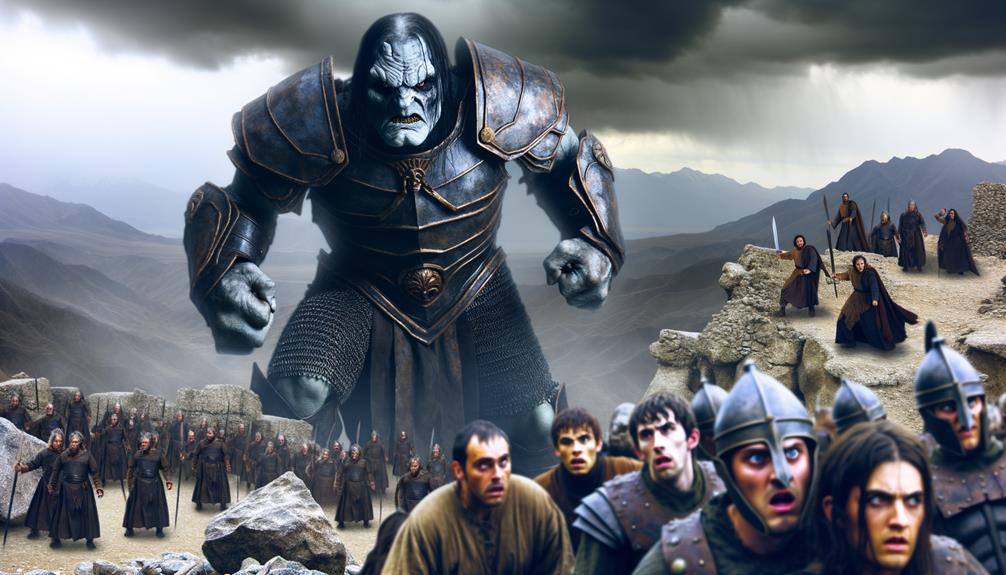
As the Philistine champion, Goliath’s taunts in 1 Samuel 17:8-10 not only demeaned the Israelite forces but also challenged the sovereignty and power of their God, epitomizing the brazen defiance against divine authority.
Goliath’s mockery was a direct affront to Israel’s faith, highlighting the spiritual warfare embedded within the physical conflict. His defiance and ridicule served to amplify the perceived weakness of the Israelites and their God.
Historically, such taunts were a tactic to demoralize opponents, but scripturally, they underscored a deeper theological narrative: the battle between human arrogance and divine providence.
Goliath’s challenge set the stage for David’s faith-driven victory, illustrating the triumph of God’s power over human pride and mockery.
Job’s Suffering and Mockery
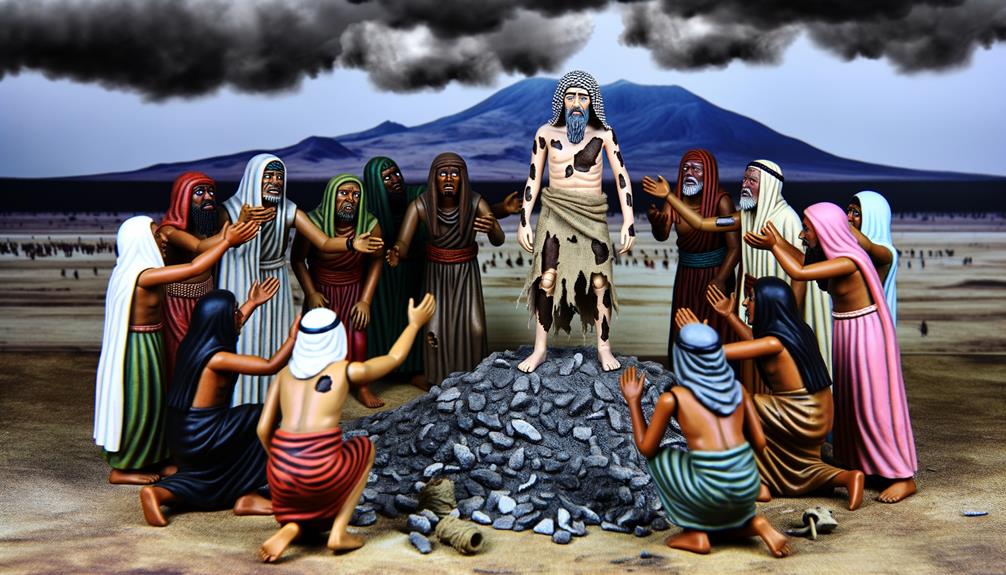
The Book of Job presents a profound exploration of suffering and mockery, particularly through the accusations leveled by Job’s friends who misunderstand the divine purpose behind his trials.
Their erroneous assertions that Job’s suffering is a result of his own sins reflect a broader theological misunderstanding of God’s justice.
Despite their mockery and misguided counsel, Job’s enduring faith amid immense trials underscores the complexity of faith and the human condition in the face of inexplicable suffering.
Job’s Friends’ Accusations
Amidst Job’s profound suffering and despair, his friends’ accusations only served to deepen his anguish, as they attributed his misfortunes to supposed hidden sins. This reflected a common yet flawed theological perspective of retributive justice, as they believed that suffering was a direct consequence of personal sin, consequently misinterpreting Job’s plight.
This viewpoint was prevalent in ancient Near Eastern thought and is encapsulated in their dialogues with Job:
- Eliphaz: Suggested that Job’s suffering was due to his own iniquity (Job 4:7-8).
- Bildad: Asserted that Job’s children suffered for their sins (Job 8:4).
- Zophar: Claimed Job deserved even more suffering for his hidden sins (Job 11:6).
- Elihu: Argued that Job failed to recognize God’s righteous judgment (Job 34:7-9).
This misjudgment highlighted their limited understanding of divine justice.
Misunderstanding Divine Purpose
Job’s friends’ flawed accusations underscore a broader misunderstanding of divine purpose, particularly evident in their inability to grasp the true nature of his suffering and the apparent mockery he endured.
Historically, the Book of Job challenges simplistic retributive theology, where suffering is seen solely as a consequence of sin.
Scripturally, Job 2:7-13 illustrates his friends’ limited perspective, as they equate his afflictions with divine punishment. This misinterpretation overlooks the divine dialogue in Job 1:8, where God acknowledges Job’s righteousness.
Their mockery and misguided counsel reflect a failure to understand that divine purposes can transcend human comprehension.
Consequently, Job’s plight invites readers to explore the complexities of faith, suffering, and God’s inscrutable will beyond superficial judgments.
Enduring Faith Amid Trials
Amid profound suffering and mockery, Job’s unwavering faith serves as a demonstration to the resilience of the human spirit in the face of divine trials. Job’s narrative, deeply rooted in historical and theological contexts, offers profound insights:
- Suffering as a Test: Job’s afflictions, from loss of wealth to severe illness, are depicted as a divine test of faith (Job 1-2).
- Mockery from Peers: His friends’ accusations and derision represent societal misunderstanding of divine justice (Job 4-27).
- Divine Dialogue: Job’s conversations with God emphasize the transcendence of divine wisdom over human understanding (Job 38-41).
- Ultimate Restoration: Despite trials, Job’s faith culminates in restoration, symbolizing divine justice and mercy (Job 42).
This analysis underscores the multifaceted dimensions of faith amid trials.
Prophets and Scorn

Throughout biblical history, prophets often faced scorn and derision as they delivered messages that challenged societal norms and called for repentance. Figures such as Jeremiah, who lamented, ‘I am ridiculed all day long; everyone mocks me’ (Jeremiah 20:7), exemplify this struggle.
Theologically, prophets were God’s mouthpieces, whose divine commissions frequently put them at odds with prevailing cultural practices and political powers. This opposition underscores the tension between divine truth and human resistance.
Historically, the rejection of prophets illustrates a recurring pattern where humanity resists transformative calls for spiritual and moral reformation.
Scriptural accounts, from Elijah’s confrontations with Ahab to Isaiah’s warnings, reveal a consistent theme: prophetic integrity often invites ridicule, yet remains pivotal in God’s redemptive narrative.
Mockery in the Psalms

The theme of mockery extends into the Psalms, where the psalmists frequently express their anguish over being scorned by their adversaries, reflecting a profound sense of suffering and a plea for divine intervention.
In these poetic prayers, mockery serves as a catalyst for deeper spiritual reflection and a call for God’s justice. The psalmists’ experiences highlight several key elements:
- Psalm 22:7 – ‘All who see me mock me; they hurl insults, shaking their heads.’
- Psalm 35:16 – ‘Like the ungodly they maliciously mocked; they gnashed their teeth at me.’
- Psalm 44:13 – ‘You have made us a reproach to our neighbors, the scorn and derision of those around us.’
- Psalm 123:4 – ‘We have endured no end of ridicule from the arrogant.’
Jesus and Ridicule

Jesus’ ministry was profoundly marked by instances of ridicule and scorn, which not only fulfilled prophetic scriptures but also underscored his role as the suffering servant.
Isaiah 53:3 prophetically describes the Messiah as ‘despised and rejected by men,’ a theme echoed in the Gospels.
Jesus’ teachings, which often contradicted Pharisaic legalism and societal norms, invited derision. For instance, in Luke 16:14, the Pharisees, described as ‘lovers of money,’ ridiculed Jesus for his teachings on wealth.
Such mockery was not incidental but integral to his ministry, highlighting his unwavering commitment to God’s redemptive plan.
This ridicule accentuated Jesus’ fulfillment of Old Covenant prophecies, affirming his identity and mission amidst opposition and disbelief.
The Mocking of Jesus’ Trial
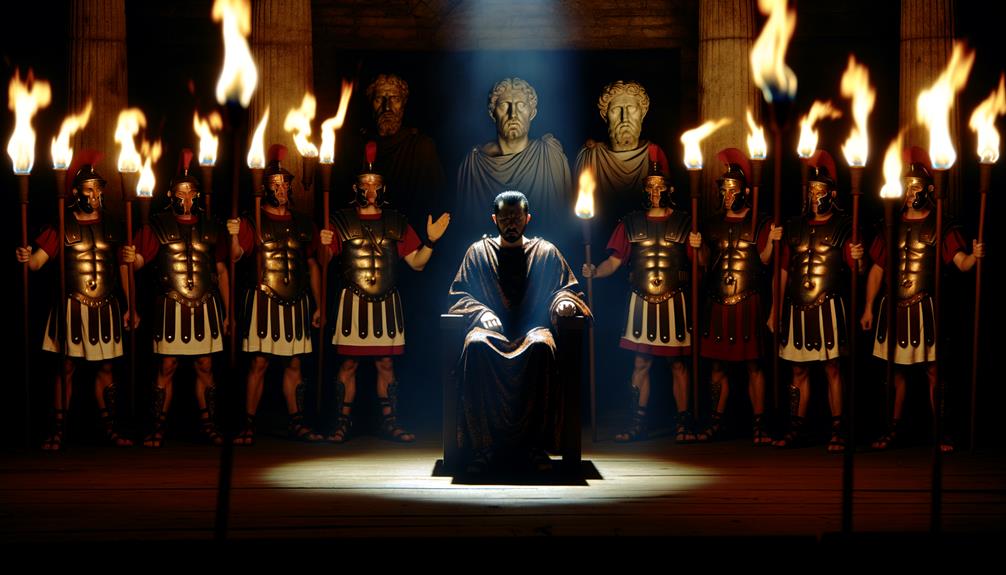
Amid the climactic events of his trial, the mockery and scorn directed at Jesus served to fulfill ancient prophecies and illuminate the profound theological significance of his suffering. The trial of Jesus, laden with derision, aligns with the prophetic visions, particularly Isaiah 53:3, which describes the Messiah as ‘despised and rejected.’
This mockery underscores key theological themes:
- Fulfillment of Prophecy: Jesus’ experience aligns with Old Covenant prophecies, affirming his messianic identity.
- Rejection by His Own: His own people’s rejection emphasizes the profundity of his sacrifice.
- Divine Purpose: It demonstrates the foreordained nature of Jesus’ path to crucifixion.
- Suffering Servant: This highlights the concept of Jesus as the suffering servant who endures humiliation for humanity’s redemption.
This mockery, therefore, deepens understanding of Jesus’ redemptive mission.
Mockery at the Crucifixion
At the crucifixion, myriad forms of mockery and derision directed at Jesus become a focal point that reveals the depth of human sin and the magnitude of divine grace.
Roman soldiers, Jewish leaders, and passersby all participated in ridiculing Jesus, as recorded in the Gospels (Matthew 27:39-44, Mark 15:29-32). They taunted Him with titles like ‘King of the Jews’ and challenged Him to save Himself.
This public humiliation was prophesied in Isaiah 53:3 and underscores the fulfillment of Messianic prophecies.
Theologically, this mockery illustrates humanity’s rejection of divine truth, while simultaneously highlighting Jesus’ unwavering submission to God’s salvific plan.
His silent endurance amidst scorn exemplifies divine love and the redemptive power of His sacrifice.
Apostles Facing Mockery
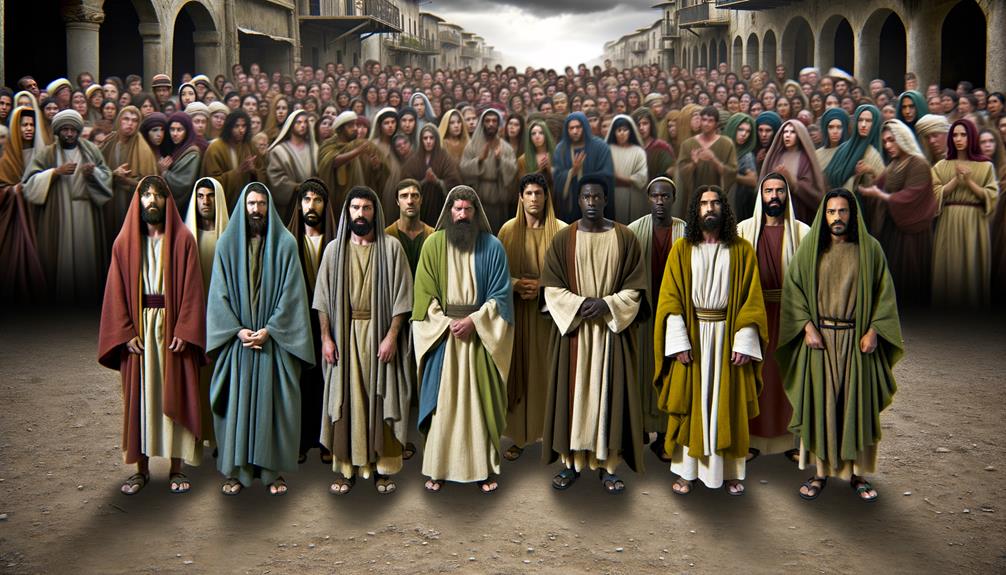
The apostles frequently encountered mockery from various sources, including religious authorities, political leaders, and even the general populace, as they proclaimed the Gospel.
Scriptural accounts, such as Acts 17:32 and Acts 26:24, highlight instances where the apostles’ teachings were met with scorn and skepticism.
Analyzing their responses to ridicule reveals a steadfast commitment to their mission, characterized by resilience and a profound reliance on divine guidance.
Sources of Apostolic Mockery
Throughout their ministry, the apostles frequently encountered mockery from various groups, reflecting both the sociopolitical tensions and theological misunderstandings of the time.
Key sources of apostolic mockery include:
- Jewish Religious Leaders: The Pharisees and Sadducees often ridiculed the apostles for their teachings, which they viewed as blasphemous and contrary to Jewish law (Acts 4:1-3).
- Roman Authorities: Roman officials mocked the apostles for their allegiance to Christ, whom they saw as a threat to the imperial cult and societal order (Acts 25:23-27).
- Pagan Philosophers: Greek and Roman philosophers derided the apostles for their monotheistic beliefs and resurrection claims, considering them foolish (Acts 17:18).
- General Public: Common people sometimes mocked the apostles, influenced by prevailing cultural and religious biases (Acts 2:13).
Responses to Ridicule
In the face of persistent mockery, the apostles demonstrated resilience and unwavering faith, often responding with scriptural references, reasoned arguments, and a steadfast commitment to their divine mission.
For instance, in Acts 2:13-15, when accused of drunkenness during Pentecost, Peter rebutted with prophetic fulfillment from Joel, affirming the Holy Spirit’s descent.
Paul, in Acts 17:32-34, faced ridicule in Athens but persisted, leading some to believe.
Historically, their responses were rooted in Jewish traditions of debate and prophecy, as seen in Stephen’s eloquent defense before the Sanhedrin in Acts 7.
This scriptural analysis underscores that their approach was not mere defiance but a theological affirmation of their faith, grounded in divine revelation and historical continuity.
Mockery in Proverbs

Proverbs, a book renowned for its wisdom literature, frequently addresses mockery, highlighting its detrimental effects on both individuals and communities. The text often contrasts the outcomes of wise and foolish behaviors, emphasizing the spiritual and social ramifications of ridicule.
- Proverbs 9:7-8 – Criticizing a mocker invites insults; rebuking a wicked man incurs abuse. This underscores the futility and potential backlash of confronting mockery.
- Proverbs 14:9 – Fools mock at making amends for sin, showcasing their disregard for repentance and reconciliation.
- Proverbs 19:29 – Penalties are prepared for mockers, indicating divine justice against those who scorn.
- Proverbs 21:24 – The proud and arrogant are labeled as mockers, linking mockery to pride and hubris.
These passages collectively illustrate the biblical condemnation of mockery.
Lessons on Faith and Mockery

The intertwining of faith and mockery in the Bible reveals profound lessons on the resilience of belief amidst scorn and derision.
Scriptural narratives, such as the mockery faced by Noah (Genesis 6-9) and the ridicule endured by Jesus (Matthew 27:27-31), underscore faith’s steadfastness in adversity.
Noah’s unwavering obedience in building the ark, despite public scorn, illustrates the fortitude of divine trust.
Similarly, Jesus’ endurance of mockery, culminating in His crucifixion, exemplifies ultimate faithfulness and the redemptive power of suffering.
Historical context highlights that these instances were not mere episodes of derision but pivotal moments shaping theological understanding.
Consequently, these biblical episodes teach that true faith remains unshaken, even when faced with profound mockery.
Conclusion
Mockery, pervasive throughout the Bible, underscores the spiritual trials faced by key figures, from Goliath’s taunts to the crucifixion of Christ.
Significantly, mockery is referenced over 50 times in the scriptures, revealing its profound impact on faith narratives.
Theological analysis highlights that enduring mockery often serves to test and strengthen believers’ faith.
Consequently, scriptural accounts of mockery offer valuable lessons on resilience and divine justice, reinforcing the steadfastness of faith amidst scorn and derision.