
Still Waters Meaning In The Bible: Peace and Restoration
In the Bible, the term ‘still waters‘ in Psalm 23:2 signifies profound peace and spiritual renewal, illustrating God’s nurturing and restorative presence. The Hebrew phrase ‘mei menuchot’ translates to waters of rest, evoking imagery of divine tranquility and assurance.
Water, a recurrent biblical symbol, embodies purification, life, and spiritual sustenance. Still waters specifically highlight God’s guidance and provision, offering a respite from life’s chaos and a path to inner peace.
This depiction of divine care continues to inspire, hinting at further depths of spiritual insight waiting beyond this glimpse into the sacred text.

Key Takeaways
- ‘Still waters’ in Psalm 23:2 symbolize divine peace, tranquility, and spiritual restoration provided by God.
- The Hebrew phrase ‘mei menuchot’ translates to ‘waters of rest,’ indicating God’s nurturing and comforting presence.
- Water in scripture often represents life, purification, and spiritual sustenance, reflecting God’s provision and care.
- Still waters evoke imagery of divine guidance and protection, ensuring safety and inner peace for believers.
Biblical Context of Psalm 23
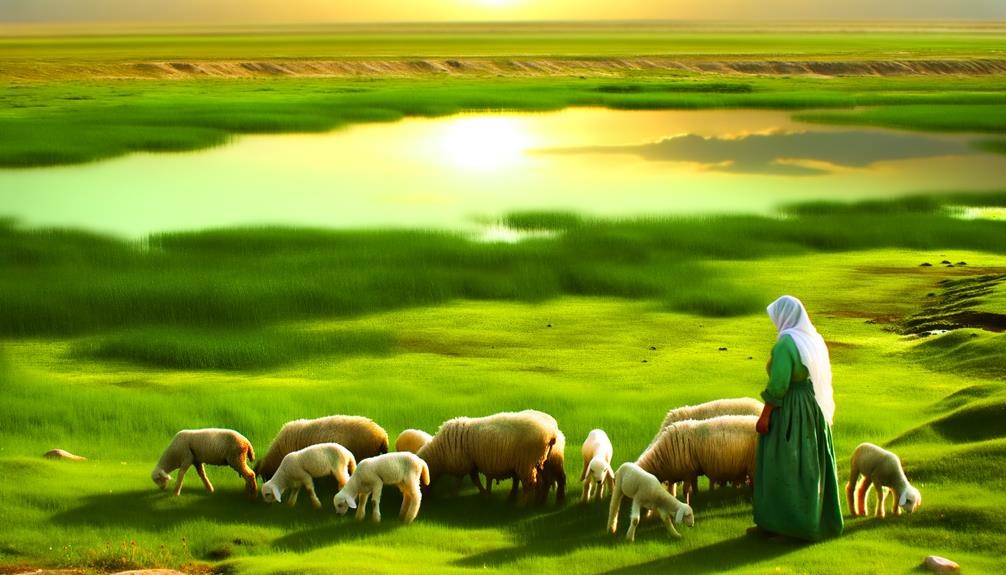
Psalm 23, one of the most renowned passages in the Bible, offers profound insights into the relationship between God and His followers, encapsulating themes of guidance, provision, and peace.
Composed by King David, this psalm presents the Lord as a shepherd, guiding His flock with unwavering care and compassion. The imagery of shepherding, prevalent in ancient Near Eastern cultures, conveys an intimate and protective dynamic.
David’s use of pastoral metaphors underscores God’s role in providing sustenance, security, and tranquility. The phrase ‘He makes me lie down in green pastures’ and ‘He leads me beside still waters’ emphasizes divine provision and rest, reflecting a deeper spiritual sustenance.
Consequently, Psalm 23 remains a timeless witness to God’s nurturing and steadfast presence.
Symbolism of Water in Scripture

Throughout the Bible, water emerges as a multifaceted symbol representing purification, life, divine blessing, and spiritual renewal. Its significance is woven throughout scripture, embodying profound theological and spiritual truths.
Purification: Water frequently symbolizes cleansing from sin, as seen in baptismal rites.
Life: It is essential for physical survival, mirroring its role in sustaining spiritual life (John 4:14).
Divine Blessing: Abundant water is often depicted as a sign of God’s favor and provision (Isaiah 44:3).
Spiritual Renewal: Water signifies the Holy Spirit’s work in revitalizing and restoring believers (John 7:38-39).
Thus, water stands as a powerful metaphor, revealing deeper layers of God’s interaction with humanity and His creation.
Ancient Near Eastern Water Sources
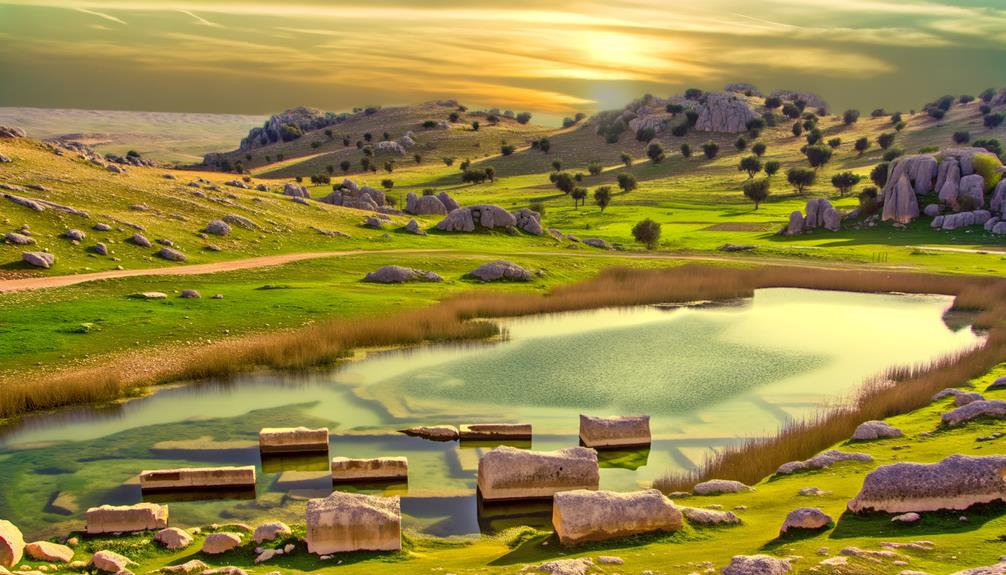
In the arid landscapes of the Ancient Near East, water sources such as wells, cisterns, rivers, and streams were essential for survival and sustenance.
Wells and cisterns provided stable, though often labor-intensive, access to water, symbolizing human effort and divine provision.
Conversely, the natural flow of rivers and streams offered a more immediate and abundant representation of God’s life-giving presence, underscoring themes of refreshment and renewal in the biblical narrative.
Wells and Cisterns
Wells and cisterns were essential water sources in the arid regions of the Ancient Near East, symbolizing both physical sustenance and spiritual provision in biblical texts. These water repositories were not merely functional but carried rich symbolic weight.
Wells often represented divine encounters and blessings, while cisterns, usually man-made, underscored human effort in securing life’s necessities.
- Wells as Divine Encounters: Jacob’s well (John 4) became a place of revelation with Jesus and the Samaritan woman.
- Cisterns Reflecting Human Trust: Jeremiah 2:13 likens forsaking God to relying on broken cisterns.
- Spiritual Thirst: Wells and cisterns metaphorically address humanity’s spiritual longing.
Thus, wells and cisterns are integral to understanding biblical themes of reliance, provision, and divine-human interaction.
Rivers and Streams
Rivers and streams in the Ancient Near East not only provided essential water for daily life but also held profound theological significance in biblical literature.
These water sources symbolized sustenance and divine provision, as seen in the life-sustaining Jordan River.
Biblically, rivers often represented spiritual cleansing and renewal, as evidenced in the ritualistic purifications and baptisms.
Additionally, streams were metaphors for peace and divine guidance, echoing the imagery in Psalm 23:2, ‘He leads me beside still waters.’
In a land where water was scarce, the constancy of rivers and streams underscored God’s unwavering faithfulness and care for His people.
Such imagery enriched the spiritual narrative, illustrating a God who provides, purifies, and perpetually sustains His creation.
Still Waters in Hebrew Text

In examining ‘still waters‘ within the Hebrew text, it is essential to conduct a thorough lexical analysis to understand the precise meaning and connotations of the original terms used.
The scriptural context in which these terms appear further illuminates their theological and pastoral implications.
Additionally, exploring the symbolism and metaphor associated with still waters can provide deeper insights into their significance in biblical narratives.
Hebrew Lexical Analysis
The term ‘still waters’ in the Hebrew Bible is often translated from the phrase ‘מֵי מְנ\u05llחוֹת’ (mei menuchot), which conveys a sense of tranquility and restfulness. This phrase combines the Hebrew words for ‘waters’ (mei) and ‘rest’ (menuchot).
Analyzing these components reveals profound theological and emotional connotations:
- Waters (mei): Represents life-sustaining resources and spiritual refreshment.
- Rest (menuchot): Suggests peace, serenity, and divine comfort.
- Symbolism: Evokes imagery of divine guidance and spiritual restoration.
Understanding ‘mei menuchot’ enriches our comprehension of biblical tranquility, highlighting God’s nurturing and restorative nature.
Scriptural Context Importance
Understanding the scriptural context of ‘still waters’ is essential for comprehending its full theological and spiritual implications within the Hebrew text. The term ‘still waters’ (מֵי מְנֻחָה, mei menuchah) appears in Psalm 23:2, resonating with themes of peace and divine providence. This imagery, deeply embedded in the Hebrew Scriptures, evokes the tranquil and restorative nature of God’s presence.
| Scriptural Passage | Hebrew Term | Contextual Meaning |
|---|---|---|
| Psalm 23:2 | מֵי מְנֻחָה | Peaceful, Restorative |
| Isaiah 8:6 | מֵי הַשִּׁלֹחַ | Gentle, Sustaining |
| Jeremiah 2:13 | מֵי חַיִּים | Living Waters, Life-Giving |
| Ezekiel 47:9 | מֵי מַרְפֵּא | Healing, Energizing |
Analyzing these contexts reveals the multifaceted role of ‘still waters’ in conveying God’s nurturing and sustaining power.
Symbolism and Metaphor
Drawing from the rich tapestry of Hebrew poetry and narrative, ‘still waters’ serve as a profound metaphor encapsulating divine tranquility and restorative grace. The Hebrew term often evokes a serene, undisturbed body of water, symbolizing God’s peace and the soul’s restoration. This imagery is deeply rooted in the spiritual experience of the faithful, offering a sanctuary from life’s turmoil.
Divine Presence: Still waters signify God’s calming presence in the believer’s life.
Restoration: They embody the rejuvenation of the soul, reflecting Psalm 23’s promise.
Guidance: Representing divine guidance, they lead the faithful towards righteousness.
Eternal Peace: They hint at the ultimate peace and contentment found in God’s care.
Such symbolism enriches Biblical understanding and spiritual reflection.
Peace and Tranquility

In biblical scripture, still waters frequently symbolize the profound peace and tranquility bestowed upon believers through divine presence and guidance. This serene imagery encapsulates the cessation of turmoil and the onset of spiritual calmness, reflecting a soul at rest in God’s care. The Psalms, particularly Psalm 23:2, vividly illustrate this tranquility, portraying God as a shepherd leading His flock beside still waters. This metaphor underscores the spiritual refreshment and inner peace that come from trusting in divine providence.
| Aspect | Description |
|---|---|
| Scriptural Basis | Psalm 23:2: “He leads me beside still waters.” |
| Symbolism | Represents peace, calmness, and spiritual rest. |
| Spiritual Impact | Encourages believers to seek and trust in God’s serene and steady guidance. |
This understanding fosters a deeper appreciation for the spiritual solace found in divine proximity.
Divine Guidance and Provision

The metaphor of still waters in the Bible extends beyond mere tranquility to encompass divine guidance and provision, offering profound spiritual nourishment.
This imagery signifies the path to tranquility that God provides, leading believers to a place of rest and sustenance.
Spiritual Nourishment Described
Spiritual nourishment, as depicted in the biblical metaphor of still waters, encapsulates the divine guidance and provision that sustains the believer’s soul. This imagery, rooted in Psalm 23, illustrates how God’s care and leadership offer restorative and sustaining power.
The metaphor underscores several key aspects of divine sustenance:
- Peaceful Environment: Reflects God’s provision of a serene setting for spiritual rejuvenation.
- Guidance and Direction: Symbolizes divine leadership in the believer’s life journey.
- Restoration and Healing: Indicates the soul’s renewal through divine intervention.
These elements collectively highlight how divine guidance and provision through ‘still waters’ fosters a deeper, more resilient spiritual life.
Path to Tranquility
Finding the path to tranquility through divine guidance and provision reveals a profound understanding of spiritual peace and assurance.
The biblical metaphor of ‘still waters‘ encapsulates this notion, suggesting a state of calmness and divine surveillance. Psalms 23:2 poignantly illustrates this, stating, ‘He leads me beside still waters,’ indicating that God’s guidance is both nurturing and serene.
This divine provision guarantees that believers find solace and stability amid life’s tumultuous currents. Scholarly interpretations often highlight that tranquility is not merely the absence of chaos but the presence of divine order and care.
Consequently, the path to tranquility is a journey led by divine wisdom, promising a peaceful heart and a steadfast spirit under God’s providential care.
Safety and Protection

In the biblical context, ‘still waters’ often symbolize a divine assurance of safety and protection for the faithful. This imagery is deeply rooted in the pastoral care provided by God, akin to a shepherd tending to his flock. The serene waters represent more than just physical tranquility; they embody God’s vigilant watch over His people, ensuring their well-being in a turbulent world.
Serenity amidst chaos: Still waters suggest a divine peace that shields against life’s storms.
Divine guidance: Just as a shepherd leads sheep to safe waters, God directs believers towards safety.
Restoration of the soul: This protection is not only physical but also spiritual, securing inner peace.
Trust in providence: Believers find safety in their unwavering trust in God’s plans and provisions.
Spiritual Refreshment

Building upon the assurance of safety and protection, the notion of ‘still waters’ also encompasses a profound sense of spiritual refreshment, offering rejuvenation to the weary soul. This metaphorical imagery signifies a state of inner peace and divine restoration, often referenced in the Psalms. The tranquil waters represent God’s ability to renew the spirit, providing a sanctuary from life’s turbulence.
| Aspect | Scriptural Reference | Interpretation |
|---|---|---|
| Inner Peace | Psalm 23:2 | Calmness in God’s presence |
| Divine Restoration | Psalm 51:12 | Renewal of spiritual liveliness |
| Sanctuary from Turbulence | Psalm 91:1 | Refuge and comfort |
| Rest for the Weary | Matthew 11:28 | Spiritual rest and solace |
| Healing and Renewal | Jeremiah 31:25 | Revitalization of the soul |
In essence, ‘still waters’ serve as a divine remedy for spiritual exhaustion, fostering a profound connection with the divine.
Life-Giving Properties

The concept of ‘still waters’ in biblical scripture is not merely symbolic of peace and tranquility, but also embodies the life-giving properties that sustain and nourish the believer’s soul.
This imagery serves as a profound metaphor, indicating the spiritual sustenance and renewal offered by divine grace. It emphasizes the essential need for spiritual nourishment that parallels physical sustenance.
- Spiritual Renewal: Just as still waters refresh the body, they rejuvenate the soul.
- Divine Provision: Symbolizes God’s provision for life’s necessities, both physical and spiritual.
- Inner Peace: Reflects the tranquility and calm that faith can bring amidst life’s turmoil.
In these ways, still waters encapsulate the holistic sustenance offered by faith.
Historical Interpretations

Exploring the historical interpretations of ‘still waters‘ reveals a rich tapestry of theological reflections and cultural understandings that have shaped the way this metaphor has been perceived throughout centuries.
Early Church Fathers, such as Augustine, viewed ‘still waters’ as symbolic of divine tranquility and spiritual nourishment, essential for the soul’s journey toward God.
Medieval theologians emphasized its representation of inner peace and the soul’s restoration through God’s grace.
In Jewish exegesis, ‘still waters’ often signified God’s providence and the sustenance provided in the wilderness.
Across these interpretations, ‘still waters’ consistently convey a sense of divine comfort and assurance, reflecting the broader biblical theme of God as a shepherd who leads His flock to places of safety and rest.
Modern-Day Applications

In contemporary spiritual practice, ‘still waters’ frequently serve as a metaphor for cultivating inner peace amidst the chaos of modern life. This concept resonates deeply in our fast-paced world, where the quest for tranquility is paramount.
Embracing ‘still waters’ involves:
- Mindfulness Practices: Engaging in meditation or prayer to calm the mind.
- Nature Retreats: Immersing oneself in natural environments to rejuvenate the spirit.
- Balanced Living: Prioritizing work-life balance to maintain mental health.
These modern applications underscore the timeless relevance of ‘still waters,’ illustrating how ancient biblical wisdom can be seamlessly integrated into contemporary lifestyles, fostering a profound sense of harmony and spiritual well-being.
Conclusion
The imagery of ‘still waters‘ in Psalm 23, rich with ancient Near Eastern symbolism, encapsulates profound themes of peace, tranquility, and spiritual nourishment.
This biblical metaphor, echoing through historical interpretations, invites reflection on divine providence and sustenance.
Embracing still waters as emblematic of God’s restorative presence, one is reminded of the timeless quest for spiritual serenity and life-giving grace, much akin to the soul’s yearning for the eternal ‘living water’ proffered by Christ.