
Wedding Veil Meaning in Bible: Symbolism and Significance
In the Bible, the wedding veil is imbued with rich symbolism, highlighting themes of modesty, purity, and the sacred nature of marriage. References in Genesis 24:65, where Rebekah veils herself, and 1 Corinthians 11:5-6, which discusses head coverings, underscore its cultural and spiritual significance.
The veil functions as a marker of the bride’s inner sanctity and moral integrity, aligning with biblical expectations of purity and virtue. It also represents the sacred marriage covenant under God’s blessing, signifying promises of fidelity and divine union.
This layered symbolism reveals deeper theological insights in both Old and New scriptures contexts.

Key Takeaways
- The wedding veil symbolizes modesty and purity, reflecting the bride’s inner sanctity and moral integrity.
- In the Bible, veils often signify marital status, as seen with Rebekah in Genesis 24:65.
- The veil represents the sacred marriage covenant and divine principles, highlighting fidelity and mutual respect.
- Veils in biblical contexts symbolize themes of modesty, divine intervention, and spiritual transformation.
Biblical Origins of Veils

The biblical origins of veils can be traced to several key passages in the Old and New Scriptures, where they symbolize various theological and cultural concepts.
In Genesis 24:65, Rebekah covers herself with a veil upon meeting Isaac, suggesting a form of reverence and perhaps denoting her impending marital status.
Similarly, in 1 Corinthians 11:5-6, Paul discusses women covering their heads during prayer, which reflects early Christian customs and gender roles.
The veil’s presence in these texts underscores its multifaceted significance, ranging from religious devotion to social norms.
Symbolism of Modesty
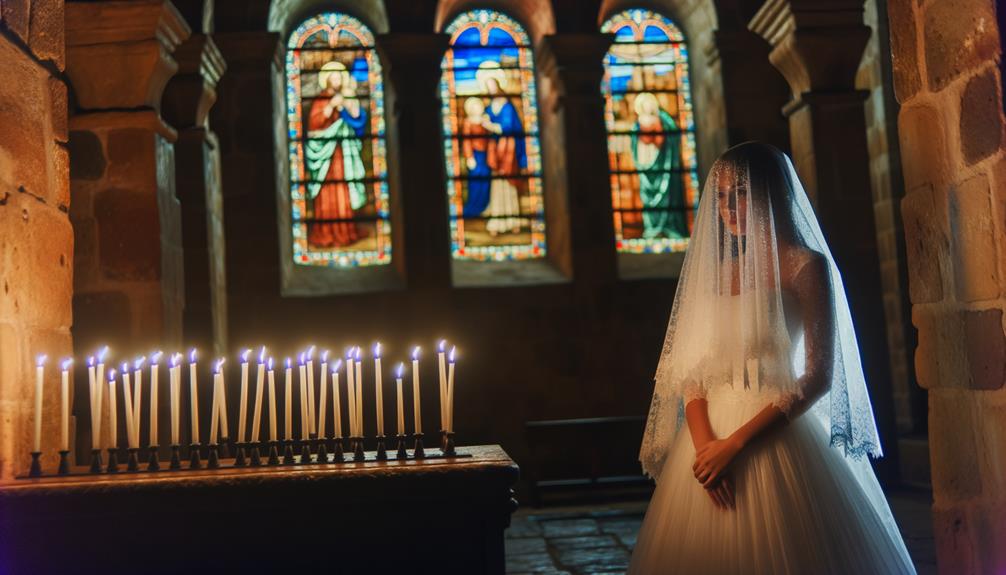
The wedding veil in biblical context serves as a multifaceted symbol of modesty, encapsulating both cultural humility and spiritual purity.
Cultural humility is reflected in the veil’s function as a marker of a woman’s respect and reverence within societal norms.
Concurrently, its spiritual significance lies in representing the bride’s inner sanctity and moral integrity, aligning with scriptural notions of purity.
Cultural Humility Expression
Embodying cultural humility, the wedding veil in biblical traditions symbolizes modesty and reverence, reflecting a deep-seated ethos of respect and submission. This garment, often seen in historical contexts as an outward manifestation of inward virtue, underscores the importance of humility in matrimonial ceremonies.
It conveys the bride’s reverence for both divine and societal structures, encapsulating the values of humility and deference in a sacred union. The veil acts as a tangible reminder of the bride’s commitment to embodying these virtues within the marital covenant.
Spiritual Purity Significance
In biblical traditions, the wedding veil serves as a profound symbol of spiritual purity, emphasizing the bride’s commitment to modesty and sanctity within the sacred institution of marriage.
This symbolic gesture can be traced back to scriptural references that highlight the virtues of humility and chastity. The veil acts as a physical manifestation of the bride’s inner purity, aligning her with the biblical archetype of a virtuous woman.
It underscores the importance of approaching marriage with a heart that is pure and intentions that are honorable. By donning the veil, the bride not only honors her faith but also upholds the spiritual tenets that form the foundation of a consecrated marital union, thereby imbuing the ceremony with profound religious significance.
Purity and Chastity

Why does the wedding veil in biblical tradition symbolize purity and chastity, and how is this representation rooted in scriptural contexts? The wedding veil signifies the bride’s purity and her dedication to chastity before marriage, reflecting societal values derived from scriptural mandates. Biblical references, including passages from the Old and New Scriptures, emphasize the importance of purity in a bride as a reflection of moral and spiritual integrity.
| Aspect | Old Scripture Reference | New Scripture Reference |
|---|---|---|
| Purity | Genesis 24:16 | 1 Timothy 2:9-10 |
| Chastity | Leviticus 21:13-14 | 1 Corinthians 7:34 |
| Symbolism of Veil | Song of Solomon 4:1 | 2 Corinthians 11:2-3 |
| Societal Expectations | Deuteronomy 22:13-21 | Matthew 25:1-13 |
This framework fosters an understanding of how the veil operates as a multifaceted symbol within biblical tradition.
Sacred Marriage Covenant

The symbolic purity and chastity represented by the wedding veil intertwine seamlessly with the profound significance of the sacred marriage covenant, a binding agreement that reflects divine principles and commitments outlined in biblical teachings.
This covenant is more than a social contract; it symbolizes the union of two souls under God’s blessing, embodying promises of fidelity, love, and mutual respect.
The wedding veil, consequently, serves as a tangible reminder of these sacred vows, drawing parallels to the covenantal relationship between God and His people.
Veils in Old Testament

Veils in the Old Scripture are imbued with rich symbolism and multifaceted significance, often representing themes of modesty, mystery, and divine intervention.
For instance, in Genesis 24:65, Rebekah veils herself upon meeting Isaac, signifying her modesty and readiness for the sacred covenant of marriage.
Similarly, veils can denote divine encounters, as seen in Exodus 34:33-35 where Moses covers his face after speaking with God, reflecting the glory and mystery of divine revelation.
Furthermore, veils also serve as metaphors for separation and sanctity, as embodied by the veil in the Tabernacle, which segregates the Holy of Holies from other areas, thereby maintaining a boundary between the divine and the mundane.
Such instances underscore veils’ profound theological and cultural connotations.
New Testament References

In the New Covenant, veils continue to carry significant theological and symbolic weight, particularly in the context of spiritual transformation and divine revelation.
The most notable reference is found in 2 Corinthians 3:14-18, where the Apostle Paul discusses the removal of the veil, symbolizing the shift from the Old Covenant to the New. Here, the veil represents a barrier to understanding divine truth, which is lifted through Christ, enabling believers to behold God’s glory directly.
Additionally, in Matthew 27:51, the tearing of the temple veil at Jesus’ crucifixion signifies the newfound accessibility to God.
These references underscore the veil’s evolving significance, from a symbol of separation to one of revelation and intimate communion with the divine.
Cultural Contexts

Building upon the theological implications of veils in the New Covenant, it is imperative to examine how these symbolic meanings have influenced various cultural practices surrounding wedding ceremonies.
Historically, veils have signified modesty, purity, and the bride’s shift from her familial home to her marital union. In Western cultures, veils often symbolize the bride’s virginity and readiness for marriage, echoing biblical notions of purity.
Similarly, in Eastern traditions, veils serve as a symbol of familial honor and societal status. The act of revealing, prevalent in many cultures, marks the bride’s new role and the couple’s unity.
Consequently, the wedding veil, imbued with rich biblical symbolism, has transcended religious texts to become an integral part of diverse matrimonial customs.
Veiling in Religious Ceremonies

The practice of veiling in religious ceremonies serves as a profound manifestation of spiritual symbolism and cultural heritage, reflecting deep-seated theological traditions across various faiths.
In Christianity, veiling during weddings can be traced back to early church practices, symbolizing purity and reverence. Similarly, in Islam, veiling signifies modesty and divine obedience, as exemplified in the wearing of the hijab.
Judaism also incorporates veiling in wedding rituals, where the bride’s veil (badeken) signifies modesty and the groom’s acceptance.
These practices underscore the multifaceted roles of veiling, which encompass not only the ceremonial aspects but also the broader cultural and religious contexts, thereby enriching the spiritual experience of the participants and the observing community.
Spiritual Significance

Central to the spiritual significance of veiling in biblical contexts is its role as a symbol of sanctity and divine covenant. Veils often demarcate the sacred from the profane, establishing a physical and metaphysical boundary.
In the Old Testament, veiling signified a woman’s modesty and her dedication to God, such as Rebekah veiling herself upon meeting Isaac (Genesis 24:65). Furthermore, the veil in the Temple, which separated the Holy of Holies, epitomized the separation between God and humanity, torn at Christ’s crucifixion to signify a new covenant (Matthew 27:51).
Consequently, the veil serves as a profound emblem of divine presence, purity, and the unfolding relationship between the Creator and the faithful, underlining its enduring theological importance.
Modern Interpretations

In contemporary society, the wedding veil’s symbolism has experienced a notable shift, reflecting broader cultural changes.
The modern interpretation often balances between fashion statements and traditional values, illustrating a complex interplay of personal expression and historical continuity.
This evolution invites a critical examination of how contemporary brides reconcile aesthetic preferences with the veil’s rich, multifaceted heritage.
Contemporary Symbolism Shift
Many contemporary interpretations of the wedding veil have shifted from traditional biblical symbolism to embrace diverse cultural and personal meanings. This evolution reflects broader societal changes and the individualization of wedding ceremonies. Modern brides often view the veil as an expression of personal style or a nod to family heritage, rather than solely a symbol of purity or modesty derived from biblical texts. The table below elucidates various contemporary perspectives on the wedding veil:
| Perspective | Description | Example |
|---|---|---|
| Personal Style | Reflects individual fashion choices | Customized designs, colors |
| Cultural Significance | Honors cultural traditions | Traditional ethnic veils |
| Familial Heritage | Pays homage to family legacy | Heirloom veils |
| Symbolic Reinterpretation | Modern symbolic meanings | Empowerment, unity |
This shift underscores the dynamic nature of wedding rituals in modern contexts.
Fashion Vs. Tradition
Balancing the aesthetic allure of contemporary fashion with the deep-rooted customs of tradition, modern interpretations of the wedding veil reveal a nuanced interplay between personal expression and historical reverence.
Today’s brides often seek to merge individual style preferences with symbolic meanings inherited from biblical traditions. The veil, once a marker of purity and modesty, now also serves as a canvas for artistic expression, seen in varied materials, lengths, and embellishments.
This duality underscores how modern bridal fashion respects traditional values while embracing innovation. Consequently, the wedding veil remains a profound element of matrimonial attire, bridging past and present, and highlighting the evolving yet enduring nature of cultural symbols in contemporary weddings.
Choosing a Biblical Veil
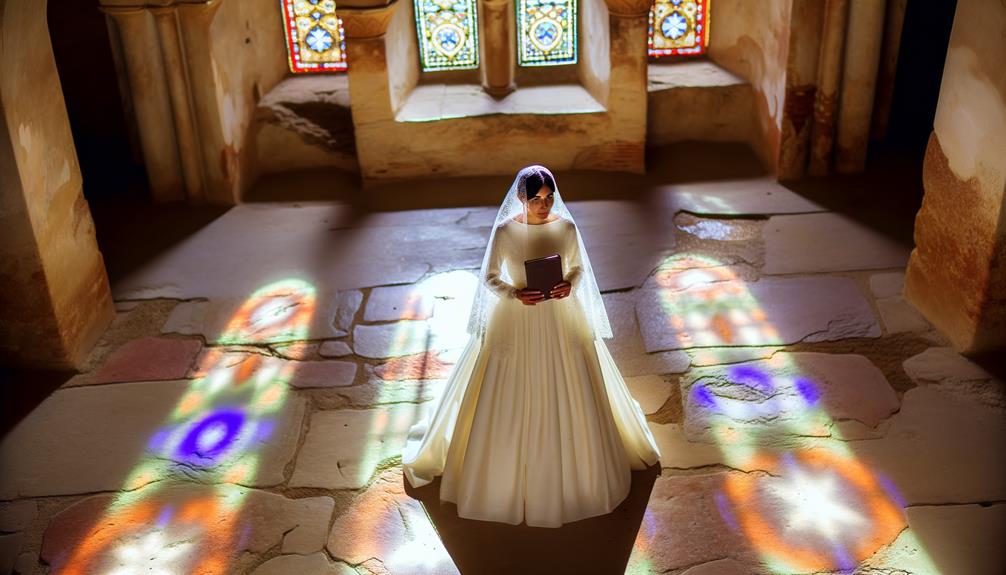
When selecting a veil that aligns with biblical traditions, it is essential to take into account both historical and scriptural contexts to guarantee that the choice reflects a deep understanding of its religious significance.
Historically, veils symbolize modesty and reverence, as seen in Genesis 24:65 when Rebekah veils herself upon meeting Isaac. Scripturally, veils can denote purity and the sanctity of the marriage covenant.
To choose a biblical veil, consider materials and designs that evoke these traditional values. Lace and linen, often mentioned in biblical texts, are appropriate choices.
In addition, the veil’s length and style should reflect a balance between personal expression and adherence to scriptural principles, ensuring that the symbolism of reverence and purity remains intact.
Conclusion
To sum up, the wedding veil, rooted deeply in biblical tradition, serves as a multifaceted symbol of modesty, purity, and the sacred marriage covenant.
From the Old Scriptures to contemporary religious ceremonies, the veil has woven its way through the tapestry of spiritual significance.
Modern interpretations continue to honor these ancient meanings, inviting brides to don the veil as a bridge between timeless spiritual heritage and contemporary marital vows.
This enduring emblem reflects a rich, historical narrative that transcends mere adornment.