Meaning of East in the Bible: Direction of Glory
In the Bible, “East” holds rich symbolic and theological meaning. It signifies origins and new beginnings, as seen with the Garden of Eden’s entrance and the journey of the Wise Men from the East.
Exile and estrangement from God are often associated with eastward movements, as Cain’s departure illustrates. Additionally, the east wind symbolizes divine judgment, while prophetic visions from the East, such as Ezekiel’s, herald the return of God’s glory.
The rising sun from the east stands for renewal and divine favor, encompassing themes from creation to eschatology. This multifaceted symbolism continues through various significant biblical themes.

Key Takeaways
- Eastward movements in the Bible often symbolize separation from God’s presence and divine judgment.
- The east wind represents divine intervention and judgment, bringing calamities such as plagues and desolation.
- Prophetic visions frequently depict the east as a direction of divine revelation and future hope, including the return of God’s glory.
- The Eastern Gate of Jerusalem holds eschatological significance, symbolizing divine entrance and Messianic expectations.
The Garden of Eden’s Eastward Entrance

The concept of the Garden of Eden‘s eastward entrance, as mentioned in Genesis 3:24, holds significant theological implications, symbolizing divine access and a directional motif that recurs throughout biblical scripture.
This entrance, guarded by cherubim and a flaming sword, represents a threshold between the sacred and the profane. Theologically, it underscores humanity’s separation from God’s immediate presence due to sin.
Historically, eastward entrances in ancient Near Eastern cultures often signified prestige and sanctity. Scripturally, this eastward orientation is echoed in later narratives, such as the construction of the Tabernacle and Solomon’s Temple, where entrances also faced east.
Consequently, the eastward entrance to Eden serves as a foundational element in understanding divine-human interaction and sacred geography within the biblical text.
Eastward Movements in Genesis
The theme of eastward movement in Genesis highlights significant theological and symbolic shifts.
Cain’s exile to the land of Nod, east of Eden, following his fratricide introduces a pattern of separation from divine presence and favor.
Similarly, the entrance to the Garden of Eden being placed on the east underscores humanity’s estrangement from paradise and God’s protective boundaries after the Fall.
Cain’s Exile Eastward
Following his fratricide, Cain’s exile eastward marks a significant moment in Genesis, symbolizing both physical displacement and spiritual alienation. In Genesis 4:16, Cain’s movement ‘east of Eden’ to the land of Nod underscores a profound disconnection from God and family.
This eastward progression not only signifies geographical separation but also indicates a deeper, metaphysical estrangement from divine favor and communal harmony. Theologically, Cain’s journey eastward reflects the consequences of sin, manifesting in a life of wandering and rootlessness.
Historically, this narrative action underscores the biblical theme of exile as a form of divine judgment. Consequently, Cain’s eastward exile is a critical element in understanding the broader motif of eastward movements within the Genesis narrative.
Eden’s Eastern Entrance
In Genesis 3:24, the placement of cherubim and a flaming sword at the eastern entrance of Eden symbolizes both a divine barrier to re-entry and the profound spiritual implications of humanity’s fall from grace.
This eastward expulsion signifies a movement away from the presence of God, a recurring theme in biblical narratives.
Scriptural analysis reveals that eastward movements often denote separation or exile, as seen in Cain’s journey to Nod (Genesis 4:16).
Historically, the eastern direction held significant connotations, often associated with new beginnings but also with alienation from divine favor.
Theologically, the guarded eastern gate of Eden serves as a poignant reminder of lost innocence and the enduring quest for reconciliation with the Creator.
The East Wind in Scripture

Scripture frequently portrays the east wind as a powerful and often destructive force, symbolizing divine judgment and intervention. This meteorological phenomenon is deeply embedded within biblical narratives, serving as a tool of God’s will.
For instance:
- Exodus 10:13: The east wind brings the plague of locusts upon Egypt.
- Genesis 41:6: The east wind scorches and withers the grain in Pharaoh’s dream.
- Job 27:21: The east wind is depicted as carrying away the wicked.
- Hosea 13:15: The east wind dries up springs and fountains, signifying desolation.
These instances underscore the east wind’s role as a divine instrument, illustrating its significance in biblical theology and historical context.
East in Prophetic Visions

Prophetic visions in the Bible frequently depict the east as a locus of divine revelation and future hope, intertwining geographical orientation with spiritual significance.
In Ezekiel’s visions, the glory of God returns from the east (Ezekiel 43:2), symbolizing renewal and divine presence. Similarly, Matthew 24:27 references Christ’s second coming as a lightning flash from the east to the west, signifying universal revelation.
Theologically, the east often serves as a metaphor for new beginnings and divine intervention. Historically, the east held particular importance for the Israelites, as their ancestors journeyed from this direction into the Promised Land.
Consequently, the biblical east encapsulates both a physical direction and an eschatological promise, enriching its prophetic symbolism.
The Eastern Gate of Jerusalem
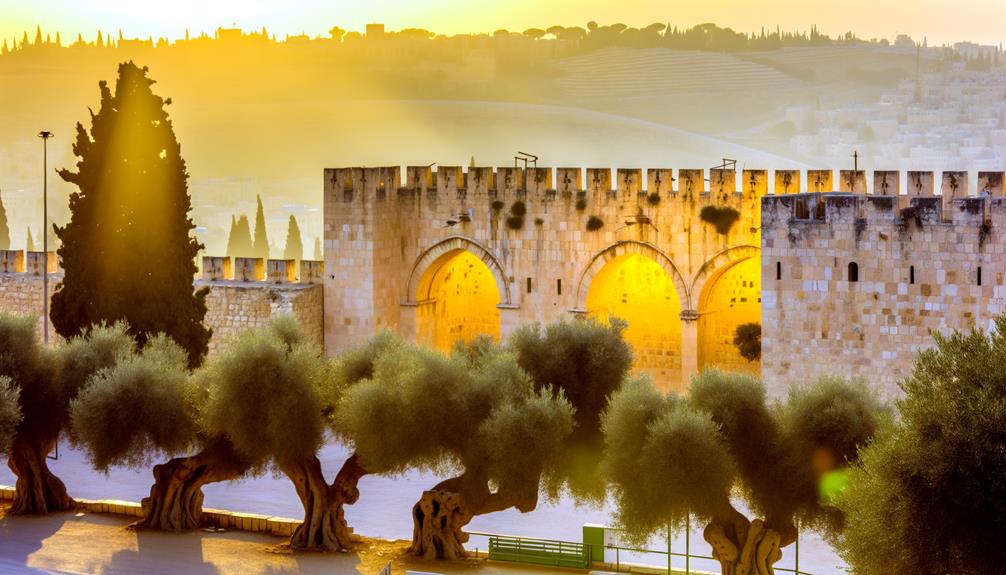
The significance of the east in biblical prophecy extends to the Eastern Gate of Jerusalem, often regarded as a symbol of divine entrance and eschatological hope. This gate, also known as the Golden Gate, holds profound theological and historical connotations.
It is believed that:
- Ezekiel prophesied that the glory of the Lord would enter through this gate (Ezekiel 43:1-4).
- Messianic expectations are tied to its opening, particularly within Jewish and Christian traditions.
- Historical closures by various rulers reflect attempts to forestall prophetic fulfillment.
- Pilgrims and scholars frequently visit the site, drawn by its spiritual significance.
Through these elements, the Eastern Gate remains a focal point for eschatological anticipation.
Symbolism of the Rising Sun

In biblical literature, the rising sun often symbolizes new beginnings, divine presence, and the renewal of life.
Scripturally, this imagery is prevalent in passages like Malachi 4:2, where the ‘sun of righteousness’ arises with healing, denoting God’s restorative power.
Historically, the East, where the sun rises, was seen as the direction of divine revelation and favor.
Theologically, the dawn signifies God’s mercies, renewed every morning (Lamentations 3:22-23).
This symbolism extends to eschatological themes, as the return of Christ is often analogized to the daylight breaking forth (Matthew 24:27).
Consequently, the rising sun encapsulates the hope of salvation and the continuous presence of God in the believer’s life, offering a fresh start each day.
Exile and Return From the East

Throughout biblical history, the motif of exile and return from the East encapsulates profound theological and prophetic significance, often symbolizing judgment, redemption, and the fulfillment of divine promises. This theme is vividly illustrated in the narratives of Israel’s exile to Babylon and subsequent return, reflecting divine justice and mercy.
Key aspects include:
- Judgment: Exile often served as divine retribution for covenantal unfaithfulness.
- Prophetic Fulfillment: Prophets like Isaiah and Jeremiah foretold both the exile and the eventual return.
- Redemption: The return from exile symbolizes God’s unwavering commitment to His people.
- Restoration: The rebuilding of Jerusalem and the Temple signified spiritual and communal renewal.
This theme underscores God’s sovereignty in history and His redemptive plan for humanity.
The Wise Men From the East
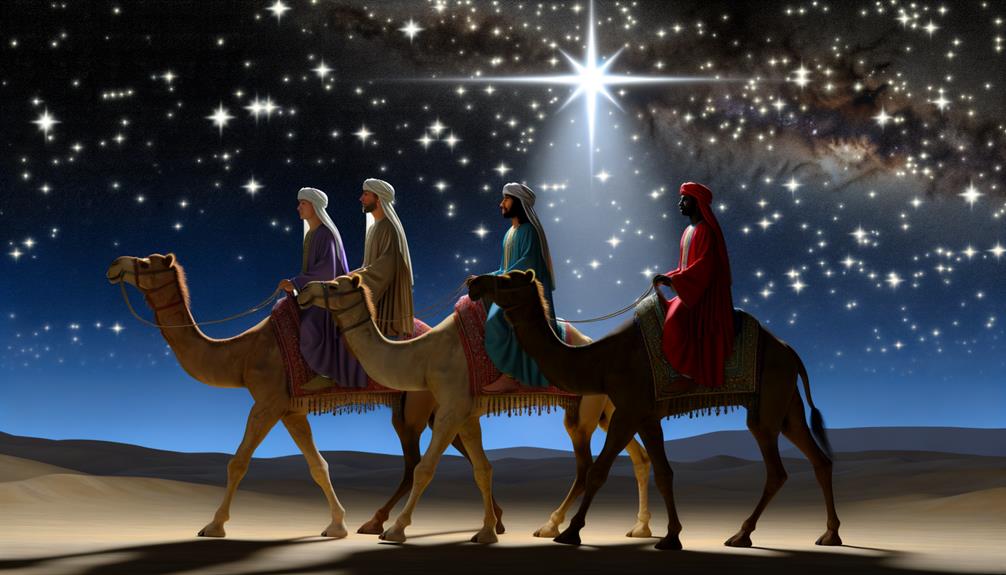
The narrative of the Wise Men from the East, as depicted in the Gospel of Matthew, illuminates their journey guided by a celestial phenomenon and imbued with profound symbolism.
Their arrival bearing gifts of gold, frankincense, and myrrh not only signifies homage to the newborn King but also encapsulates theological themes of kingship, priesthood, and sacrificial death.
Historically, these wise men, or Magi, underscore the recognition of Christ’s divinity by Gentiles, thereby expanding the scope of divine revelation beyond the confines of Israel.
Journey and Symbolism
Drawing from the Gospel of Matthew, the arrival of the Wise Men from the East not only marks a significant journey but also serves as a profound symbol of divine guidance and fulfillment of prophecy. Their expedition, guided by a celestial phenomenon, underscores the intersection of faith and revelation.
These men, often termed Magi, carry rich theological symbolism:
- Divine Revelation: Their journey is initiated by a star, symbolizing divine intervention and guidance.
- Fulfillment of Prophecy: Their arrival fulfills Old Covenant prophecies about the Messiah.
- Universal Scope of Christ’s Birth: Their non-Jewish origins emphasize the global impact of Jesus’ birth.
- Wisdom and Knowledge: They represent the pursuit of divine wisdom.
Their journey is a demonstration of the far-reaching implications of Christ’s birth.
Gifts and Significance
Among the numerous symbols associated with the Wise Men, their gifts of gold, frankincense, and myrrh hold deep theological and prophetic significance, reflecting various aspects of Christ’s identity and mission.
Gold, a symbol of kingship, acknowledges Jesus as the King of Kings. Frankincense, used in temple worship, signifies His divine nature and priestly role. Myrrh, an embalming spice, prophetically points to His sacrificial death and burial.
These gifts, presented by visitors from the East, underscore the recognition of Jesus’ multifaceted identity by Gentile nations, fulfilling Old Covenant prophecies. Consequently, the Wise Men’s offerings encapsulate a rich tapestry of Christological themes, resonating with the broader biblical narrative of salvation and divine revelation.
Spiritual Lessons From the East

In biblical narratives, the East frequently symbolizes divine intervention and new beginnings, offering profound spiritual lessons for believers. This direction is often associated with the arrival of God’s light, wisdom, and revelation.
Theologically, the East represents:
- Divine Guidance: The wise men from the East followed a star to find the Messiah (Matthew 2:1-2).
- New Beginnings: The Garden of Eden was planted in the East, symbolizing the dawn of human existence (Genesis 2:8).
- Prophetic Fulfillment: Ezekiel’s vision of the glory of God entering the temple from the East (Ezekiel 43:2).
- Spiritual Renewal: The rising sun in the East signifies resurrection and renewed faith.
Conclusion
The concept of ‘East’ in biblical texts encompasses diverse dimensions:
The Garden of Eden’s eastward entrance signifies a beginning.
Eastward movements in Genesis denote pivotal shifts.
The east wind symbolizes divine intervention, and east in prophetic visions conveys future events.
The Eastern Gate of Jerusalem holds eschatological significance.
The rising sun symbolizes hope and renewal.
Exile and return from the east reflect restoration.
The Wise Men from the east highlight divine guidance.
Spiritual lessons from the east offer profound insights.