
Tumult Meaning in the Bible
In the Bible, ‘tumult‘ signifies periods of chaos, disorder, and societal upheaval, often manifesting through divine judgment and human rebellion. The Old Scripture showcases this through significant events like the Tower of Babel and the fall of Jericho, reflecting the consequences of human disobedience.
In the New Scripture, tumult is evident during Jesus’ trial and the Ephesus uproar, symbolizing the clash between emerging Christian beliefs and established norms. Historically, these narratives coincide with the Babylonian captivity and Roman occupation, shaping theological insights on resilience and divine providence.
As these stories unfold, further layers of spiritual and historical meaning emerge.

Key Takeaways
- ‘Tumult’ in the Bible signifies chaos, disorder, and societal upheaval, often linked to divine judgment and human rebellion against God’s order.
- Old Testament events like the Tower of Babel and the Fall of Jericho illustrate tumult as a consequence of disobedience.
- In the New Testament, tumult accompanies Jesus’ ministry and early Christian experiences, symbolizing conflict with established norms.
- Tumultuous events, such as the Exodus and Babylonian Exile, serve as trials and opportunities for spiritual growth and faith resilience.
Definition of Tumult

How does the term ‘tumult‘ manifest within the biblical narrative, and what are its theological implications?
In scriptural contexts, ‘tumult’ often signifies chaos, disorder, and societal upheaval, reflecting both physical and spiritual disturbances. The term appears in various forms, such as Hebrew ‘mehumah’ and Greek ‘thorubos,’ denoting confusion and turmoil.
Theologically, tumult is frequently associated with divine judgment or human rebellion against God’s order. Historical instances, like the Babel event or the tumult around Jesus’ ministry, underscore its profound implications.
Such instances reveal the tension between divine sovereignty and human agency, underscoring themes of repentance, divine retribution, and restoration. Consequently, ‘tumult’ encapsulates a critical dimension of biblical theology, emphasizing the consequences of straying from divine commandments.
Tumult in the Old Testament
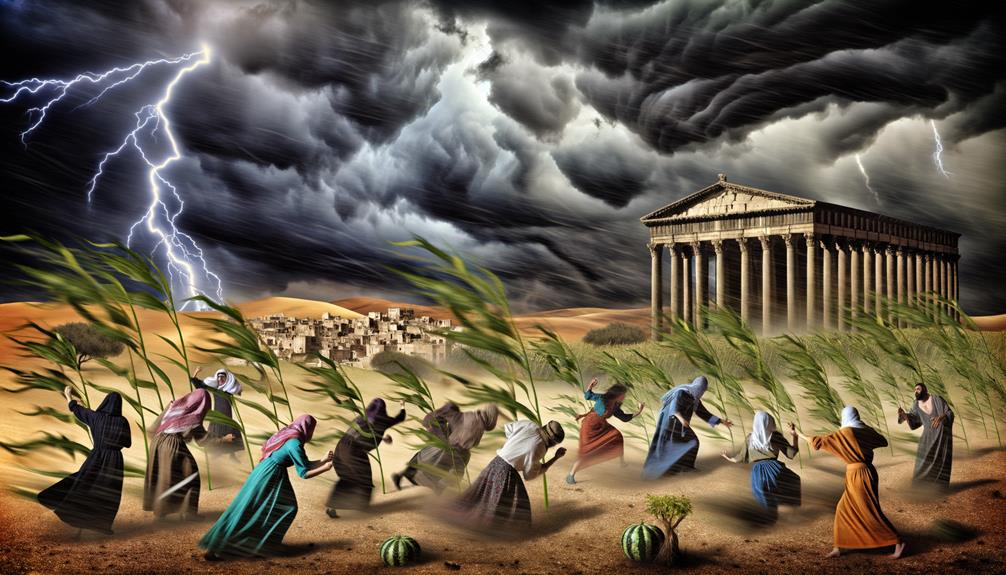
In the Old Scripture, the concept of tumult is frequently depicted through events that signify divine judgment and societal disarray, such as the confusion at the Tower of Babel and the chaos during Israel’s periods of rebellion. These instances highlight the theological significance of tumult as both a consequence of human disobedience and a catalyst for divine intervention.
The Old Covenant provides several vivid examples:
- Tower of Babel (Genesis 11:1-9): Illustrates the divine dispersion of people and languages as a response to human pride.
- Exodus Rebellion (Numbers 14:1-45): Depicts Israel’s defiance resulting in divine wrath and subsequent disorder.
- Fall of Jericho (Joshua 6:1-27): Represents the tumultuous overthrow of a city through divine mandate.
Each of these events underscores the profound impact of tumult in Old Covenant theology.
Tumult in the New Testament

The New Covenant presents tumult as an integral aspect of the early Christian experience, often linked to the transformative events surrounding Jesus’ ministry and the nascent Church’s struggles.
Scripturally, tumult is evident in episodes such as the tumultuous crowd at Jesus’ trial (Matthew 27:24) and the uproar in Ephesus over Paul’s teachings (Acts 19:23-41). These instances reflect the social and spiritual upheaval that accompanied the spread of the Gospel.
Theologically, tumult symbolizes the conflict between the emerging Christian ethos and established religious and societal norms. This upheaval serves as a demonstration to the radical shift brought by Christ’s teachings and the Holy Spirit’s activity, embodying the struggle and growth of early Christian communities.
Historical Context of Tumult

The historical context of tumult in the Bible is deeply intertwined with periods of ancient Hebrew turmoil and significant biblical events.
From the chaos of the Babylonian captivity to the fervent uprisings during the Roman occupation, tumultuous times shaped the spiritual and social landscape of the Israelites.
Examining these events provides essential insights into the scriptural narratives and theological implications of disorder and upheaval.
Ancient Hebrew Turmoil
Throughout biblical history, the Hebrew people experienced periods of significant upheaval and conflict that shaped their spiritual and cultural identity. These times of tumult were not merely incidental but integral to their narrative, reflecting divine interaction and human response.
The historical context of this turmoil can be categorized into several key aspects:
- Political Instability: The Hebrew people faced continuous threats from surrounding nations, leading to frequent wars and invasions.
- Social Upheaval: Internal divisions, such as tribal disputes and class struggles, often disrupted societal harmony.
- Religious Challenges: Encounters with pagan practices and idolatry tested the steadfastness of their covenant with Yahweh.
Each of these factors contributed to a profound sense of divine purpose and dependency among the ancient Hebrews.
Biblical Events of Tumult
Numerous pivotal events in the Bible illustrate periods of tumult that profoundly impacted the spiritual and historical trajectory of the Hebrew people.
The Exodus, for instance, epitomizes a time of divine intervention and national upheaval, as the Israelites escaped Egyptian bondage under Moses’s leadership (Exodus 12:31-42).
Similarly, the Babylonian Exile marks a period of profound disruption and sorrow, as Judah was conquered and its people were deported (2 Kings 25:8-21).
The fall of Jerusalem in 70 AD, though not captured in the Old scripture, signifies another catastrophic turmoil, shaping early Christian identity.
These episodes underscore the recurring theme of tumult as both a trial and a crucible for faith, forging a resilient, covenantal relationship with God.
Spiritual Lessons From Tumult

The Bible often portrays tumultuous events as opportunities for spiritual growth and divine intervention, drawing attention to the profound lessons of finding peace amid chaos and experiencing growth through adversity.
Scriptural narratives such as Jesus calming the storm (Mark 4:35-41) and the Israelites’ exodus from Egypt (Exodus 14) provide rich theological insights into God’s sovereignty and faithfulness during times of upheaval.
Historically, these accounts have underscored the resilience of faith and the transformative power of trusting in God’s providence.
Finding Peace Amid Chaos
How can one find peace amid the tumultuous events described in the Bible, and what spiritual lessons can be drawn from these ancient narratives?
Biblical stories reveal that tumult often precedes divine intervention. Reflecting on these, we can extract profound insights for today:
- Trust in Divine Providence: Stories like Joseph’s journey from slavery to governance illustrate unwavering faith amid chaos (Genesis 37-50).
- Prayer and Meditation: Daniel’s consistency in prayer, even under threat, underscores the importance of spiritual discipline (Daniel 6).
- Community and Support: The early Church’s solidarity amid persecution demonstrates the strength found in communal faith (Acts 2:42-47).
These principles offer a blueprint for finding inner peace and spiritual resilience during life’s inevitable upheavals.
Growth Through Adversity
Recognizing peace amid biblical tumult sets the stage for exploring how these adversities serve as catalysts for spiritual growth and deeper faith. Scriptural narratives, such as Israel’s exodus from Egypt and David’s trials, illustrate that tumult often precedes divine intervention and revelation.
Historically, moments of crisis have compelled believers to seek God more fervently, fostering resilience and trust. Theologically, James 1:2-4 exhorts believers to ‘consider it pure joy’ when facing trials, for they produce perseverance and maturity.
Paul’s experiences, recorded in 2 Corinthians 12:9-10, highlight that divine strength is perfected in human weakness. Understanding these scriptural lessons reveals that tumult, far from being merely destructive, is a formative crucible for spiritual refinement and deeper communion with God.
Modern-Day Applications

In contemporary society, the biblical concept of tumult offers profound insights into maneuvering periods of social upheaval and personal crisis. Scripture elucidates that tumultuous times are not merely chaotic but can serve as opportunities for spiritual growth and societal reflection.
Modern applications include:
- Community Resilience: Drawing from biblical accounts, communities today can find strength and unity in adversity, using tumult as a catalyst for collective perseverance and faith.
- Ethical Leadership: Leaders can look to biblical figures who navigated tumultuous periods with integrity and moral fortitude, guiding their people toward justice and reconciliation.
- Personal Faith: Individuals can deepen their relationship with God by understanding that tumultuous experiences are part of a divine plan, fostering resilience and spiritual maturity.
These applications underscore the timeless relevance of biblical principles in contemporary contexts.
Tumult in Personal Growth

The concept of tumult in personal growth, as depicted in the Bible, underscores how periods of chaos and uncertainty can serve as profound opportunities for individual spiritual development and transformation.
Scriptural narratives, such as Job’s trials, illustrate how enduring tribulation can lead to deeper faith and resilience. Similarly, the Israelites’ exodus from Egypt symbolizes a tumultuous journey towards liberation and divine covenant.
Historically, these accounts reveal that spiritual growth often necessitates maneuvering through strife and upheaval. James 1:2-4 advises believers to ‘consider it pure joy…whenever you face trials,’ highlighting that perseverance through tumultuous times cultivates maturity and completeness.
Consequently, biblical tumult is not merely destructive but can be a catalyst for profound personal and spiritual evolution.
Conclusion
In summation, the term ‘tumult’ within biblical scripture encapsulates both physical upheaval and spiritual discord, reflecting broader existential struggles.
Old Covenant accounts often associate tumult with divine judgment, while the New Covenant emphasizes internal and communal strife.
Historically and spiritually, tumult serves as a crucible for faith, fostering growth and resilience.
Modern applications reveal tumult as akin to a spiritual Wi-Fi signal, connecting believers to divine strength in times of chaos, thereby facilitating profound personal development.