
What Is the Meaning of Eunuch in the Bible? Significance
In the Bible, a eunuch is a castrated male who served in significant administrative, political, and religious roles, especially within royal courts. In the Old Scripture, eunuchs managed royal households and harems but faced marginalization, as seen in Deuteronomy 23:1.
The New Scripture presents a more inclusive view, with Jesus acknowledging celibate eunuchs in Matthew 19:12 and the baptism of the Ethiopian eunuch in Acts 8:26-40 symbolizing broader acceptance. Eunuchs are often depicted as loyal, non-threatening officials whose roles underscored deeper theological themes of purity, devotion, and divine inclusion.
Exploring these texts illuminates their multifaceted significance within biblical narratives.

Key Takeaways
- Eunuchs in the Bible often served in royal courts, holding administrative and custodial roles.
- Jesus recognizes eunuchs for their spiritual devotion in Matthew 19:12, elevating their status.
- Eunuchs symbolize purity and dedication to divine service, as seen in Isaiah 56:3-5.
- The Ethiopian eunuch’s baptism in Acts 8 signifies the Gospel’s inclusivity.
Definition and Origin

Originating from ancient cultures, the term ‘eunuch‘ in the Bible denotes a castrated male who often held significant administrative or ceremonial roles within royal courts.
Historically, eunuchs were trusted officials, valued for their loyalty and inability to procreate, which eliminated concerns about dynastic ambitions. Scholars note that the practice of employing eunuchs can be traced back to early civilizations such as Mesopotamia and Egypt, where they served in various capacities from guardians of harems to high-ranking advisors.
The etymology of the word ‘eunuch’ itself is derived from the Greek ‘eunoukhos,’ meaning ‘bed-keeper’ or ‘chamberlain,’ reflecting their intimate roles in royal households.
Consequently, eunuchs played pivotal roles in maintaining the stability and administrative efficiency of ancient monarchies.
Eunuchs in the Old Testament

In the Old Scripture, eunuchs are depicted in various contexts, highlighting their roles and the societal perceptions surrounding them within ancient Israelite society. They are often seen serving in royal courts, a representation of their trusted position and administrative capabilities.
For example, in 2 Kings 20:18, Isaiah prophesies that some of Hezekiah’s descendants will become eunuchs in the palace of the king of Babylon. Additionally, in Esther 2:3, eunuchs are entrusted with significant responsibilities, including the care of the harem.
Despite their high status in certain spheres, eunuchs were also marginalized in other respects, as evidenced by Deuteronomy 23:1, which excludes them from the assembly of the Lord. This duality underscores their complex and multifaceted role within the biblical narrative.
Eunuchs in the New Testament

While the Old Covenant presents eunuchs in various roles and societal standings, the New Covenant introduces a more nuanced theological perspective on eunuchs, particularly through the teachings of Jesus and the early Christian community.
In Matthew 19:12, Jesus acknowledges eunuchs in three categories: those born in that manner, those made eunuchs by others, and those who choose celibacy for the Kingdom of Heaven. This statement elevates the status of eunuchs, suggesting a spiritual devotion that transcends physical limitations.
Additionally, Acts 8:26-40 recounts the baptism of an Ethiopian eunuch by Philip, signifying the inclusion of eunuchs in the early Christian mission. These passages highlight a shift from societal exclusion to spiritual inclusion and acceptance within the Christian faith.
Roles and Duties

The roles and duties of eunuchs in biblical times were multifaceted, often encompassing positions of significant administrative, political, and religious responsibility.
They frequently served as trusted officials in royal courts, managing households, overseeing harem security, and acting as intermediaries in state affairs. Their unique status, often perceived as loyal and non-threatening due to their physical condition, rendered them ideal for sensitive roles requiring discretion and fidelity.
In religious contexts, eunuchs could be found participating in temple services and custodial functions. Their presence is particularly documented in the service of the Ethiopian Queen Candace’s treasurer (Acts 8:27), indicating a recognition of their competence and trustworthiness.
Consequently, eunuchs contributed substantially to the social and political fabric of biblical societies.
Spiritual Symbolism

Eunuchs in the Bible often symbolize purity, devotion, and the transcendence of earthly desires, reflecting deeper spiritual themes.
Their unique status, marked by their inability to procreate, metaphorically frees them from the distractions of familial obligations, allowing for undivided service to God.
Isaiah 56:3-5 poignantly illustrates this, promising eunuchs who keep God’s covenant a name ‘better than sons and daughters.’
Additionally, in Matthew 19:12, Jesus acknowledges those who choose celibacy for the kingdom of heaven.
These passages underscore the spiritual valorization of eunuchs as exemplars of ultimate commitment and spiritual focus, serving as profound metaphors for a life dedicated entirely to divine service, unencumbered by worldly attachments.
This allegorical interpretation enriches our understanding of their biblical significance.
Cultural Context
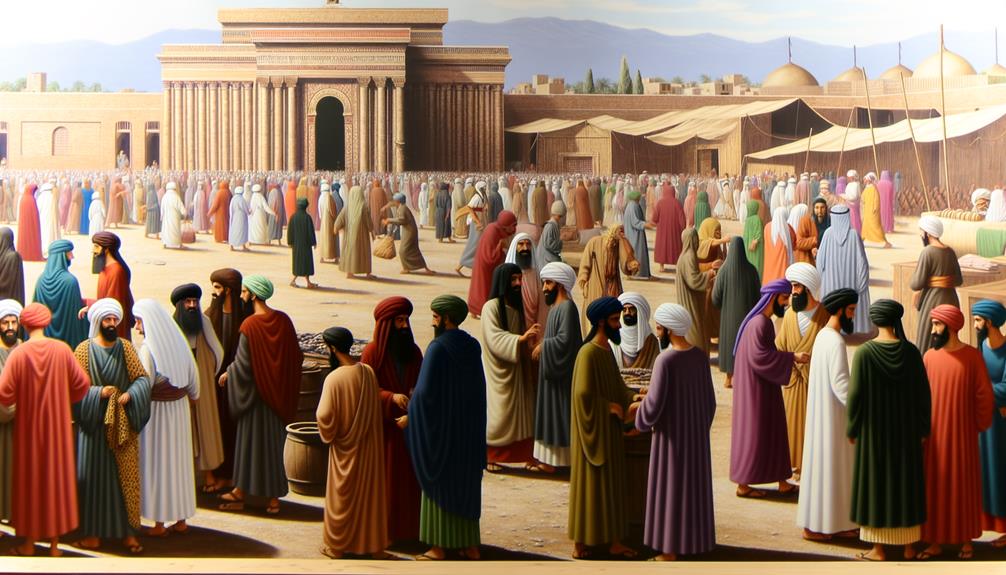
In examining the cultural context of eunuchs in the Bible, it is essential to understand the historical and social frameworks that shaped their roles and perceptions within ancient societies. Eunuchs often held significant positions within royal courts and administrative systems due to their perceived loyalty and non-threatening status. This social placement varied across different cultures and eras, influencing their portrayal in biblical texts.
| Culture | Role of Eunuchs |
|---|---|
| Ancient Egypt | Trusted advisors and custodians of royal harems |
| Assyria | Military commanders and high-ranking officials |
| Persia | Guardians of royal women and political advisors |
| Israel | Royal servants, sometimes in administrative roles |
| Rome | Court officials and sometimes educators |
Understanding these cultural contexts illuminates the multifaceted roles eunuchs played, beyond mere physical attributes.
Theological Implications

Understanding the cultural roles of eunuchs provides a foundation for exploring their theological significance within biblical narratives. Eunuchs often symbolize themes of transformation and divine inclusion.
Isaiah 56:3-5 highlights God’s promise of a lasting name to eunuchs who keep His covenant, indicating a shift from social exclusion to spiritual inclusion. In the New Covenant, the Ethiopian eunuch’s conversion in Acts 8 underscores the expanding reach of the Gospel.
Jesus’ mention of eunuchs in Matthew 19:12, where He acknowledges different reasons for their status, further signifies a broader understanding of human conditions in God’s kingdom. Consequently, eunuchs serve as metaphors for the inclusive nature of divine grace, transcending traditional social boundaries.
Conclusion
To sum up, the role of eunuchs in biblical texts transcends mere physical alteration, embodying a spectrum of social, spiritual, and theological significance.
These figures, often relegated to the periphery, wielded unparalleled influence, serving as both literal and symbolic gatekeepers of purity and devotion.
Their presence reverberates through the annals of sacred scripture, illustrating an exaggerated dichotomy between human limitation and divine purpose.
This multifaceted portrayal underscores the intricate tapestry of cultural and religious paradigms within biblical narratives.