Deck of Cards Meaning to Bible: Symbolism or Superstition?
The symbolism of a deck of cards reveals deep connections to biblical themes and characters. Each suit carries distinct theological meanings—Hearts symbolize love and compassion, Diamonds represent material wealth and its moral challenges, Clubs signify growth and divine stewardship, and Spades relate to death and spiritual battles.
Face cards, such as Kings and Queens, depict biblical figures like Jesus and Esther, embodying virtues of authority and bravery. Numerical values also evoke scriptural concepts, like unity and divine perfection.
The Joker encapsulates human folly contrasted with divine wisdom. This multilayered symbolism deepens the rich interplay between secular games and sacred narratives.

Key Takeaways
- The suits in a deck of cards reflect biblical themes: Hearts for love, Diamonds for material wealth, Clubs for growth, and Spades for challenges and transformation.
- Kings symbolize biblical figures and divine authority, with connections to Jesus, King David, King Solomon, and Apostle Paul.
- Queens represent virtues like wisdom, faith, and compassion, linked to biblical female figures such as Esther and Virgin Mary.
- Numerical values in cards, such as seven for divine perfection and twelve for completeness, hold significant theological meanings.
The Four Suits
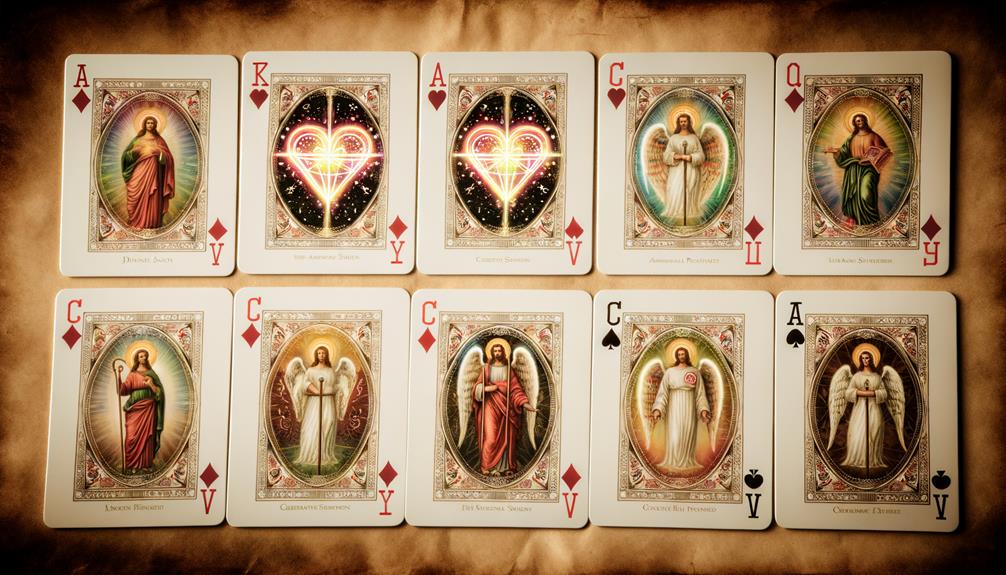
The symbolism of the four suits in a deck of cards—hearts, diamonds, clubs, and spades—has been subject to various interpretations within biblical exegesis, each reflecting deeper theological and moral dimensions.
Hearts are often seen as representing the emotional and spiritual aspects of human experience, mirroring the biblical emphasis on love and compassion.
Diamonds can be interpreted as symbols of earthly wealth and materialism, posing moral challenges addressed in scripture.
Clubs may signify growth, labor, and the natural world, resonating with themes of stewardship and divine creation.
Spades, often associated with death and transformation, can be seen as reflecting the biblical concepts of mortality and resurrection.
These interpretations offer a rich, multidimensional understanding of the suits within a theological context.
The King Cards
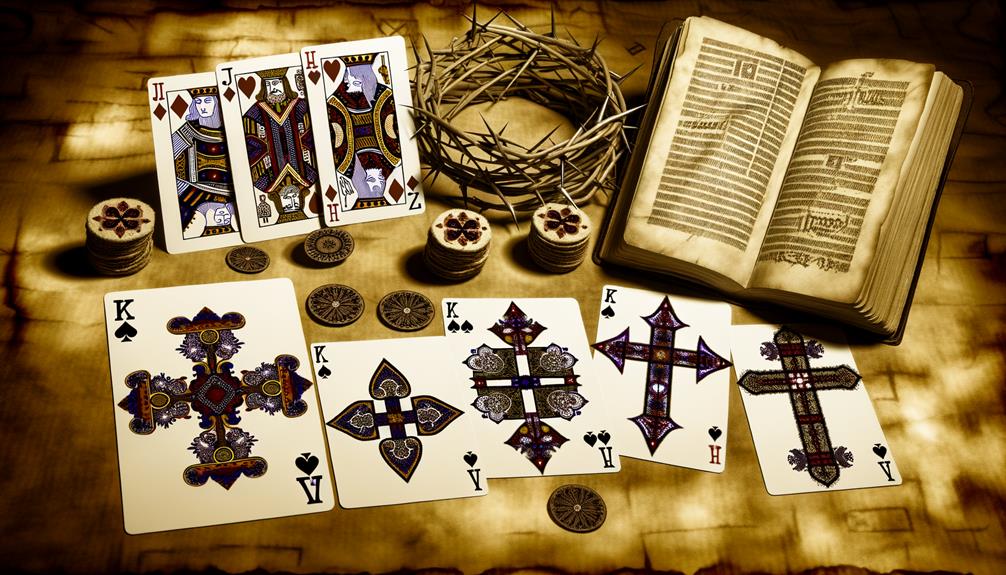
Building on the symbolic richness of the four suits, the King cards hold particular significance, often representing authority, power, and divine governance within biblical interpretation.
The King of Hearts is frequently associated with the figure of Jesus Christ, embodying love and sacrifice.
The King of Spades is seen as King David, a warrior and a man after God’s own heart.
The King of Diamonds often symbolizes wealth and wisdom, akin to King Solomon.
Finally, the King of Clubs can be linked to the Apostle Paul, representing endurance and spiritual leadership.
These associations highlight how the King cards encapsulate different facets of leadership and divinity, aligning with scriptural themes of governance under divine providence.
The Queen Cards
Examining the Queen cards through a biblical lens reveals a tapestry of virtues such as wisdom, faith, and compassion, often embodying the matriarchal and nurturing aspects of divinity.
In the Bible, women like Queen Esther and the Virgin Mary exemplify these qualities, serving as pillars of strength and moral guidance.
Queen Esther’s bravery saved her people, reflecting the Queen of Hearts’ role as a guardian of love and sacrifice.
Similarly, the Virgin Mary’s unwavering faith and devotion resonate with the Queen of Spades, symbolizing spiritual wisdom and maternal care.
These correlations underscore the Queen cards’ representation of pivotal female figures who shape biblical narratives through their virtues and influence, bridging divine principles and human experience.
The Jack Cards
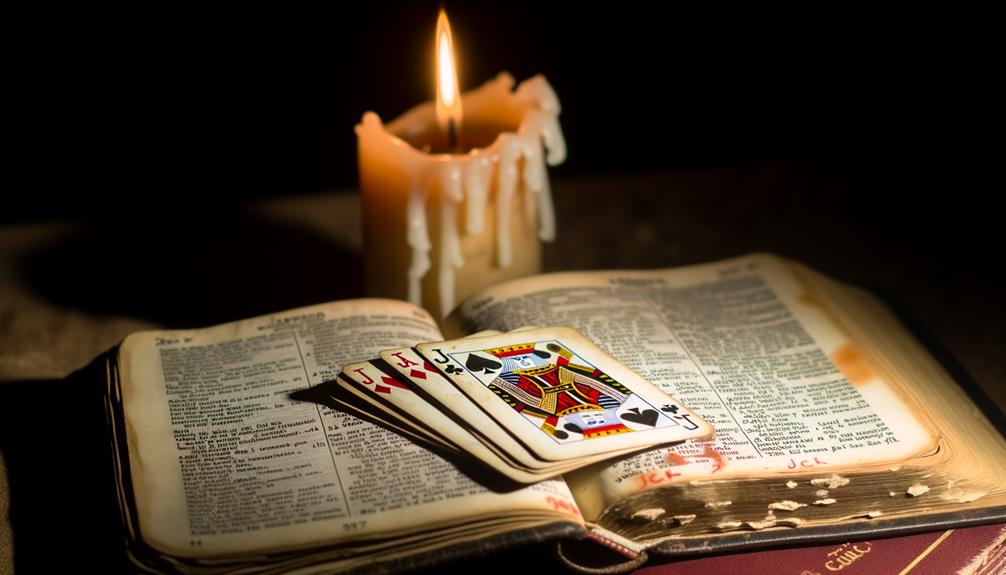
Within the context of biblical symbolism, Jack cards often represent youthful vigor, service, and the journey towards spiritual maturity, drawing parallels to figures such as David, who rose from shepherd boy to king, embodying qualities of courage, humility, and divine favor.
The Jack, or Knave, is traditionally seen as a figure of action and duty, reflecting the biblical emphasis on servanthood as a pathway to spiritual growth.
In the narrative of David, his early years of service and his eventual rise to kingship underscore the transformative power of divine guidance and personal integrity.
Consequently, the Jack card encapsulates the essence of youthful potential and the formative experiences that shape one’s spiritual and moral character.
The Numbered Cards
The numbered cards in a deck hold significant biblical symbolism, often reflecting the numbers’ meanings found within scripture.
Each card number may correspond to specific biblical events or principles, such as the number seven symbolizing divine perfection or completion.
Understanding these associations provides deeper insights into how numerical values in cards might mirror spiritual and theological concepts found in the Bible.
Biblical Number Symbolism
Biblical number symbolism imbues each numbered card in a deck with profound theological and spiritual significance, reflecting the rich numerological traditions found throughout the scriptures.
Numbers in the Bible often carry layered meanings; for example, the number three signifies completeness and divine perfection, as seen in the Holy Trinity.
Similarly, seven represents spiritual perfection and is frequently linked to creation and rest, echoing the seven days of creation.
Twelve symbolizes divine governance, exemplified by the twelve tribes of Israel and the twelve apostles.
Such symbolic associations offer a deeper understanding of how biblical numerology can be transposed onto the numbered cards within a deck, providing a robust framework for interpreting their spiritual implications beyond mere chance or fortune.
Card Numbers’ Significance
Analyzing the significance of card numbers in the context of biblical numerology reveals intricate layers of spiritual meaning that align with scriptural teachings. Each numbered card, from Ace to Ten, resonates with specific biblical themes and values. For instance, the number seven, often associated with completeness and divine perfection, mirrors the creation week culminating in the Sabbath.
| Card Number | Biblical Significance | Scriptural Reference |
|---|---|---|
| Ace | Unity, Primacy | Deuteronomy 6:4 |
| Three | Trinity, Divine Nature | Matthew 28:19 |
| Seven | Completeness, Perfection | Genesis 2:2 |
This alignment between card numbers and biblical numerology not only enriches our understanding of the cards but also deepens our appreciation for the symbolism embedded within the Holy Scriptures.
The Joker’s Symbolism
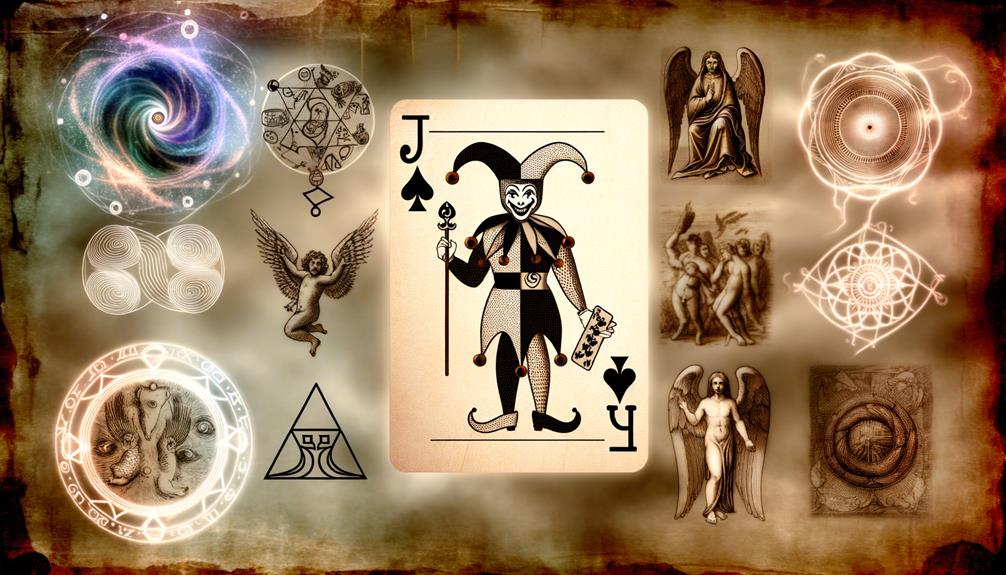
Symbolically rich and often enigmatic, the Joker card in a deck of cards can be interpreted through various theological and cultural lenses within biblical context.
The Joker, absent from traditional tarot and standard card games, can be seen as a representation of chaos or the unpredictable nature of life, akin to the biblical concept of human folly or the unpredictability of divine will.
In Christian terms, the Joker might symbolize the ‘fool’ who rejects God’s wisdom, paralleling Proverbs 1:7, which contrasts the wise with the foolish.
Alternatively, the card could reflect the paradoxical wisdom found in apparent foolishness, as articulated in 1 Corinthians 1:27, where God uses the foolish to shame the wise, encapsulating the mystery of divine plans.
The Deck’s Structure
An exploration of the deck’s structure reveals profound layers of symbolism anchored in its suits, numerical values, and face cards.
Each suit within the deck carries specific allegorical meanings that resonate with biblical themes, while the numerical values often correspond to significant scriptural numbers.
Additionally, the face cards embody various archetypal figures that invite comparisons to prominent biblical characters, offering rich material for theological reflection.
Suits and Their Symbolism
The four suits in a deck of cards—hearts, diamonds, clubs, and spades—each carry distinct symbolic meanings that have been interpreted through various biblical and historical lenses.
Hearts are often associated with love and compassion, resonating with the biblical emphasis on love as the greatest commandment.
Diamonds symbolize wealth and prosperity; they can be connected to biblical teachings on stewardship and material blessings.
Clubs, resembling a clover, symbolize growth and life, aligning with scriptural themes of spiritual growth and renewal.
Spades, reminiscent of a spearhead, are linked to challenges and warfare, reflecting the biblical narrative of spiritual battles.
These interpretations provide a rich tapestry of meanings, augmenting the traditional understanding of the deck’s structure.
Numerical Values’ Significance
Understanding the numerical values in a deck of cards through a biblical lens reveals intricate layers of spiritual and moral teachings embedded within their structure. Each number from one to ten can symbolize various biblical principles.
For instance, the number seven is often associated with divine perfection, as seen in the seven days of creation. The number twelve echoes the twelve tribes of Israel, symbolizing completeness and divine governance. Meanwhile, the number four could represent the universality of creation, akin to the four corners of the earth.
Analyzing these numbers in the context of a deck of cards provides a nuanced understanding of how these seemingly simple tools can mirror profound biblical narratives, offering a unique medium for reflection and interpretation.
Face Cards’ Representations
Face cards in a deck—kings, queens, and jacks—serve as allegorical representations of historical and biblical figures, each imbued with distinct symbolic meanings that reflect various aspects of leadership, wisdom, and virtue.
These cards encapsulate a range of attributes that resonate deeply with biblical teachings:
- Kings: Often symbolize divine authority and leadership, akin to figures such as King David or Solomon.
- Queens: Represent wisdom and nurturing roles, drawing parallels to figures like the Queen of Sheba.
- Jacks: Embody youthful vigor and service, reminiscent of biblical servants or messengers.
- Suit Symbols: Each suit (hearts, diamonds, clubs, and spades) can further denote specific virtues or challenges, adding layers of meaning.
This contextual framework provides a rich tapestry for interpreting face cards within a biblical lens.
Conclusion
The intricate symbolism of a deck of cards reveals a tapestry of spiritual and biblical meanings, where each suit, face card, and number serves as a thread in a grand design.
This analysis uncovers layers of historical and theological significance, akin to unearthing hidden treasures within a well-worn book.
The deck’s structure, from the Joker’s ambiguity to the numbered cards’ order, reflects the complexity and depth of biblical narratives, inviting continuous exploration and contemplation.