
Feet in the Bible Meaning: Symbol of Service
In the Bible, feet are rich in symbolism, embodying themes such as humility and servitude, highlighted by Jesus washing His disciples’ feet (John 13:1-17). Feet also signify reverence and holy ground, evidenced by Moses and Joshua removing their sandals (Exodus 3:5; Joshua 5:15).
Acts of anointing feet (John 12:3) illustrate deep respect and service, while Isaiah 52:7 extols feet as bringing good news. Additionally, feet symbolize the spiritual journey, divine guidance, and authority, with passages like Psalm 110:1 and Ephesians 6:15 elucidating their theological importance.
Discover more nuances and layers of meaning throughout scripture.

Key Takeaways
- Feet symbolize humility and servitude, as seen in Jesus washing His disciples’ feet (John 13:1-17).
- Feet represent worship and reverence in acts such as removing sandals on holy ground (Exodus 3:5; Joshua 5:15).
- Feet signify acts of service, exemplifying true greatness through humble actions (John 13:1-17; Isaiah 52:7).
- Feet depict the believer’s spiritual journey and divine guidance, emphasizing faith and obedience (Psalm 119:105; Proverbs 3:6).
Feet as a Symbol of Humility
In biblical narratives, feet often symbolize humility, reflecting the cultural and religious practices of the time that emphasized servitude and submission.
Washing another’s feet, for instance, is vividly portrayed in the New Scriptures, where Jesus washes the feet of His disciples (John 13:1-17). This act profoundly illustrates humility and servant leadership, as foot washing was typically performed by the lowest servants.
Additionally, the Old Scriptures recount instances where individuals remove their sandals in sacred contexts, such as Moses at the burning bush (Exodus 3:5), signifying reverence and the acknowledgment of one’s lower status before the divine.
These practices underscore the deep cultural connection between feet and humility, highlighting a theological understanding of humility as foundational to spiritual life.
Feet in Worship and Reverence

Observing the act of bowing or prostrating oneself, biblical texts frequently associate feet with worship and reverence, reflecting a deep-seated tradition of physical expressions of devotion.
In the Old Scripture, Moses and Joshua were commanded to remove their sandals in God’s presence, indicating holy ground (Exodus 3:5; Joshua 5:15).
Similarly, in the New Scripture, Mary of Bethany anointed Jesus’ feet with costly perfume, symbolizing profound respect and worship (John 12:3).
These actions underscore the significance of feet in demonstrating humility and reverence before the divine.
The physical act of lowering oneself to the feet of another encapsulates a theological acknowledgment of God’s supreme authority and an earnest devotion to His majesty.
Feet in Acts of Service
In the Bible, feet often symbolize acts of service, particularly highlighted in Jesus’ washing of the disciples’ feet, which exemplifies humility and a servant’s heart.
This act not only signifies the importance of serving others but also underscores the theological principle of leaders embodying servitude.
Additionally, feet are frequently invoked in scriptural narratives to illustrate acts of kindness and compassion, reinforcing their metaphorical association with service and humility.
Washing Disciples’ Feet
Among the most profound demonstrations of servitude in the Bible is Jesus washing the feet of His disciples, an act rich with theological significance and cultural context. This event, recorded in John 13:1-17, symbolizes the essence of Christian service and leadership.
In the ancient Near Eastern context, foot washing was typically performed by servants due to the dusty and unclean conditions of the roads. Jesus, by assuming this role, subverted societal norms and illustrated the principle of servant leadership.
Theologically, this act prefigures the ultimate act of service—His sacrificial death on the cross. It underscores the mandate for His followers to emulate this humility and service in their relationships with others, embodying the core message of the Gospel.
Feet Symbolizing Humility
Jesus’ act of washing His disciples’ feet not only exemplifies servant leadership but also deeply illustrates the symbolic association of feet with humility in acts of service throughout biblical narratives.
This profound gesture, recounted in John 13:1-17, underscores the importance of humility and selflessness.
Feet, often viewed as lowly and unclean, serve as powerful symbols in biblical texts. By attending to the feet of others, individuals demonstrate a willingness to lower themselves, thereby embodying Christ-like humility.
This act of washing feet, practiced in various Christian traditions, serves as a poignant reminder of the call to serve others selflessly.
It echoes a recurring biblical theme where true greatness is found in humble service to others.
Acts of Kindness
The symbolic use of feet in the Bible often underscores acts of kindness, where feet are depicted as instruments of service and love.
Jesus washing His disciples’ feet (John 13:1-17) exemplifies this, highlighting humility and the willingness to serve others.
Additionally, the act of anointing feet with oil, as demonstrated by Mary of Bethany (John 12:3), signifies deep respect and care.
Isaiah 52:7 exalts those who bring good news, describing their feet as ‘beautiful.’ This metaphor emphasizes the value of selfless service and spreading God’s message.
Through these examples, the Bible illustrates that feet are not merely physical appendages but symbols of compassion, dedication, and divine service.
Understanding this enriches one’s appreciation of biblical teachings on kindness.
Spiritual Journey and Feet

In biblical texts, feet often symbolize the believer’s spiritual journey, illustrating the path of faith, obedience, and discipleship. This symbolism is rich with theological implications, as seen in various scriptures where walking or standing with feet represents one’s relationship with God.
| Scripture Reference | Symbolic Meaning |
|---|---|
| Psalm 119:105 | Guidance through God’s word |
| Ephesians 6:15 | Readiness to spread the gospel of peace |
| Isaiah 52:7 | Proclaiming good news and salvation |
| Exodus 3:5 | Holy ground and reverence |
Thus, feet in scripture are not merely anatomical references but powerful symbols of one’s spiritual journey, reflecting readiness, sanctity, and commitment to divine mandates. Understanding this nuance enriches one’s grasp of biblical teachings and their application in the life of faith.
Feet and Divine Guidance

Examining the role of feet in divine guidance reveals how biblical narratives often depict God’s direction and purpose through the journeys and actions of His followers.
For example, in Psalm 119:105, the psalmist declares, ‘Your word is a lamp to my feet and a light to my path,’ symbolizing divine instruction that illuminates the believer’s way.
Similarly, in Proverbs 3:6, believers are encouraged to acknowledge God in all their ways, trusting He will make their paths straight.
These references underscore a theological understanding where feet represent obedience and the acceptance of God’s will.
Feet in Prophetic Imagery
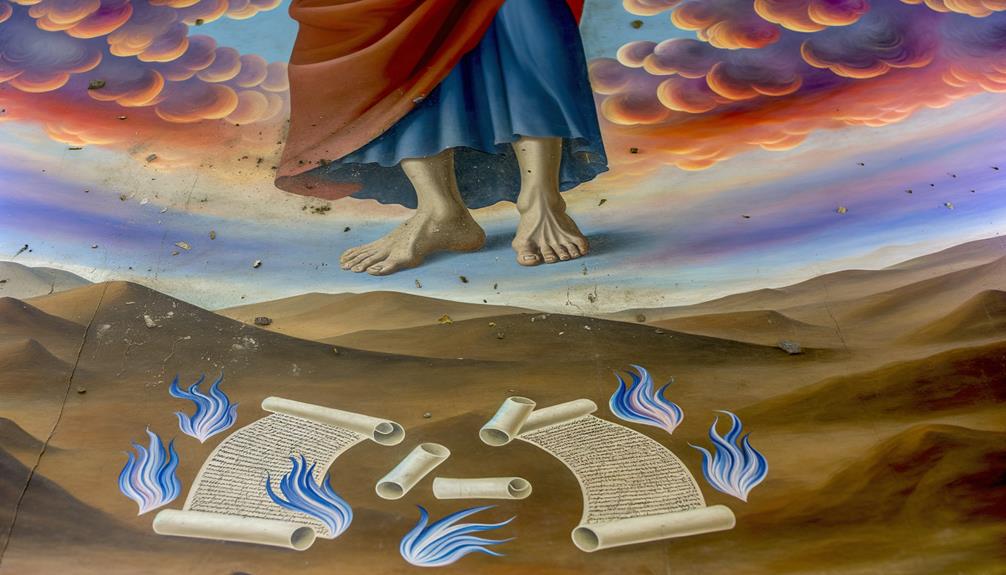
In prophetic imagery within the Bible, feet often symbolize authority, as seen in passages where dominion over enemies is depicted by placing feet upon them (Joshua 10:24).
Additionally, feet can represent humility and servanthood, exemplified by Jesus washing the disciples’ feet (John 13:1-17).
Symbol of Authority
Throughout the Bible, feet often symbolize authority, particularly in prophetic imagery where they represent dominion and the power to subdue.
In Psalm 110:1, God says, ‘Sit at my right hand until I make your enemies a footstool for your feet,’ illustrating the subjugation of adversaries under divine rule.
Similarly, in Ephesians 1:22, it is stated that ‘God placed all things under his feet,’ signifying Christ’s ultimate authority over creation.
This metaphor extends to the anointing of kings in the Old Scriptures, where the act of washing or anointing feet signifies the conferral of power and sanctity.
These scriptural instances underscore the profound connection between feet and the exercise of divine and earthly sovereignty.
Representation of Humility
The symbolism of feet in the Bible extends to representing humility, particularly evident in prophetic and New Covenant narratives where acts like foot-washing underscore servitude and reverence.
One illustrative example is Jesus’ washing of His disciples’ feet (John 13:1-17), a profound act of humility and service. This imagery aligns with prophetic traditions, emphasizing a posture of submission and the relinquishing of status.
Isaiah 52:7 celebrates the ‘beautiful feet‘ of those who bring good news, further encapsulating the humble messenger’s role.
In these contexts, feet become a metaphor for lowliness and the willingness to serve others, reflecting a spiritual ethos centered on humility and selflessness, integral to the Christian understanding of discipleship and community.
Sign of Blessing
Prophetic texts in the Bible often employ the imagery of feet to symbolize divine blessing and the transmission of God’s favor. This symbolism is multifaceted, reflecting various dimensions of God’s interaction with humanity.
Notable examples include:
- Isaiah 52:7 – ‘How beautiful upon the mountains are the feet of him who brings good news,’ signifying the proclamation of God’s salvation.
- Psalm 18:33 – ‘He makes my feet like the feet of a deer,’ illustrating divine enablement and stability.
- Ephesians 6:15 – ‘Feet shod with the preparation of the gospel of peace,’ indicating readiness and peace in spiritual warfare.
- Romans 10:15 – Echoing Isaiah, it emphasizes the blessedness of those spreading the gospel.
These references underscore the profound significance of feet in conveying God’s blessings and purposes.
Washing of Feet Rituals

In biblical times, the act of washing feet served as a profound symbol of humility, hospitality, and purification. This ritual is vividly illustrated in John 13:1-17, where Jesus washes His disciples’ feet, exemplifying servant leadership and urging His followers to emulate His humility.
The practice also held practical significance in a dusty, sandal-wearing culture, offering physical cleanliness and refreshment to guests. Additionally, washing feet symbolized spiritual purification, as seen in Exodus 30:19-21, where priests washed their feet before entering the Tabernacle.
This multifaceted ritual underscored the interconnectedness of physical and spiritual cleanliness, reinforcing themes of service, sanctity, and community within biblical narratives. It remains a poignant emblem of servitude and grace in Christian liturgy and practice.
Feet and Holy Ground

When Moses approached the burning bush in Exodus 3:5, he was commanded to remove his sandals, signifying that he was standing on holy ground and illustrating the profound reverence required in the presence of the divine.
This act of removing one’s sandals appears in other biblical instances, emphasizing the sacredness of certain spaces.
The concept of holy ground can be understood through several key aspects:
- Divine Presence: Holy ground signifies a place where God manifests His presence.
- Purity and Respect: Removing sandals denotes respect and recognition of the sacredness.
- Transformation: The encounter often leads to a transformative mission or revelation.
- Covenantal Relationship: It reinforces the unique relationship between God and His chosen individuals.
Understanding the feet’s role in these contexts deepens our comprehension of biblical sanctity.
Feet in Healing Narratives

Biblical narratives frequently depict feet as instruments of divine healing, highlighting their symbolic and physical significance in miraculous restorations. Feet are often the focal point in various healing accounts, reflecting their importance in spiritual and physical renewal. For instance, Jesus’ healing of the lame, the washing of disciples’ feet, and the anointing of His feet by a repentant woman all underscore feet’s role in divine acts of mercy and restoration. These narratives invite believers to contemplate the profound theological implications of feet in the healing process.
| Biblical Event | Significance |
|---|---|
| Healing of the lame man | Physical and spiritual restoration |
| Washing of disciples’ feet | Humility and service |
| Anointing by repentant woman | Forgiveness and devotion |
| Jesus’ feet on the cross | Sacrificial redemption |
| Resurrected Jesus’ feet | Victory over death |
These events collectively affirm the transformative power vested in feet within biblical contexts.
Conclusion
In biblical contexts, feet frequently function as fundamental symbols, signifying humility, holiness, and healing.
The multifaceted meanings manifest in worship, reverence, and divine guidance, while also permeating prophetic imagery and ritual purification practices.
Feet illustrate the spiritual sojourn of believers, underscoring acts of service and sacred encounters.
This consistent and complex connotation underscores the theological tapestry that interweaves the physical with the spiritual, reflecting an enduring emblem of faith, devotion, and divine connection.