
Elephant Meaning in the Bible: Strength and Wisdom
The elephant, while seldom mentioned directly in the Bible, symbolizes strength and wisdom reflective of divine majesty. Cultural exchanges from neighboring civilizations, where elephants were revered, enhanced their symbolic interpretation in biblical contexts.
Ivory from elephants is significantly valued in 1 Kings 10:22 and Ezekiel 27:15, contributing to depictions of wealth and grandeur. Apocryphal texts and Christian art further embed elephants as emblems of power, patience, and discernment.
These creatures’ long lives and gentle strength mirror attributes of God as both mighty protector and nurturing presence, inviting deeper exploration of their biblical significance.

Key Takeaways
- Elephants symbolize strength and wisdom, reflecting God’s power and discernment in biblical contexts.
- The Bible values elephant ivory, signifying wealth and splendor (1 Kings 10:22, Ezekiel 27:15).
- Elephants’ attributes align with biblical virtues like knowledge, strength, and divine majesty.
- Sparse direct mentions of elephants, but their symbolic presence enriches theological interpretations.
Historical Context of Elephants

The historical context of elephants in biblical times underscores their significance as symbols of strength and wisdom, evident through various ancient texts and archaeological findings.
Elephants, while not native to the biblical lands, were known through trade routes extending into Africa and Asia, which facilitated their importation. Their imposing physical presence and perceived sagacity rendered them potent metaphors within theological discourse.
Although direct mentions of elephants are sparse in the canonical Bible, their ivory and other attributes were highly valued, as indicated by references in 1 Kings 10:22 and Ezekiel 27:15.
These scriptural references, coupled with the broader historical milieu, provide a lens through which elephants are understood as embodying divine attributes of power and discernment, enriching biblical symbolism.
Elephants in Ancient Texts
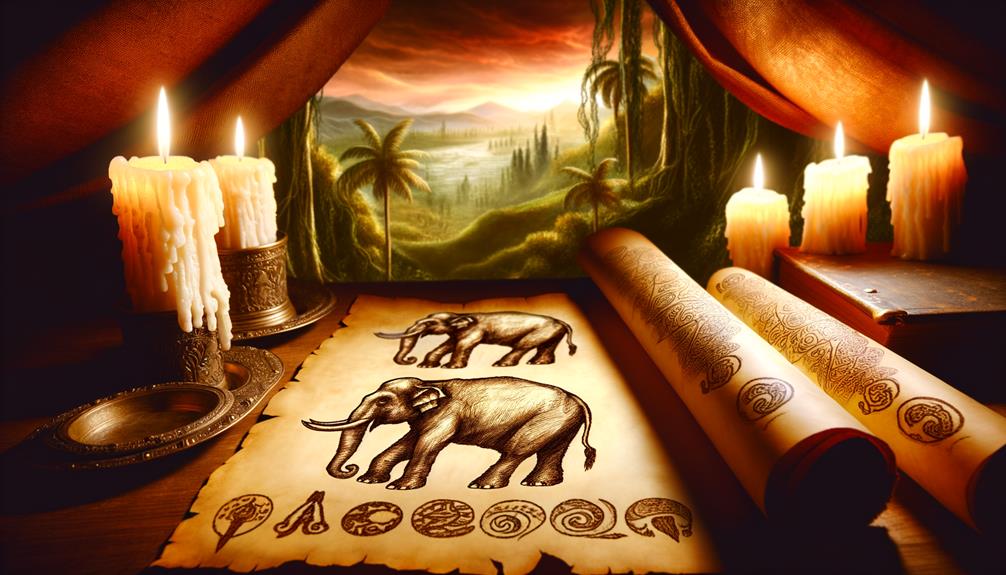
Ancient texts, including biblical scriptures, often employ elephants as symbols of strength and wisdom, reflecting their prominent role in historical narratives.
References to these majestic creatures can be found in various cultural and religious records, underscoring their significance across civilizations.
Biblical Symbolism Insights
Despite their absence from the biblical canon, elephants hold fascinating symbolic significance in ancient Near Eastern texts, shedding light on their potential metaphorical meanings when interpreting scripture.
Elephants are often depicted as emblems of strength, wisdom, and grandeur in various ancient writings. For instance, in Mesopotamian texts, they symbolize divine power and kingly authority, attributes that parallel biblical themes of God’s omnipotence and sovereign rule.
Though not explicitly mentioned in the Bible, the elephant’s esteemed status in neighboring cultures might offer insights into interpreting certain biblical symbols, such as the lion or the mighty cedar of Lebanon, which also convey strength and majesty.
Understanding these parallels can deepen our grasp of the Bible’s rich tapestry of symbols and metaphors.
Historical Elephant References
Although not mentioned in the biblical texts, elephants are frequently referenced in various ancient Near Eastern writings, providing a rich historical context that enhances our understanding of their symbolic significance.
In Assyrian inscriptions, elephants were depicted as symbols of power and military prowess, often associated with royal hunts and victories. Ancient Indian scriptures, such as the Vedas, also mention elephants, highlighting their sacred and majestic attributes.
These texts contribute to a broader cultural tapestry, illustrating how elephants were esteemed across different civilizations. While the Bible does not explicitly reference elephants, examining these ancient sources allows us to appreciate the symbolic weight they carried, enriching our theological and historical comprehension of the era’s cultural milieu.
Ancient Cultural Significance
In the rich tapestry of ancient texts, elephants emerge as potent symbols of divinity, strength, and royal authority, weaving through the narratives of various civilizations and offering profound insights into their cultural and theological landscapes.
In Hindu scriptures, elephants are revered as sacred beings, epitomized by Ganesha, the deity of wisdom and prosperity.
Similarly, in ancient Mesopotamian texts, elephants symbolize power and grandeur, often associated with kingship.
While not explicitly mentioned in the Bible, the cultural significance of elephants in neighboring regions likely influenced biblical metaphors of strength and majesty.
These ancient texts collectively underscore the elephant’s esteemed position across diverse cultures, enriching our understanding of its symbolic resonance in historical and religious contexts.
Symbolism in Biblical Times
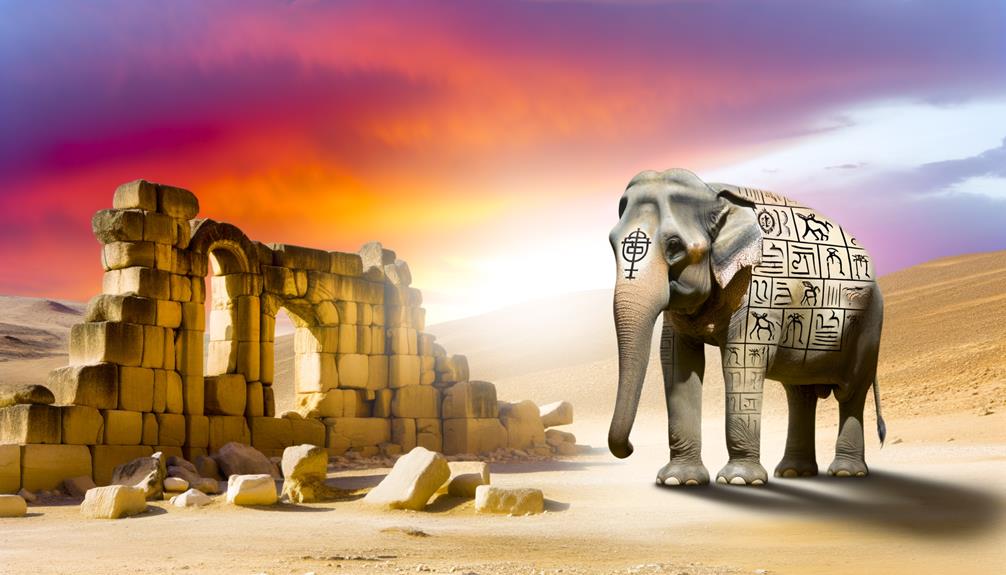
In biblical times, the symbolism of the elephant often conveyed themes of strength, wisdom, and divine majesty, drawing from its unique attributes and occasional mentions in ancient texts.
Although the Bible does not explicitly reference elephants, their presence in the broader ancient Near Eastern context influences biblical imagery.
Elephants, known for their immense power and longevity, symbolized enduring wisdom and divine protection.
These attributes resonated with biblical themes of God’s omnipotence and enduring faithfulness.
The ancient world’s perception of elephants as majestic creatures paralleled the biblical portrayal of God as a mighty and wise protector.
This symbolism is subtly reflected in scriptural metaphors that emphasize God’s strength and wisdom, akin to the revered qualities of the elephant in contemporary ancient cultures.
Elephants in Christian Art
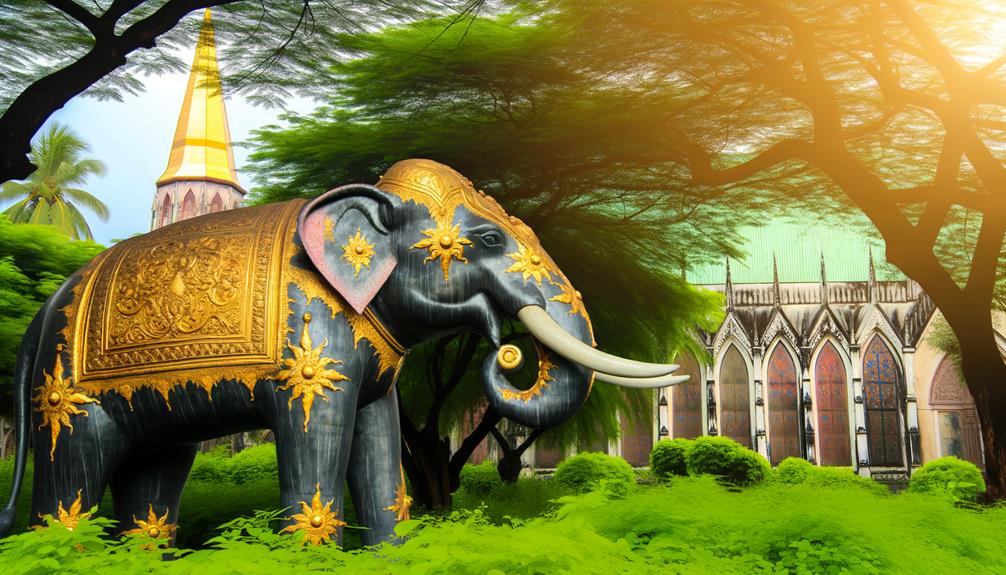
In Christian art, the symbolism of elephants often reflects themes of strength, patience, and wisdom, drawing from their majestic presence in nature.
Historical depictions, such as those found in medieval manuscripts, highlight the elephant’s role in conveying moral and theological lessons.
While direct scriptural references to elephants are sparse, their representation in art provides a rich context for exploring broader spiritual truths within the Christian tradition.
Symbolism in Religious Imagery
Elephants, though not frequently depicted, occasionally appear in Christian art as symbols of strength, wisdom, and temperance, reflecting their perceived attributes within broader theological and historical contexts. These majestic creatures are often seen as representations of divine wisdom and moral fortitude, aligning with scriptural virtues.
| Symbolism | Theological Insight | Historical Context |
|---|---|---|
| Strength | Reflects divine power | Medieval bestiaries |
| Wisdom | Embodies godly wisdom | Influenced by ancient texts |
| Temperance | Symbolizes moral balance | Renaissance religious art |
In Christian symbolism, elephants’ strength mirrors divine omnipotence, their wisdom echoes the pursuit of godly knowledge, and their temperance underscores the importance of self-control and moderation, all of which are esteemed in Christian doctrine.
Historical Art Interpretations
Throughout the annals of Christian art, the depiction of elephants serves as a profound demonstration to the integration of theological virtues and historical symbolism. Elephants, though not explicitly mentioned in the Bible, appear in Christian art and literature as symbols of strength, patience, and wisdom.
- Strength: Elephants embody divine power and the steadfastness of faith, reflecting Psalm 18:2.
- Patience: Their calm demeanor and longevity signify the virtue of patience, paralleling James 5:7-8.
- Wisdom: Often associated with Solomon’s wisdom, elephants symbolize divine knowledge (1 Kings 4:29-34).
- Exoticism: Their exotic nature points to the universality of God’s creation and the church’s reach, as seen in Acts 1:8.
These interpretations enrich the tapestry of Christian iconography.
Moral Lessons From Elephants

One profound moral lesson drawn from elephants in the Bible is their embodiment of strength and wisdom, serving as a metaphor for righteous living and divine guidance.
Although elephants are not explicitly mentioned in canonical scriptures, their symbolic presence in Apocryphal texts, such as the Book of Maccabees, underscores their association with power and sagacity.
Elephants’ traits resonate with biblical virtues, reflecting Proverbs 24:5, which states, ‘A wise man is strong; yea, a man of knowledge increaseth strength.’ This alignment highlights the importance of wisdom in cultivating spiritual fortitude.
Historically, elephants were revered by ancient civilizations for their intelligence and might, thereby reinforcing the scriptural portrayal of wisdom as a pillar of strength and moral integrity.
Cultural Interpretations
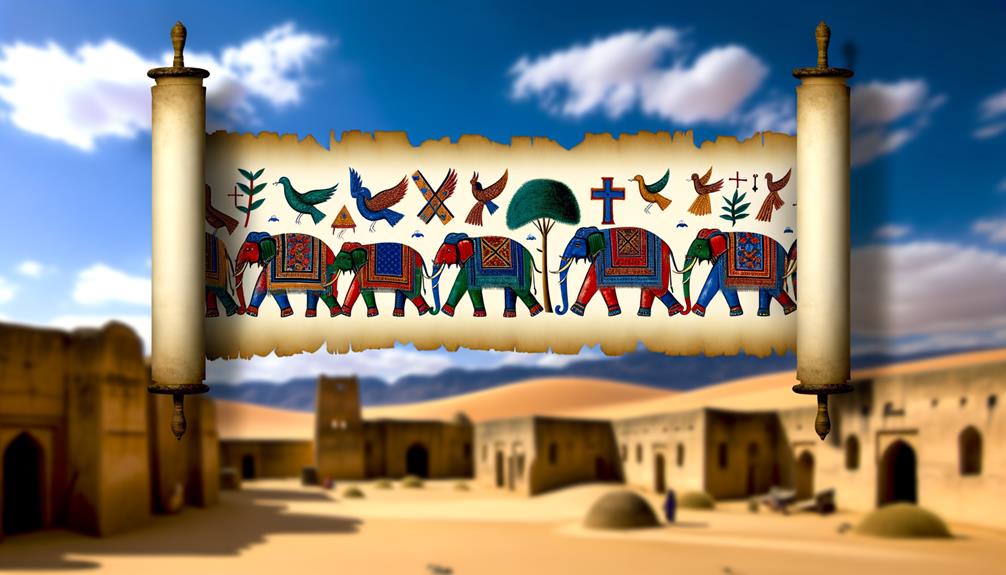
Cultural interpretations of elephants in biblical contexts reveal a rich tapestry of symbolic meanings that extend beyond their physical presence, intertwining with themes of divine wisdom and strength. These interpretations are informed by both scriptural references and historical contexts, offering theological insights into their significance:
- Wisdom and Prudence: Elephants, known for their intelligence, are often seen as symbols of wisdom, correlating with Proverbs 4:7’s emphasis on acquiring wisdom.
- Strength and Power: Their immense strength echoes biblical themes of divine power, as seen in Psalm 147:5.
- Longevity and Memory: Elephants’ long lifespans and memories reflect the eternal nature of God, akin to Isaiah 40:28.
- Gentleness and Majesty: Their gentle demeanor despite their size mirrors the biblical portrayal of God’s gentle and majestic nature, as in Psalm 18:35.
Modern Reflections

In contemporary theological discourse, the symbolic representation of elephants continues to evoke profound reflections on divine attributes and moral virtues.
Elephants, often perceived as embodiments of wisdom and strength, resonate with biblical themes of God’s omniscience and omnipotence. While the Bible does not explicitly mention elephants, their cultural significance in ancient times provides a backdrop for understanding their metaphorical use in modern faith discussions.
Elephants’ matriarchal societies may inspire reflections on biblical figures like Deborah, who exemplified leadership and wisdom (Judges 4-5). Additionally, the elephant’s memory evokes the divine attribute of God’s covenantal faithfulness (Deuteronomy 7:9).
Consequently, modern reflections on elephants invite believers to contemplate the intricate and majestic nature of the divine.
Conclusion
The elephant, though scarcely mentioned in biblical scriptures, serves as a profound symbol throughout history and Christian art.
Coincidentally, its rarity in the Bible contrasts with its rich representation in ancient texts and cultural interpretations.
This juxtaposition highlights the moral lessons and theological insights gleaned from the elephant’s majestic presence and enduring symbolism.
Ultimately, the elephant’s depiction across various contexts underscores a divine orchestration, inviting deeper reflection on the interconnectedness of creation and spiritual wisdom.