
Meaning of Tabitha in Bible: Life and Resurrection
In the Bible, Tabitha (Aramaic for ‘gazelle’) epitomizes grace, beauty, and spiritual importance. She is prominently featured in Acts 9:36-42, where she is also called Dorcas.
As a devout disciple in Joppa, she exemplified early Christian virtues through her acts of charity, particularly making garments for the poor. Her resurrection by Peter not only highlights divine grace but also solidifies her as a symbol of Christian altruism and miraculous faith.
This story showcases the profound impact of her life on the community, beautifully reflecting God’s compassion and power. Continue exploring to uncover the deeper layers of her legacy.

Key Takeaways
- Tabitha, also known as Dorcas, means ‘gazelle’ in Aramaic, symbolizing grace and beauty.
- She is a devout disciple in Joppa, known for her charity and service.
- Tabitha’s acts of kindness include making garments for the poor, reflecting Christian values.
- Her miraculous resurrection by Peter underscores divine approval and power.
Origin of the Name Tabitha

The name Tabitha, derived from the Aramaic word ‘Tabitha’ meaning ‘gazelle,’ signifies grace and beauty. Its origins can be traced back to biblical times, specifically within the context of the New Covenant.
This association with a gazelle not only symbolizes physical agility but also spiritual elegance and liveliness. In the ancient Near Eastern culture, gazelles were esteemed for their swiftness and delicate form, attributes that were metaphorically applied to women of notable virtue and charm.
Theologians often interpret the name as a reflection of divine artistry in creation, emphasizing the inherent dignity and worth bestowed upon women. Consequently, Tabitha embodies both a cultural symbol and a theological affirmation of God’s intricate design and care for humanity.
Tabitha in the Book of Acts

In the Book of Acts, Tabitha, also known by her Greek name Dorcas, is depicted as a devout disciple in Joppa who exemplifies the early Christian values of charity and service to others.
Her story is narrated in Acts 9:36-42, where she is described as ‘full of good works and acts of charity.’
The theological significance of Tabitha’s character lies in her embodiment of Christian discipleship, marked by a life dedicated to altruism.
Her miraculous resurrection by Peter underscores the divine approval of her virtuous life and serves as a proof of the power of faith and the early Christian community’s emphasis on benevolence.
This narrative not only highlights individual piety but also the communal impact of Christian love and compassion.
Acts of Charity and Kindness
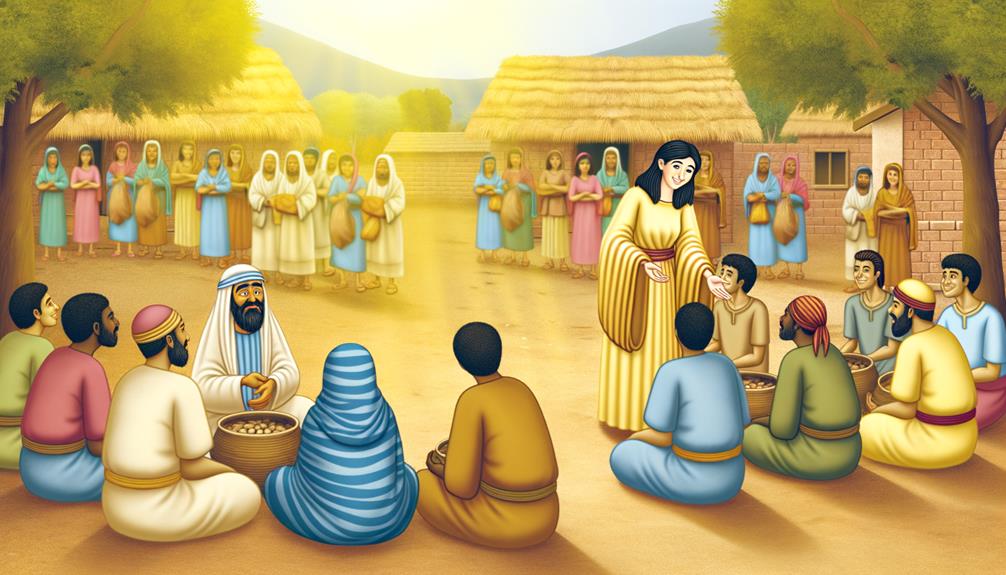
How does Tabitha’s life exemplify the profound theological principles of charity and kindness within the early Christian community?
Tabitha, also known as Dorcas, epitomizes these virtues through her unwavering commitment to serving others, as recounted in Acts 9:36-42. A seamstress by trade, she utilized her skills to create garments for the impoverished, embodying the biblical call to love thy neighbor (Matthew 22:39).
Her acts of benevolence were not mere gestures but profound manifestations of agape love—selfless, sacrificial, and unconditional. Tabitha’s life underscores the communal ethos of the early Church, where charity was an essential expression of faith.
Her legacy serves as a theological touchstone, demonstrating that genuine discipleship is marked by tangible acts of kindness and service.
The Miracle of Resurrection
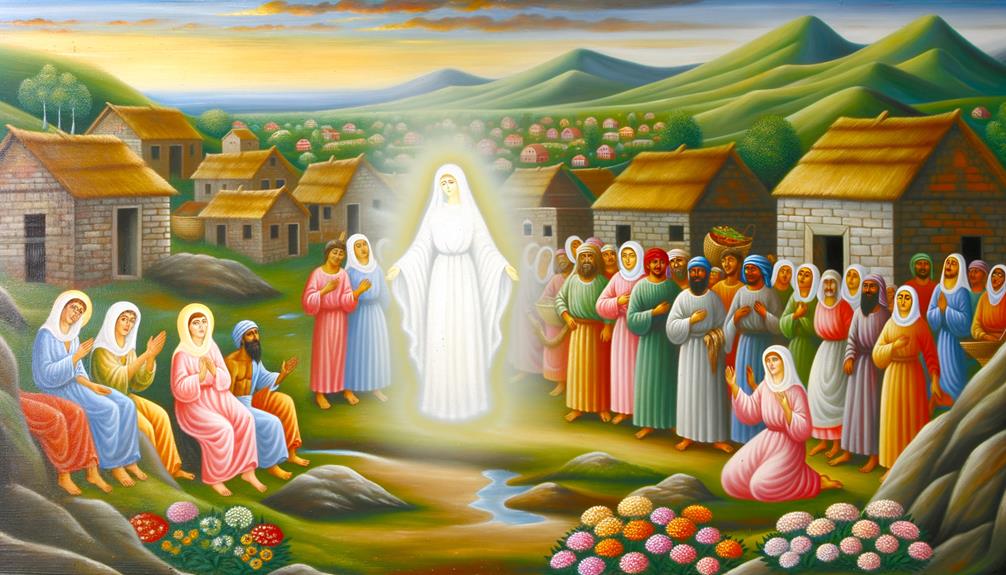
Tabitha’s profound acts of charity culminated in a miraculous event that not only reaffirmed her impact but also highlighted the divine power at work within the early Christian community.
When Tabitha, also known as Dorcas, fell ill and died, the disciples in Joppa sent for Peter, demonstrating their faith in God’s ability to perform miracles through His apostles. Peter’s arrival and subsequent prayer resulted in Tabitha’s resurrection, showcasing a powerful indication of Christ’s resurrection power.
This miracle served multiple purposes:
- Affirmation of Faith: Strengthened the believers’ faith.
- Evangelism: Led many to believe in the Lord.
- Divine Authority: Confirmed apostolic authority.
- Community Impact: Reinforced the communal bonds through divine intervention.
This event underscored the tangible presence of divine intervention in daily life.
Legacy and Symbolism

Consistently revered for her charitable deeds, Dorcas’s legacy extends beyond her lifetime, embodying the Christian principles of compassion and service. Her acts of kindness, particularly towards the impoverished and widowed, underscore the essential Christian tenet of altruism. The miracle of her resurrection by Peter further amplifies her role as a symbol of divine compassion and the transformative power of faith.
| Aspect | Symbolism | Legacy Impact |
|---|---|---|
| Charitable Acts | Compassion and Service | Model for Christian Altruism |
| Resurrection | Divine Compassion | Affirmation of Faith’s Power |
| Community Influence | Social Support and Unity | Enduring Christian Fellowship |
Dorcas’s life and her subsequent resurrection continue to inspire believers, emphasizing the importance of selfless service and the enduring nature of faith-based communities.
Conclusion
The name Tabitha, deeply rooted in biblical tradition, blooms with profound significance.
From its origins to its embodiment in the Book of Acts, Tabitha’s life serves as a tapestry woven with acts of charity and kindness.
The miraculous resurrection by Peter further elevates her legacy, symbolizing divine compassion and the transformative power of faith.
Consequently, the story of Tabitha endures as a beacon of benevolence and spiritual renewal, illuminating the path of righteousness for generations.