
Dorcas Meaning in the Bible: Woman of Good Works
In the Bible, Dorcas, also known as Tabitha, is a significant figure mentioned in Acts 9:36-42, symbolizing charity and community service. Her name, meaning ‘gazelle’ in Greek and Aramaic respectively, reflects a blend of Hellenistic and Judaic cultural influences, illustrating grace and compassion.
Dorcas is celebrated for her acts of kindness, particularly creating garments for the needy, and her resurrection by Peter underscores her impact on early Christians. Her story exemplifies the essential roles women played in fostering communal solidarity and Christian values.
Exploring her legacy further reveals the broader implications of her charitable life’s work.

Key Takeaways
- Dorcas, also known as Tabitha, symbolizes grace, beauty, and swift elegance from Greek and Aramaic origins.
- In Acts 9:36-42, Dorcas is noted for her charitable works and helping the needy, especially widows.
- Peter’s miracle of raising Dorcas from the dead highlights her importance and the community’s respect for her.
- Dorcas’s acts of kindness and charity fostered unity and compassion in early Christian communities.
The Name Dorcas

The name Dorcas, derived from the Greek word ‘dorkás’ meaning ‘gazelle,’ reflects the cultural and linguistic influences present in the early Christian era.
This nomenclature emphasizes the blend of Hellenistic and Judaic traditions, showcasing the Greek language’s prevalence among early Christian communities.
The imagery of a gazelle, known for its grace and beauty, conveys attributes of swiftness and elegance. Such symbolism would resonate with early Christian audiences, who often imbued names with spiritual and moral significance.
The adoption of Greek names within Jewish circles also illustrates the broader socio-cultural exchanges of the period.
Consequently, examining the name Dorcas provides critical insights into the intercultural dynamics and linguistic practices of early Christianity, enriching our understanding of its historical context.
Biblical References
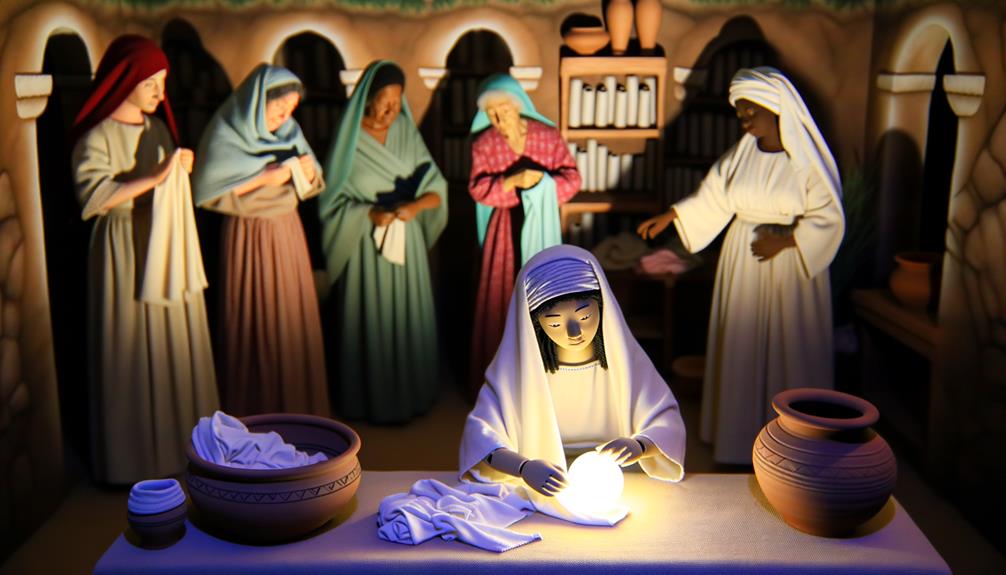
Among the biblical references to Dorcas, Acts 9:36-42 stands out as a crucial passage that highlights her significance within the early Christian community.
This scripture narrates the account of Dorcas, also known as Tabitha, a disciple renowned for her charity and good works. She resided in Joppa and was highly esteemed for her acts of kindness, particularly making garments for the needy.
Remarkably, her death and subsequent miraculous resurrection by the Apostle Peter serve as a proof of her essential role and the faith of the nascent church.
This passage underscores not only her personal virtues but also the community’s deep respect and affection for her, reflecting the integral part she played in their spiritual and communal life.
Dorcas in the Book of Acts
In the Book of Acts, Dorcas emerges as a pivotal figure whose life and deeds exemplify the charitable spirit and communal values of the early Christian church. Known for her benevolence and acts of kindness, Dorcas, also called Tabitha, is described in Acts 9:36-42. Her story is significant for several reasons:
Charitable Works: Dorcas is noted for her generosity and her active role in helping the poor and needy.
Resurrection: Her revival by Peter is a powerful demonstration of the faith and miracles in the early church.
Community Impact: Her death and subsequent resurrection had a profound effect on the believers in Joppa.
Role Model: Dorcas serves as a model of Christian charity and service.
Faith Demonstration: Her life and revival underscore the importance of faith within the Christian community.
Tabitha: Another Name
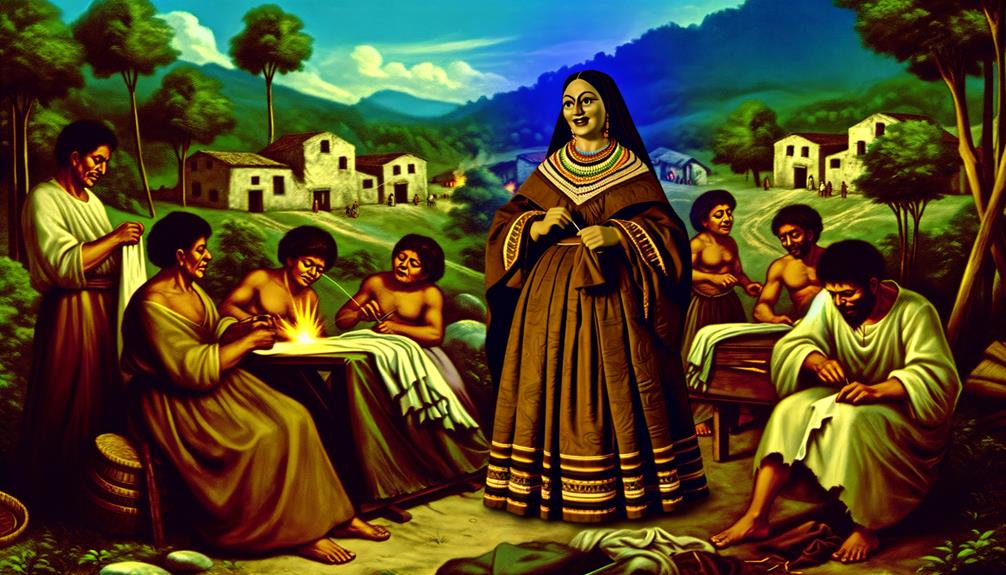
The name Tabitha, an Aramaic variant, holds the same meaning as Dorcas, which translates to ‘gazelle,’ highlighting the cultural and linguistic diversity present in the early Christian community.
Understanding the significance of these names within their cultural context is essential for a thorough biblical character analysis.
This dual nomenclature underscores the broader narrative of inclusivity and multiculturalism in the early Church.
Name Translation Significance
Translating the name Dorcas to its Aramaic equivalent, Tabitha, not only underscores the cultural and linguistic diversity of early Christian communities but also enriches our understanding of the character’s significance in biblical narratives.
The duality of her name reflects the interconnectedness of different linguistic groups within the early Church, offering insights into the spread of Christianity across diverse populations. This translation highlights the following key aspects:
- Cultural Integration: Demonstrates the blending of Hellenistic and Jewish traditions.
- Linguistic Adaptability: Shows the necessity of translation for broader communication.
- Character Recognition: Enhances the visibility of Dorcas/Tabitha in different communities.
- Historical Context: Provides clues about the socio-religious environment of the time.
Cultural Context Importance
Understanding the cultural context in which the name Tabitha was used provides profound insights into the socio-religious dynamics of early Christian communities.
Tabitha, an Aramaic name, translates to Dorcas in Greek, both meaning ‘gazelle.’ This bilingual nomenclature underscores the multicultural milieu of the early Church, reflecting both Jewish and Hellenistic influences.
Aramaic was commonly spoken among Jews in Palestine, while Greek was the lingua franca of the broader Eastern Mediterranean. The use of both names in Acts 9:36 highlights the cultural and linguistic duality experienced by early Christians.
This duality facilitated the spread of Christian teachings across diverse populations, illustrating the adaptability and inclusivity that characterized early missionary efforts.
Understanding this context enriches our comprehension of early Christian identity.
Biblical Character Analysis
Examining the character of Tabitha, also known as Dorcas, reveals significant insights into her role and impact within the early Christian community as depicted in the Book of Acts.
Tabitha is described as a woman ‘full of good works and acts of charity’ (Acts 9:36). Her dual names, with Dorcas being the Greek equivalent of the Aramaic Tabitha, highlight her cultural inclusivity and the early church’s diverse demographic.
The narrative of her resurrection by Peter underscores her crucial importance to the community, reflecting the high esteem in which she was held.
- Acts of Charity: Demonstrates her dedication to aiding the vulnerable.
- Resurrection: Signifies her pivotal role.
- Cultural Inclusivity: Reflects early church diversity.
- High Esteem: Indicative of her influence.
Acts of Kindness

Dorcas, also known as Tabitha, is celebrated in the Bible for her exemplary acts of kindness, which are epitomized by her charitable works and compassionate legacy.
Her dedication to helping the poor, particularly through the making of garments, underscores the profound impact of individual generosity in early Christian communities.
Biblical Acts of Charity
The narrative of Dorcas in the Book of Acts exemplifies the profound impact of charitable acts within early Christian communities. Her acts of kindness, particularly her dedication to making garments for widows and the needy, underscore a foundational Christian ethic—service to others.
This narrative not only highlights individual piety but also community interdependence, reflecting broader socio-religious values of the time. Charitable acts were instrumental in fostering unity and mutual support among early Christians.
- Provision of clothing for the needy: Dorcas sewed garments for those in need.
- Support for widows: She offered direct aid to a vulnerable demographic.
- Public recognition: Her deeds were well-known within her community.
- Spiritual inspiration: Her acts motivated others to engage in charity.
Dorcas’ Compassionate Legacy
Dorcas’ enduring legacy of compassion is profoundly illustrated through her numerous acts of kindness, which served as a catalyst for community solidarity and spiritual growth within the early Christian church.
Her diligent efforts in creating garments for the needy, as chronicled in Acts 9:36-42, exemplify a tangible expression of agape love.
The communal response to her death, marked by mourning and the display of garments she made, underscores the deep impact of her charitable deeds.
Peter’s miraculous raising of Dorcas from the dead not only validated the sanctity of her service but also invigorated the faith of the believers.
This event reinforces the symbiotic relationship between charity and spiritual significance in the nascent Christian community.
Cultural Context
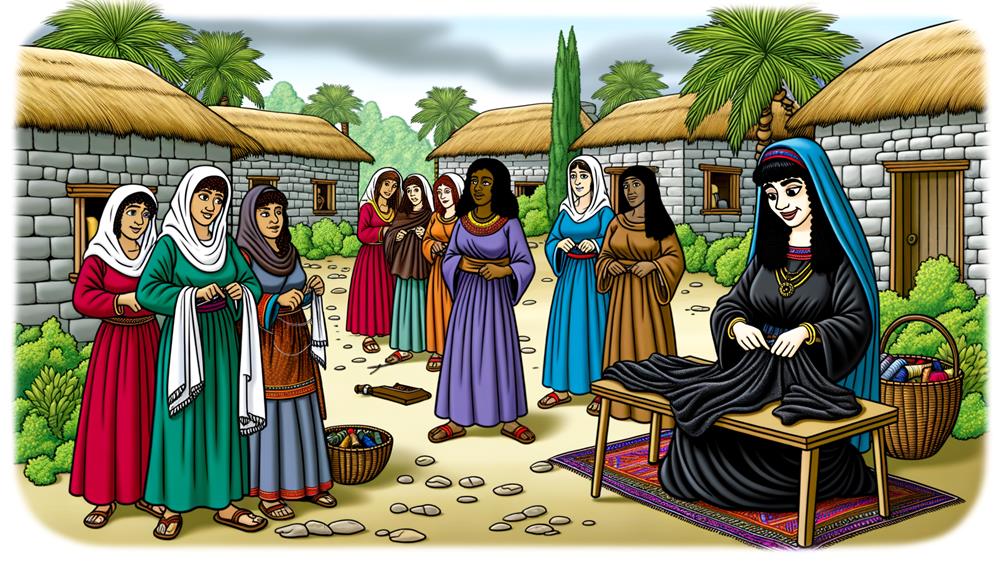
Examining the cultural context of the name Dorcas within the Bible reveals significant insights into the socio-religious landscape of the early Christian communities. The name Dorcas, derived from the Greek ‘Dorkas,’ meaning ‘gazelle,’ reflects a blend of Hellenistic and Jewish traditions. This duality highlights the integration of diverse cultural elements within the nascent Christian faith.
- Hellenistic Influence: The adoption of Greek names was common among Jews in the Diaspora.
- Jewish Heritage: Dorcas is also known by her Aramaic name, Tabitha, preserving her Jewish identity.
- Role of Women: Her charitable works underscore the active participation of women in early Christian ministry.
- Socio-Economic Status: Likely a woman of means, capable of philanthropy.
Dorcas’s Legacy

Dorcas’s enduring legacy in early Christianity is epitomized by her acts of charity and the profound impact these had on her community, demonstrating the integral role of benevolence in the nascent Christian ethos.
Her life, as documented in Acts 9:36-42, underscores the importance of social action within the framework of faith. By providing garments and aid to widows and the impoverished, Dorcas embodied the teachings of Christ regarding compassion and service.
Her resurrection by Peter further solidified her status as a paragon of Christian virtue. This narrative not only highlights the theological significance of miracles but also reinforces the value placed on altruism in early Christian communities, setting a precedent for subsequent charitable endeavors within the faith.
Impact on Early Christians
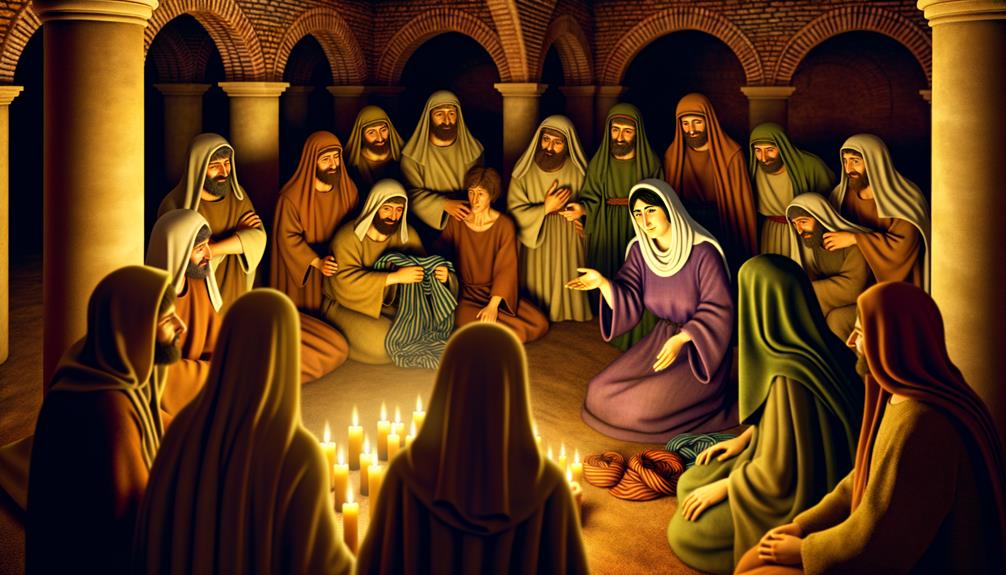
The acts of charity exemplified by Dorcas greatly influenced early Christians, embedding a culture of compassion and community service within the burgeoning faith.
As a figure of benevolence, Dorcas’s deeds underscored the tangible expressions of faith through service. Her life and works provided a model for Christian charity, promoting an ethos that emphasized aiding the needy and fostering communal bonds.
This influence is evidenced by the early Church’s structured approaches to social welfare, mirroring Dorcas’s commitment to helping others.
- Encouraged the establishment of charitable practices in early Christian communities.
- Inspired the formation of organized care for widows and orphans.
- Reinforced the Christian tenet of love and service to others.
- Highlighted the role of women in ministry and service.
Lessons From Dorcas
Through her exemplary acts of kindness and service, Dorcas provides profound lessons on the embodiment of faith and the pivotal role of charity within the Christian ethos. Dorcas, also known as Tabitha, epitomized selfless devotion, weaving garments for the needy and embodying the principle that faith without works is dead (James 2:26). Her life underscores the transformative power of altruism within a community and the essential nature of practical love in Christian doctrine.
| Lesson | Biblical Reference | Application |
|---|---|---|
| Acts of Kindness | Acts 9:36 | Community Service |
| Faith in Action | James 2:26 | Practical Faith |
| Charity | Acts 9:39 | Philanthropy |
| Altruism | Acts 9:36-39 | Selflessness |
| Legacy of Service | Acts 9:40-42 | Inspirational |
Dorcas’ story is a reflection of how individual generosity can leave a lasting legacy.
Modern-Day Inspiration

In contemporary society, the legacy of Dorcas serves as a compelling paradigm for acts of charity and selfless service.
Her example underscores the transformative impact that individual contributions can have on communities, particularly through compassionate outreach and tangible support to those in need.
Acts of Charity
Drawing from the biblical account of Dorcas, whose acts of charity exemplify profound generosity, modern individuals can find inspiration to engage in altruistic endeavors within their own communities.
Dorcas, also known as Tabitha, was renowned for her tireless work in aiding the poor by creating garments and providing for their needs (Acts 9:36). This historical example illuminates the enduring impact of charitable actions. Contemporary society can emulate Dorcas by adopting similar practices that address pressing social issues.
- Volunteer: Contribute time to local shelters or food banks.
- Donate: Provide financial support to community organizations.
- Skill-sharing: Offer expertise to educate and empower others.
- Mentorship: Guide youth or marginalized individuals.
These acts of charity can foster societal well-being and solidarity.
Selfless Service Example
Contemporary examples of selfless service, such as the philanthropic efforts of individuals like Malala Yousafzai and Bill Gates, demonstrate the profound impact that dedicated altruism can have in addressing global challenges.
Malala’s advocacy for girls’ education in Pakistan exemplifies a modern embodiment of Dorcas’s charitable spirit, transforming lives through unwavering commitment and personal sacrifice.
Similarly, Bill Gates’s extensive contributions to global health through the Bill & Melinda Gates Foundation reflect a strategic and impactful approach to philanthropy.
These contemporary figures exemplify how selfless service, rooted in empathy and strategic action, can produce substantial societal benefits.
Their efforts underscore the timeless relevance of Dorcas’s example and inspire ongoing communal and individual contributions to societal well-being.
Conclusion
Dorcas, also known as Tabitha, exemplifies early Christian philanthropy, as highlighted in the Book of Acts.
Significantly, her acts of kindness and charity are so important that she is the only woman in the New Covenant referred to as a ‘disciple’ (Acts 9:36). This distinction underscores her exceptional role and enduring impact on early Christian communities.
Dorcas’s legacy serves as a compelling model of compassionate service, resonating with contemporary values of altruism and social responsibility.