
Tiller Meaning in the Bible
In the Bible, the term ‘tiller‘ typically refers to individuals who cultivate the land, exemplified by Cain in Genesis 4:2. This role is significant in agrarian societies and symbolizes humanity’s intrinsic connection to the earth, as well as its divine mandate to steward creation (Genesis 2:15).
‘Tiller’ not only denotes agricultural labor but also encompasses deeper spiritual responsibilities and moral choices, reflecting the complexities of human endeavor and divine expectation (Genesis 1:28, 3:17-19). This multifaceted term invites us to explore themes of stewardship, ethical behavior, and spiritual growth within the scriptural narrative.

Key Takeaways
- The term ’tiller’ in the Bible refers to an individual who cultivates the land, highlighting an agrarian context and humanity’s relationship with the earth.
- Cain, as a ’tiller of the ground’ in Genesis 4:2, contrasts with Abel, emphasizing different vocations and the complexities of moral choices.
- Tilling symbolizes diligence, stewardship, and humanity’s responsibility to care for God’s creation, as seen in Genesis 2:15.
- The role of a tiller is metaphorically linked to spiritual leadership and nurturing community growth in contemporary biblical interpretations.
Historical Context of ‘Tiller’
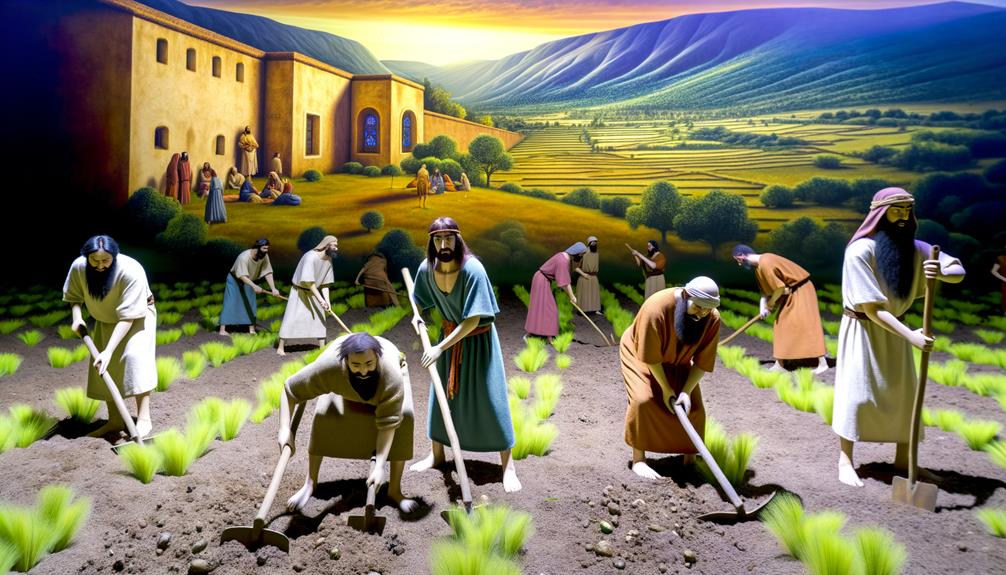
In the historical context of biblical literature, the term ’tiller’ primarily refers to an individual who cultivates the land, as seen in Genesis 4:2, where Cain is described as a ‘tiller of the ground.’
This role is integral to the agrarian society depicted in the Old Covenant, highlighting humanity’s dependence on agriculture for sustenance and survival. The Hebrew term ‘ʿōḇēḏ ʾăḏāmâ’ underscores the profound connection between humankind and the earth, a theme recurrent throughout biblical narratives.
As tillers, individuals engage in the divine mandate to ‘subdue’ the earth (Genesis 1:28), reflecting the theological significance of stewardship and labor.
Consequently, the term ’tiller’ encapsulates both a practical occupation and a deeper spiritual vocation within the scriptural context.
‘Tiller’ in Genesis

Exploring the role of the ’tiller’ within the Book of Genesis reveals profound insights into the early human condition and divine-human relationships as illustrated in the narratives of Cain and Abel.
Genesis 4:2 identifies Cain as a ‘tiller of the ground,’ signifying his occupation and connection to the earth. This role contrasts with Abel, a ‘keeper of sheep,’ highlighting divergent human vocations post-Eden.
Cain’s subsequent actions—offering a sacrifice that displeased God (Genesis 4:3-5) and committing fratricide—underscore the complexities of human morality and divine expectation.
The ’tiller’ consequently embodies themes of labor, sacrifice, and moral choice, reflecting the intricate relationship between humanity and the divine mandate to cultivate and steward the earth (Genesis 2:15).
Symbolism and Metaphor
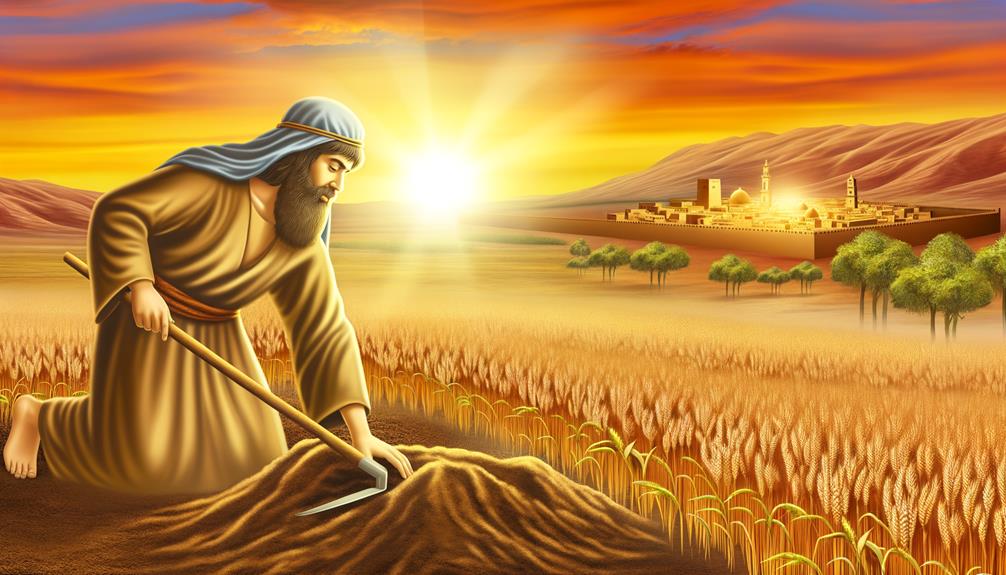
The term ’tiller’ in biblical literature serves as a potent symbol for humanity’s intrinsic connection to the land, encapsulating themes of labor, stewardship, and the moral ramifications of human actions as depicted in Genesis. This metaphorical imagery is richly layered:
- Labor: Tillers cultivate the earth, symbolizing humanity’s endeavor and diligence (Genesis 3:17-19).
- Stewardship: The act of tilling reinforces the divine mandate to care for creation (Genesis 2:15).
These facets underscore a profound theological narrative where tilling the land reflects broader spiritual and ethical dimensions, inviting readers to contemplate their own roles in the divine economy.
Tiller as a Steward

Rooted in the Edenic mandate, the figure of the tiller epitomizes the role of humanity as stewards of God’s creation, as articulated in Genesis 2:15. Here, the Lord God commands Adam to ’till and keep’ the Garden of Eden, signifying a divine entrustment to cultivate and protect the earth.
This stewardship is not merely agricultural but extends to ethical and spiritual dimensions, underscoring humanity’s responsibility to manage resources with wisdom and care. The Hebrew verb ‘abad (to till) and ‘shamar (to keep) imply a symbiotic relationship between humanity and creation, grounded in reverence for the Creator.
Consequently, the tiller serves as a paradigm of responsible stewardship, reflecting God’s order and purpose within the created world.
Spiritual Lessons From ‘Tiller’

Building upon the understanding of the tiller as a steward, spiritual lessons emerge that reveal deeper theological insights into the human vocation of cultivating both the physical and spiritual domains.
Genesis 2:15 emphasizes humanity’s role to ’till and keep’ the garden, representing responsible stewardship of God’s creation. This metaphor extends to spiritual cultivation:
- Sowing Seeds of Faith: Just as a tiller prepares the soil, believers are called to prepare hearts to receive God’s word (Matthew 13:3-9).
- Nurturing Growth: Spiritual maturity requires ongoing care and nourishment, akin to a tiller tending to crops (1 Corinthians 3:6-7).
These lessons underscore a holistic approach to discipleship.
Modern Interpretations

Modern interpretations of the term ’tiller’ in the Bible necessitate an examination of its contemporary Biblical context, wherein the role of agricultural symbolism continues to resonate with spiritual significance (Genesis 2:15).
This symbolism extends to today’s understanding, where the act of tilling the soil is often equated with nurturing one’s spiritual growth and community leadership.
In addition, parallels between ancient tillers and modern spiritual leaders underscore the ongoing importance of guidance and stewardship in fostering a thriving, faithful community.
Contemporary Biblical Context
In contemporary biblical scholarship, the interpretation of the term ’tiller’ often extends beyond its agricultural roots to encompass broader theological themes of stewardship and human responsibility.
Scriptural references such as Genesis 2:15, where Adam is placed in the Garden of Eden ‘to till and to keep it,’ illustrate a divine mandate for humans to care for creation. This concept is intrinsically linked to modern ecological and ethical considerations.
- Stewardship: Reflects humanity’s duty to responsibly manage God’s creation.
- Moral Responsibility: Emphasizes ethical behavior in the use of natural resources.
Thus, ’tiller’ serves as a profound symbol for ongoing theological discourse on environmental ethics and human agency.
Agricultural Symbolism Today
Exploring contemporary interpretations, agricultural symbolism in the Bible continues to resonate with profound theological implications, drawing from passages such as Isaiah 28:24-29, which depict divine wisdom in agricultural practices.
Today, these symbols are viewed as metaphors for spiritual cultivation and the nurturing of faith. The tiller represents one who prepares the soul for divine truth, underscoring the meticulous efforts required in spiritual growth.
Modern exegesis often parallels the cyclical nature of farming with the seasons of human life and spiritual maturity. As the farmer sows, tends, and reaps, so believers are called to cultivate virtues, discern divine guidance, and yield spiritual fruits.
This enduring symbolism enriches contemporary faith, offering timeless insights into the divine-human relationship.
Spiritual Leadership Parallels
Spiritual leadership, often likened to the role of a tiller in biblical texts, entails the responsibility of nurturing and guiding the community towards spiritual maturity, as illustrated in passages such as 1 Corinthians 3:6-9. This metaphor emphasizes the leader’s duty to prepare the spiritual soil, ensuring it is fertile for growth and development.
Modern interpretations draw parallels between scriptural tilling and contemporary spiritual guidance, highlighting:
- Cultivating Hearts: Engaging congregants in meaningful worship and study.
- Sowing Seeds of Faith: Teaching and embodying scriptural principles.
These actions reflect a holistic approach to spiritual leadership, fostering a thriving, faith-filled community aligned with biblical teachings.
Conclusion
The term ‘tiller‘ in the Bible, rich in historical and symbolic significance, reflects themes of stewardship, responsibility, and spiritual diligence.
For instance, in Genesis 4:2, Abel is noted as a ‘keeper of sheep,’ while Cain is described as a ’tiller of the ground.’
This distinction serves as a compelling case study, highlighting divergent paths of human vocation and spiritual alignment.
Modern interpretations continue to find relevance in these ancient roles, emphasizing the enduring moral and ethical lessons embedded in biblical narratives.