Separate The Wheat From The Chaff Bible Meaning: Judgment
The phrase ‘separate the wheat from the chaff’ in the Bible symbolizes divine judgment and spiritual discernment, deriving from agricultural practices like winnowing. Biblically, it is rooted in John the Baptist’s teachings (Matthew 3:12), depicting the separation of the righteous (wheat) from the wicked (chaff).
This metaphor, familiar in an agrarian context, serves to communicate profound Judeo-Christian concepts of moral purity and eschatological judgment. With roots in both Old and New scripture imagery, the phrase emphasizes the enduring importance of ethical discernment and divine separation, inviting further exploration into its spiritual implications and applications.

Key Takeaways
- The phrase symbolizes divine judgment, distinguishing the righteous (wheat) from the ungodly (chaff) based on biblical teachings.
- Originates from agrarian practices of threshing and winnowing, separating valuable grain from worthless chaff.
- Reflects theological principles of moral purity and spiritual discernment central to Judeo-Christian thought.
- Emphasizes the importance of ethical living and adherence to divine truth as depicted in Jesus’ parables and prophetic writings.
Biblical Origins
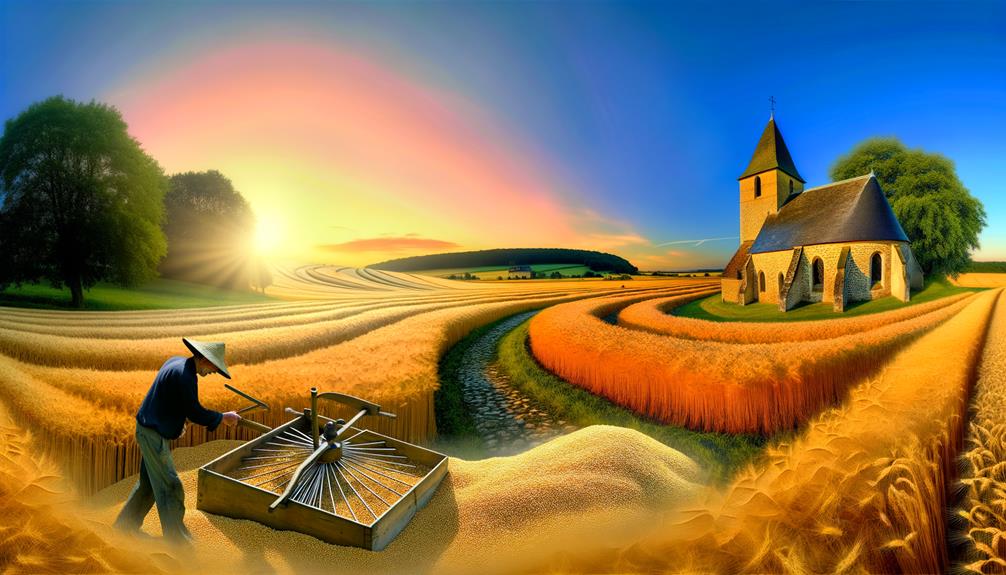
The phrase ‘separate the wheat from the chaff’ originates from biblical texts, serving as a powerful metaphor in both theological discourse and scriptural contexts.
This metaphor appears prominently in the teachings of John the Baptist, particularly in Matthew 3:12, where it symbolizes divine judgment. The wheat represents the righteous who will be gathered into God’s kingdom, whereas the chaff signifies the ungodly destined for destruction.
This imagery draws upon the agrarian practices familiar to the audience of the time, making the spiritual message both accessible and vivid. Theologically, it underscores the impending eschatological separation between the just and the unjust.
Historically, it reflects the moral dichotomies central to Judeo-Christian thought, emphasizing purity and divine discernment.
Agricultural Practice Explained
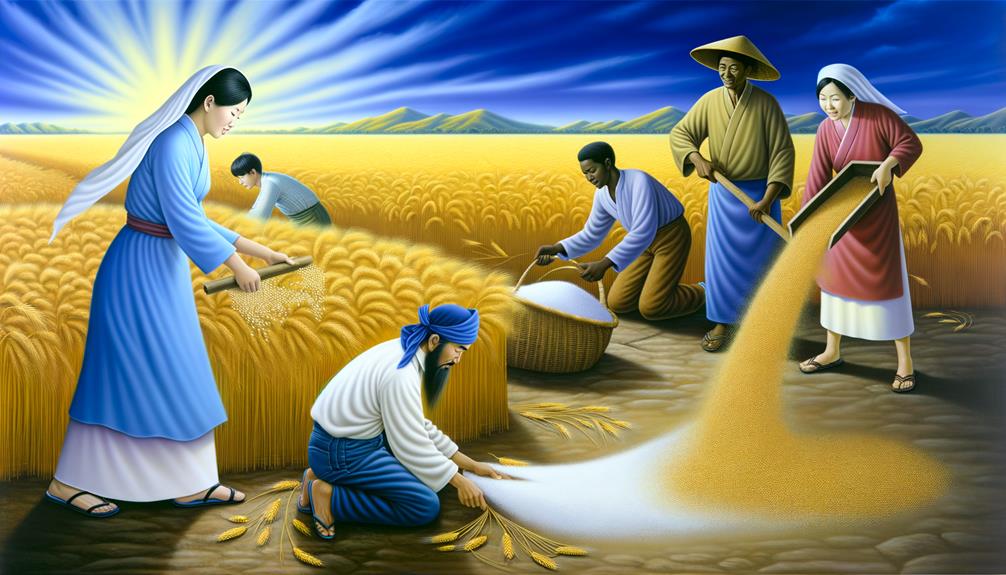
Understanding the agricultural practice of separating wheat from chaff illuminates the scriptural metaphor’s profound significance within its historical and cultural context. This method, fundamental to ancient agrarian societies, involved meticulous labor to guarantee only the valuable grain was retained.
The process included:
- Threshing: Grain was loosened from the straw by beating or trampling.
- Winnowing: The mixture was thrown into the air, allowing the wind to blow away the lighter chaff.
- Sifting: Remaining impurities were removed by sieving to guarantee purity.
This rigorous separation not only highlights the diligence required but also underscores a divine judgment motif within scripture. The imagery of wheat and chaff serves as a vivid representation of spiritual discernment and moral purification.
Old Testament References
In the Old Scripture, the imagery of separating wheat from chaff is rich with theological significance, particularly in the context of threshing floor symbolism and prophetic wheat imagery.
The threshing floor often represents a place of judgment and purification, as seen in the narratives of Ruth and David.
Additionally, prophets like Isaiah and Jeremiah employ the wheat and chaff metaphor to illustrate divine judgment and the differentiation between the righteous and the wicked.
Threshing Floor Symbolism
Threshing floors in the Old Covenant often serve as profound symbols of judgment and purification, reflecting God’s process of separating the righteous from the wicked. These sacred spaces are rife with theological significance, as illustrated by notable biblical events:
- Ruth at Boaz’s Threshing Floor (Ruth 3): Symbolizes redemption and divine providence.
- David’s Purchase of Araunah’s Threshing Floor (2 Samuel 24:18-25): Represents repentance and the establishment of a place of worship.
- Gideon’s Threshing Floor Encounter (Judges 6:37-40): Demonstrates divine selection and assurance.
Each instance underscores the threshing floor as a site of divine interaction, reinforcing its role in the spiritual, communal, and redemptive narratives of Israel.
Prophetic Wheat Imagery
Prophetic wheat imagery in the Old Scriptures frequently serves as a metaphor for divine judgment and blessing, illustrating God’s discernment between the faithful and the unfaithful among His people.
In Jeremiah 23:28, the prophet contrasts true divine revelations with false prophecies, likening authentic words of God to nourishing wheat and deceitful messages to worthless chaff.
Similarly, in Isaiah 28:24-29, the farming process of winnowing wheat symbolizes God’s meticulous judgment and the separation of righteousness from wickedness.
These passages underscore the theological principle that God not only harvests the faithful but also purges the community of those who deviate from His commandments.
Such imagery reinforces the historical and spiritual context of ancient agrarian society, emphasizing divine justice and covenantal fidelity.
New Testament Insights
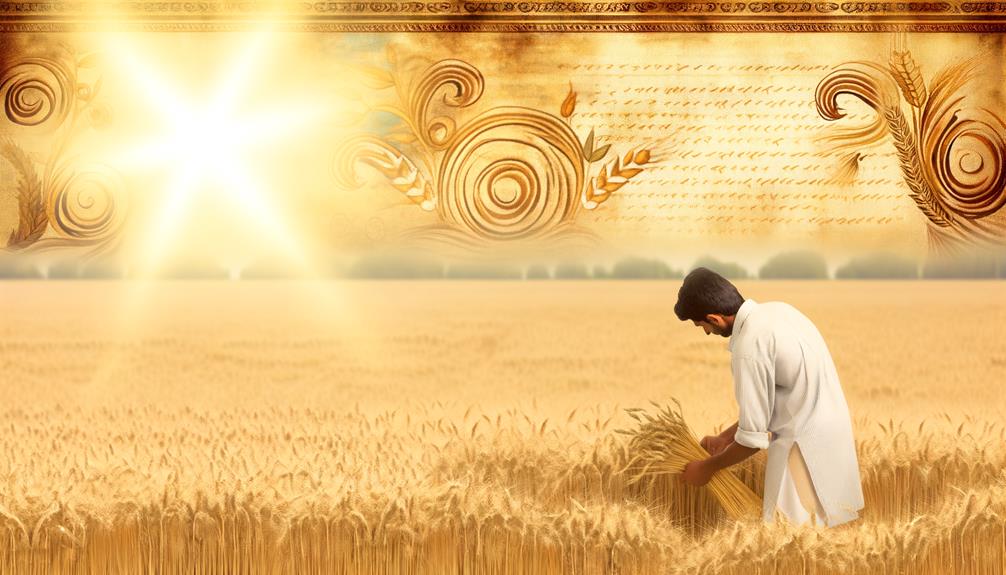
In the New Covenant, the concept of separating the wheat from the chaff is prominently illustrated in the Parable of the Weeds (Matthew 13:24-30), where Jesus expounds on the ultimate judgment and separation at the end of the age.
This imagery is further reinforced in eschatological discussions, particularly in the Book of Revelation, which underscores the final judgment.
Additionally, these teachings offer profound lessons on moral discernment, encouraging believers to distinguish between righteousness and wickedness in their lives.
Parable of Weeds
The Parable of Weeds, frequently examined within New Scriptures theology, offers profound insights into the eschatological separation of good and evil as taught by Jesus.
Found in Matthew 13:24-30, it metaphorically illustrates God’s patience and ultimate justice.
Historically contextualized, this parable addresses the mixed community of believers and non-believers in early Christian congregations.
Scriptural analysis reveals three key lessons:
- Sowing and Growing: The Kingdom of Heaven is likened to a man sowing good seed, symbolizing the growth of genuine faith amidst a corrupt world.
- Toleration Until Harvest: The coexistence of wheat and weeds signifies God’s forbearance, allowing time for repentance.
- Final Separation: The harvest represents the end times when divine judgment will distinguish the righteous from the wicked.
Judgment Day Imagery
Building upon the themes of eschatological separation in the Parable of Weeds, Judgment Day imagery in the New Covenant vividly portrays the final divine reckoning where God’s justice will be fully revealed.
The Gospels, particularly Matthew 25:31-46, depict Christ as the ultimate judge, distinguishing the righteous from the wicked. This imagery draws heavily from Old Scriptures prophetic literature, while also emphasizing the transformative power of Christ’s resurrection.
The Book of Revelation further elaborates on this, presenting a vision of the end times replete with symbolic representations of ultimate justice.
The theological import of these passages underscores the seriousness of divine judgment, urging believers to live in accordance with God’s will, mindful of the eternal consequences.
Moral Discernment Lessons
Among the myriad moral discernment lessons presented in the New scriptures, the teachings of Jesus Christ stand out as profound directives for ethical living and spiritual integrity. His parables and sermons provide timeless insights into distinguishing righteousness from unrighteousness.
Key lessons include:
- The Parable of the Good Samaritan (Luke 10:25-37): Jesus emphasizes compassion and mercy over ritualistic purity, urging followers to help those in need, regardless of societal boundaries.
- The Beatitudes (Matthew 5:3-12): These teachings highlight the virtues of humility, mercy, and peacemaking, contrasting them with worldly values of power and wealth.
- The Vine and the Branches (John 15:1-8): This metaphor illustrates the importance of remaining spiritually connected to Christ to bear good fruit, delineating true discipleship from mere affiliation.
Symbolism and Interpretation

Rooted deeply in biblical tradition, the phrase ‘separate the wheat from the chaff’ encapsulates a profound theological principle, symbolizing the divine judgment and discernment between the righteous and the wicked.
This metaphor originates from the agricultural process of winnowing, where useful wheat is separated from worthless chaff.
Scripturally, this imagery is employed in both the Old and New Scriptures. For instance, in Matthew 3:12, John the Baptist declares, ‘His winnowing fork is in his hand… He will clear his threshing floor, gathering his wheat into the barn and burning up the chaff with unquenchable fire.’
Historically, this language reflects the eschatological themes central to Judaic and Christian teachings, underscoring God’s ultimate authority in moral and spiritual judgment.
Modern-Day Applications
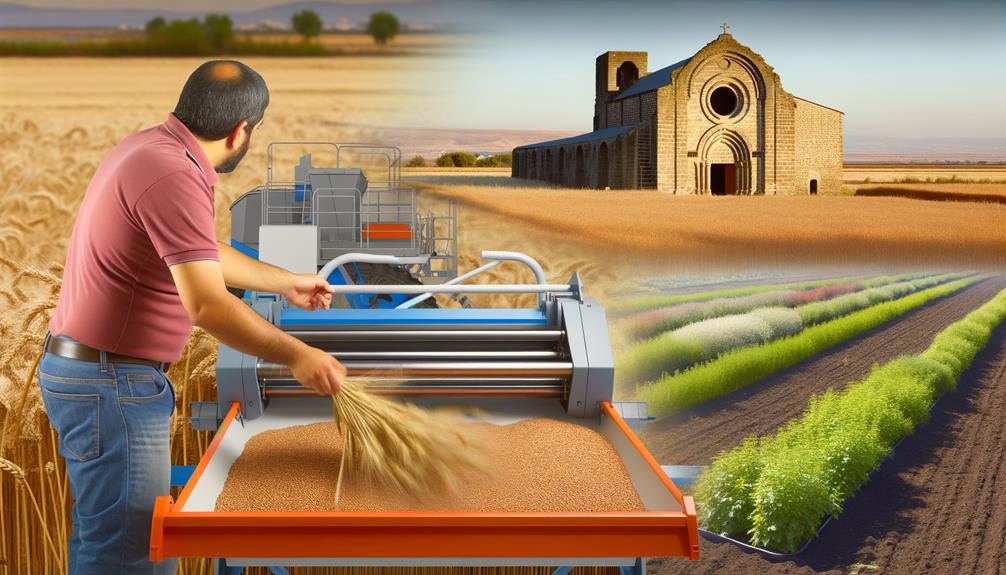
The principle of separating the wheat from the chaff continues to resonate in contemporary Christian practice, serving as a metaphor for ethical discernment and spiritual integrity. This biblical imagery urges believers to distinguish between valuable and worthless influences, actions, and teachings.
Modern-day applications include:
- Moral Decision-Making: Christians are called to evaluate their choices, ensuring they align with biblical teachings and moral standards.
- Community Engagement: Churches emphasize discerning beneficial community activities from those that may lead to moral compromise.
- Personal Growth: Individuals are encouraged to identify and remove habits or beliefs that hinder their spiritual development.
Spiritual Discernment
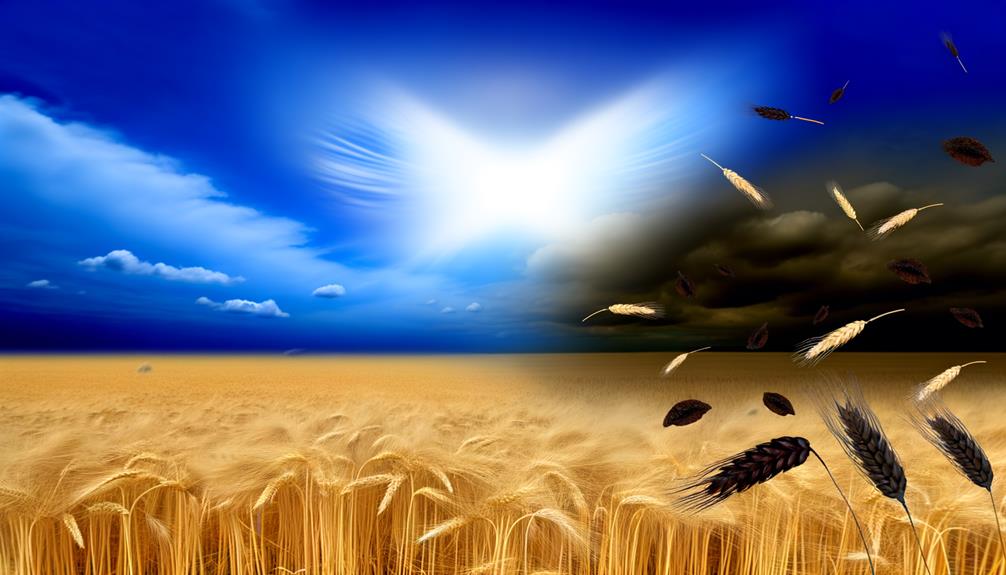
Drawing upon the rich heritage of biblical texts, spiritual discernment involves the careful and prayerful evaluation of various influences and teachings to guarantee alignment with divine truth.
Historically, this practice finds its roots in scriptural exhortations such as 1 John 4:1, which urges believers to ‘test the spirits to see whether they are from God.’
Theologically, discernment is likened to separating the wheat from the chaff, a metaphor signifying the distinction between true doctrine and falsehood.
This process necessitates a deep engagement with Scripture, guided by the Holy Spirit, to cultivate wisdom and understanding.
In an age rife with conflicting ideologies, spiritual discernment remains an essential practice for maintaining the integrity of one’s faith and adherence to God’s will.
Conclusion
In understanding the biblical phrase ‘separate the wheat from the chaff,’ one must explore its agricultural origins, scriptural references, and symbolic interpretations.
How does this metaphor illuminate the process of spiritual discernment within both historical and modern contexts? By examining the Old and New scriptures, this phrase emerges as a profound metaphor for distinguishing true faith and virtue from falsehood and sin.
Its enduring relevance underscores the timeless need for spiritual and moral clarity.