
Meaning Of Handmaid In The Bible: Humility and Service
In the Bible, the term ‘handmaid‘ derives from the Hebrew ‘amah’ and Greek ‘doule,’ historically referring to a female servant or slave. In the Old Scripture, figures like Hagar (Genesis 16) and Bilhah (Genesis 30) illustrate the handmaid’s role in fulfilling divine purposes through subservience and surrogacy.
In the New Scripture, Mary’s self-identification as ‘the handmaid of the Lord’ (Luke 1:38) underscores themes of humility and willing obedience. Theologically, the handmaid symbolizes faith and submission to God’s will, serving as a conduit for divine plans.
To explore further, consider the intricacies of these biblical narratives.

Key Takeaways
- A handmaid is a female servant or slave who serves within a household, often fulfilling crucial roles.
- Biblically, handmaids like Hagar and Mary exemplify humility and obedience in fulfilling God’s purposes.
- In the Old Testament, handmaids such as Hagar and Bilhah bear children for their masters, impacting biblical lineage and history.
- Mary’s self-identification as ‘the handmaid of the Lord’ highlights submission to divine will and faithfulness (Luke 1:38).
Definition and Etymology

The term ‘handmaid‘ in the Bible derives from the Hebrew word ‘amah’ and the Greek word ‘doule,’ both of which historically denote a female servant or slave.
In a historical context, these terms reflect a societal structure where servitude was prevalent. Scriptural references often use ‘handmaid’ to describe a woman’s subservient role, as seen in the stories of Hagar (Genesis 16) and Mary (Luke 1:38).
Theologically, the term signifies humility and obedience, embodying a servant’s heart dedicated to fulfilling God’s will.
This etymology reveals the layered meanings within biblical texts, where ‘handmaid’ evolves from a mere socio-economic status to a profound symbol of faith and submission in a religious narrative.
Old Testament References
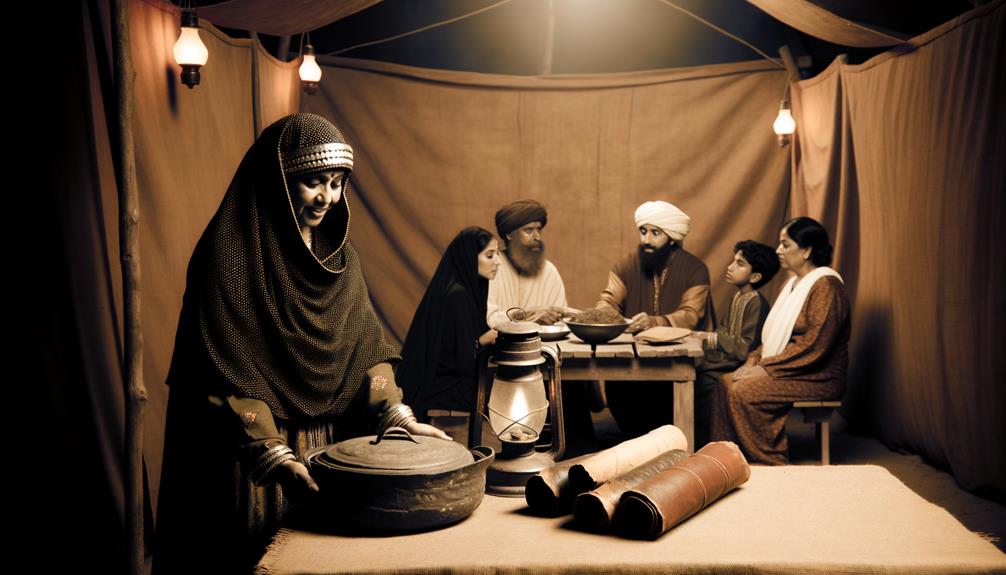
In the Old Scripture, the role of the handmaid is depicted through various narratives that intertwine social hierarchy with divine purpose.
For instance, in Genesis 16, Hagar, an Egyptian handmaid to Sarai, becomes a surrogate mother to Abram’s child, Ishmael, highlighting themes of obedience and divine intervention.
Similarly, in Genesis 30, Bilhah and Zilpah, handmaids to Rachel and Leah, respectively, bear children for Jacob, thereby playing pivotal roles in the formation of the twelve tribes of Israel.
These accounts illustrate the complex interplay between servitude and agency, as well as the theological belief that God’s plans often unfold through the lives of those in seemingly subordinate positions.
Such narratives underscore the significant, though often overlooked, roles handmaids held in biblical history.
New Testament Context

Frequently, the New Scripture subtly redefines the role of the handmaid through the lens of early Christian thought, emphasizing themes of humility and divine service.
In Luke 1:38, Mary, the mother of Jesus, refers to herself as ‘the handmaid of the Lord,’ signifying her humble acceptance of God’s will. This self-identification underscores the theological principle of servitude to God’s purpose, transforming the traditional understanding of a handmaid into an exemplar of piety and submission.
Additionally, the New Covenant narrative often associates handmaids with the virtue of faithfulness, as seen in various parables and teachings of Jesus. This recontextualization illustrates the evolving spiritual significance of the term within the early Christian community.
Cultural Significance
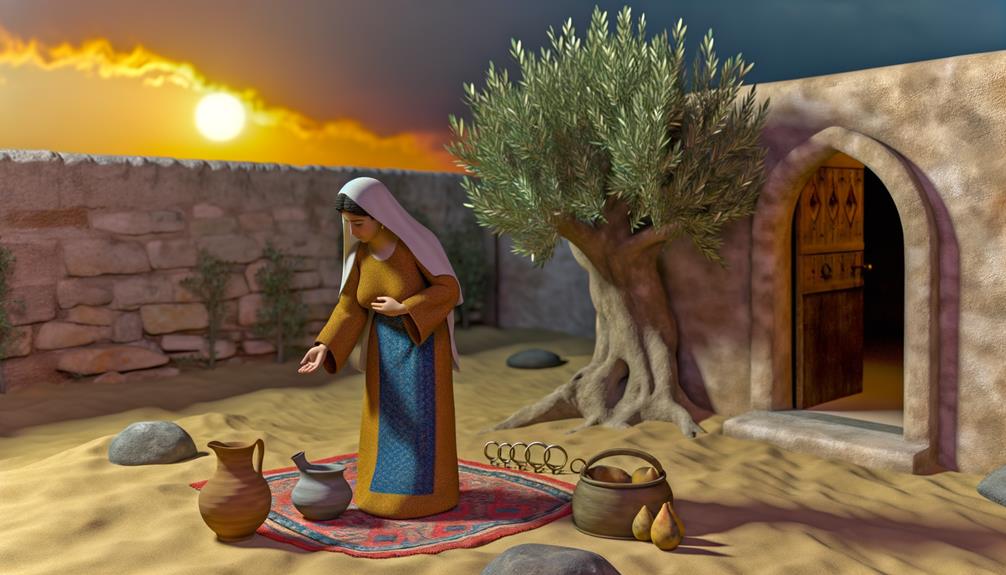
Within the cultural framework of biblical times, the concept of a handmaid extends beyond mere servitude, encapsulating a multifaceted role intertwined with social hierarchy, familial obligations, and spiritual symbolism. Handmaids often served as surrogates in childbearing, as seen with Hagar in Genesis 16. Their status, while subordinate, positioned them uniquely within the household, bridging gaps between family members and societal norms.
| Aspect | Example | Scriptural Reference |
|---|---|---|
| Surrogacy | Hagar | Genesis 16 |
| Intermediary Role | Hannah | 1 Samuel 1 |
| Spiritual Symbolism | Mary’s Fiat | Luke 1:38 |
These roles underscore the complex societal fabric and theological dimensions of handmaids in biblical narratives, highlighting their indispensable yet often overlooked contributions.
Theological Implications

The role of the handmaid in biblical texts carries profound theological implications, particularly regarding servitude and divine purpose, as exemplified by figures such as Hagar in Genesis 16 and Mary in Luke 1:38.
These narratives highlight the themes of humility and obedience, illustrating a deeper spiritual truth about submission to God’s will.
Through scriptural analysis, the handmaid’s position extends beyond mere subservience to embody a model of faithful service and divine calling.
Servitude and Divine Purpose
Exploring the role of the handmaid in the Bible reveals significant theological implications, particularly regarding servitude as a manifestation of divine purpose.
Scriptural narratives such as Hagar in Genesis 16 and Mary in Luke 1:38 illustrate how handmaids occupy a dual role of service to their human masters and fulfillment of God’s sovereign will.
Hagar’s servitude leads to the birth of Ishmael, integral to the Abrahamic lineage, while Mary’s acceptance of her role as the Lord’s servant facilitates the incarnation of Jesus Christ.
These accounts underscore the theological notion that human servitude, when aligned with divine purpose, transcends mere social hierarchy, becoming a conduit for God’s redemptive plan and ultimate sovereignty over human history.
Humility and Obedience
In biblical narratives, humility and obedience are consistently depicted as foundational virtues exemplified by handmaids, positioning them as pivotal figures in the unfolding of divine plans. This is evident in the stories of Hagar, Mary, and Hannah, whose submissive acceptance of God’s will underscores their integral roles. Their humility is not mere passivity but a profound theological stance, recognizing divine sovereignty.
| Handmaid | Scriptural Reference | Theological Implication |
|---|---|---|
| Hagar | Genesis 16:1-16 | Submission to divine will |
| Mary | Luke 1:38 | Acceptance of God’s plan |
| Hannah | 1 Samuel 1:11 | Devotion and piety |
Through these narratives, the Bible extols the virtues of humility and obedience, presenting them as pathways to fulfilling God’s purposes.
Symbolic Interpretations

Frequently, the term ‘handmaid‘ in biblical texts is imbued with rich symbolic significance, representing themes of servitude, humility, and divine favor.
In the Old Scriptures, figures like Hagar, Sarah’s handmaid (Genesis 16:1-16), exemplify servitude and the complexities of human relationships under divine providence.
Similarly, Mary, the mother of Jesus, refers to herself as ‘the handmaid of the Lord’ (Luke 1:38), symbolizing ultimate humility and submission to God’s will.
Theologically, the handmaid serves as a vessel through which divine purposes are fulfilled, embodying faith and obedience.
This symbolic role underscores the profound spiritual truths about the nature of human service to God, highlighting a divine preference for the humble and obedient in the unfolding of sacred history.
Conclusion
The term ‘handmaid’ in the Bible transcends mere servitude, embodying profound theological and cultural significance.
Rooted in ancient etymology and vividly illustrated in both Old and New scriptures contexts, the handmaid’s role encapsulates unwavering devotion and divine purpose.
Such figures are not mere historical footnotes but pivotal instruments of God’s will, reflecting a celestial hierarchy and embodying the ultimate submission to divine authority.
The exaggerated reverence for these figures underscores their indispensable place in biblical narratives.